
The long-held distinction between the camera in your hand and the editing suite on your computer is rapidly dissolving into a single, intelligent entity powered by artificial intelligence. This new AI-centric camera system represents a significant advancement in the mobile photography sector, shifting the battleground from mere hardware specifications to the intelligence of the software that drives it. This review will explore the evolution of this technology from a collection of fragmented tools into a unified platform, its key features, performance expectations, and the profound impact it is poised to have on the user experience. The purpose of this analysis is to provide a thorough understanding of this integrated system, its current capabilities, and its potential future development in the competitive smartphone market.
The Dawn of an Integrated AI Camera
The introduction of Samsung’s new AI-centric camera philosophy for the Galaxy S26 signals a fundamental shift in mobile imaging. Its core principle is the unification of capture, editing, and sharing functions into one seamless workflow, a direct response to the growing complexity of disparate AI tools found in contemporary smartphones. Previously, features like object removal or scene enhancement were often siloed within separate menus or post-production modes, creating a disjointed user journey. This move marks a strategic pivot where software and artificial intelligence are elevated to become equal partners with the physical camera hardware, rather than just supplementary afterthoughts.
This integrated approach has emerged from a clear market need to streamline the user experience. As AI capabilities have multiplied, the camera interface has risked becoming cluttered and unintuitive, burying powerful tools where casual users might never find them. Samsung’s vision, therefore, is not merely about adding more features but about fundamentally rethinking how users interact with them. By embedding AI directly into the primary camera and editing interface, the goal is to make advanced photography and videography accessible, intuitive, and immediate, transforming the creative process from a multi-step procedure into a single, fluid action.
Core Features and System Architecture
Unified Creative Suite and Interface
The primary objective of the new system is the consolidation of all creative tools into a single, cohesive ecosystem. This strategy aims to eliminate the friction caused by navigating separate “Galaxy AI” buttons and distinct post-production suites. The vision is for a future where advanced functionalities are no longer hidden behind extra taps but are deeply integrated into the main camera interface. This suggests a paradigm where AI suggestions could appear in real-time during capture, or where complex edits are presented as intuitive, one-touch options immediately after a photo is taken, creating a more efficient and satisfying user workflow.
This refined architecture promises to democratize advanced photo manipulation. By bringing powerful generative AI tools out of specialized menus and into the forefront of the user experience, Samsung is effectively lowering the barrier to entry for high-level creative work. The design philosophy is moving away from a model that requires users to actively seek out editing features and toward one where the system proactively assists in the creative process. This could manifest as simplified controls for modes like “Pro” or “Single Take,” integrating them more logically into the main interface rather than sequestering them in a “More” menu, thereby making the full power of the camera more discoverable.
Advanced On-Device Generative AI
The system’s capabilities are most vividly demonstrated through its specific generative AI functionalities, which signal a major leap in on-device processing power. Highlighting these advancements is the remarkable ability to perform complex object restoration, exemplified by the demonstration of making a partially eaten cupcake appear whole again. This goes far beyond simple object removal, requiring the AI to understand context, texture, and form to generate a photorealistic replacement. Such a feature indicates a significant maturation of the technology, moving from corrective edits to truly creative and reconstructive manipulations.
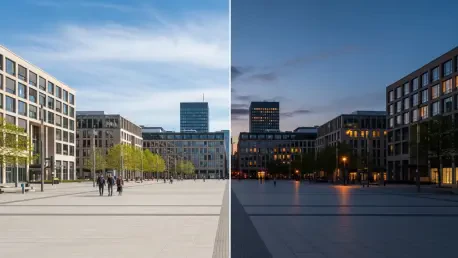
Further expanding the creative toolkit are features designed to fundamentally alter a scene’s atmosphere and lighting. The system showcases the ability to transform a standard daytime photograph into a convincing night scene, complete with adjusted shadows, artificial light sources, and altered color palettes. This, combined with enhanced low-light capture that promises to pull detail out of near darkness, positions the camera as a versatile tool capable of transcending the limitations of the original moment. These capabilities are not just incremental improvements; they represent a new level of computational photography that empowers users to reimagine their images entirely.
Industry Trends and Competitive Positioning
Samsung’s aggressive integration of generative AI places it at the vanguard of a major industry trend, yet its approach creates a clear divergence from key competitors. While partners like Google have long championed computational photography, Samsung’s push to unify these tools into the core user interface is a bold strategic move. It contrasts sharply with the more conservative methods of rivals like Apple, whose “Clean Up” tool in iOS Photos represents a cautious, incremental step into generative editing. This philosophical divide highlights a growing split in the market: Samsung is betting that users want powerful, transformative AI tools at their fingertips, while others are focusing on more subtle, “invisible” enhancements.
This strategic direction is not just about features; it is a statement about the future of smartphone utility. By embedding these powerful AI systems directly into the device, Samsung is aiming to make its ecosystem indispensable for creators and casual users alike. The move suggests a belief that the next frontier of innovation lies not in adding more lenses, but in the intelligence of the software that interprets the data they capture. This positions the Galaxy S26 as a direct challenge to the market, forcing competitors to decide whether to follow suit with deep integration or continue on a more restrained path.
Applications and Impact on User Experience
The real-world applications of a fully integrated AI camera are poised to redefine what users expect from their smartphone. By making powerful editing tools intuitively accessible, the system empowers casual photographers to achieve professional-level results without ever leaving the native camera app. This eliminates the need for third-party software for tasks that were once considered complex, such as restoring old, damaged photos by intelligently filling in cracks and missing pieces, or seamlessly merging the best elements from multiple group shots into a single perfect image. The focus is on delivering immediate, high-impact results with minimal effort.
This streamlined experience will likely foster a new wave of creativity among a broader user base. Use cases will range from simple, practical fixes to complex artistic manipulations, all performed within a familiar and efficient interface. For example, a user could remove distracting background elements from a travel photo or completely change the time of day to evoke a different mood, all with a few simple taps. The impact is a more powerful and engaging photographic process, where the device becomes a more capable partner in realizing the user’s creative vision, rather than just a tool for capturing a moment as it was.
Potential Challenges and Limitations
Despite its impressive potential, this advanced AI camera system faces significant technical and user-centric hurdles. The processing power required for on-device generative AI is substantial, raising concerns about battery consumption, device temperature, and the speed at which complex edits can be rendered. If these operations are slow or drain the battery excessively, the seamless experience Samsung is aiming for could be compromised. The system must deliver its powerful features without negatively impacting the core functionality and usability of the smartphone.
Furthermore, there is a cultural and philosophical challenge regarding the nature of photography itself. As AI-driven manipulation becomes easier and more commonplace, the line between an authentic photograph and a digitally generated image blurs. This raises the potential for a user backlash against results that appear overly edited, unrealistic, or “fake.” The market’s reception to heavily manipulated imagery is still evolving, and there is a risk that consumers may prefer authenticity over AI-powered perfection. Navigating this sentiment will be crucial for the long-term acceptance of such powerful creative tools.
Future Outlook and Long-Term Vision
Looking ahead, the trajectory for this integrated AI camera technology points toward even deeper and more dynamic applications. The logical next step is the extension of these generative capabilities from still images to real-time video capture. This could enable users to apply sophisticated style transfers, remove objects, or even alter lighting conditions as they are filming, fundamentally changing the nature of mobile videography. Future developments will also likely focus on more sophisticated object and scene manipulation, allowing for interactions that seem like science fiction today.
The long-term impact of this evolution will be a fundamental shift in consumer expectations for smartphone cameras. The emphasis will continue to move away from raw hardware metrics like megapixel counts and toward the intelligence, creativity, and speed of the software. As users become accustomed to this level of integrated AI assistance, a powerful and intuitive software experience will no longer be a bonus feature but a core requirement. This trend will likely force the entire industry to invest more heavily in software and AI development, making the “smart” in smartphone photography more important than ever.
Final Assessment and Conclusion
The move toward a deeply integrated, AI-centric camera system represented a major and necessary evolution in the landscape of mobile photography. It successfully shifted the focus from a purely hardware-driven race to a more holistic consideration of the creative user experience. By unifying a suite of powerful generative tools into a single, intuitive interface, this technology effectively democratized advanced photo editing, making it accessible to a much broader audience. The system demonstrated a clear vision for the future, where software and hardware function as inseparable partners.
Ultimately, this platform’s introduction was a landmark moment that redefined the boundaries of computational photography on a consumer device. The challenges related to processing demands and the ongoing debate over image authenticity were significant, but they did not detract from the technological achievement. The system succeeded in its primary goal: to provide a more streamlined, intelligent, and creatively empowering experience. It set a new benchmark for what users should expect from their smartphone camera, cementing the idea that the future of photography is not just about capturing reality, but about having the power to intelligently reshape it.