
Oscar Vail is a seasoned technology expert who has spent years dissecting the intersection of industrial design and high-fidelity audio. Known for his deep dives into the mechanics of premium consumer electronics, he brings a critical eye to how luxury hardware performs in the real world. In this conversation, we explore the nuances of the latest high-end over-ear headphones, examining the trade-offs between exquisite build quality and ergonomic reality. Our discussion touches on the physical toll of premium materials, the complexities of V-shaped sound signatures, and the curious discrepancy between flagship over-ear models and their smaller, feature-rich earbud counterparts.
High-end headphones often weigh nearly 400 grams due to premium metal components. How does this significant mass affect long-term neck ergonomics during a standard workday, and what specific physical adjustments can users make to the headband or seating posture to mitigate fatigue over several hours of use?
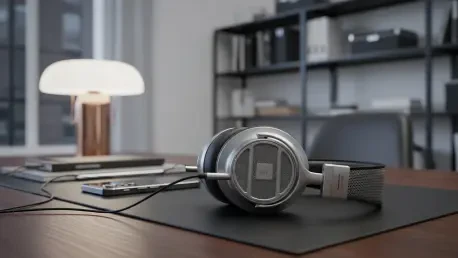
At 386 grams, these headphones are undeniably heavy, weighing more than two modern flagship smartphones stacked together. This mass creates a distinct sense of inertia; when you tilt your head, the weight can cause your neck to move more aggressively than intended, leading to a “flopping” sensation. To anchor this weight, the design employs a significant clamping force that keeps the aluminum ear cups secure but can become exhausting after just a few hours. I recommend ensuring the mesh headband is perfectly centered to distribute weight, though the limited adjustability of the metal yokes may prevent a perfect fit for those with larger heads. Maintaining a vertical, neutral neck posture is essential because leaning too far forward or backward amplifies the strain caused by those heavy ear cups.
Audio profiles with heavy sub-bass emphasis can sometimes overshadow the midrange, particularly in cinematic content. How can listeners identify and compensate for specific treble dips around the 5,000Hz range, and what are the practical trade-offs of using a “V-shaped” sound signature for professional versus casual listening?
The audio profile here uses a V-shaped signature where the sub-bass is heavily prioritized, which can occasionally feel like a “runaway subwoofer,” especially during intense films like F1 where the low-frequency channel dominates. Listeners will notice a substantial dip starting past 3,000Hz that bottoms out near 5,500Hz, often making vocals or fine instruments sound strangely quiet or murky. While this “spicy” upper treble can make casual listening feel detailed and energetic, it introduces sibilance and hiss that make it unsuitable for professional monitoring. If you find yourself cranking the volume to unsafe levels just to hear the dialogue, you are likely fighting that specific lower-treble dip, and a manual EQ adjustment on your source device is often the only way to restore that lost clarity.
A 20-hour battery life is relatively low compared to industry standards offering 30 hours or more. In the absence of a physical power button, how should users manage idle battery drain when traveling, and what specific charging habits ensure the device remains ready for spontaneous use?
While a 20-hour rating is modest, my testing showed a continuous playback time of 21 hours and 36 minutes with active noise cancellation engaged. The lack of a power button is a frequent point of contention, but the idle drain is surprisingly managed; leaving them out of the case for eight hours typically results in only a 1% drop in battery. For travelers, the best strategy is to leverage the fast-charging capability, where a quick 10-minute plug-in provides roughly 3 hours and 25 minutes of life—enough to get through a long feature film. Even if you forget the Smart Case, the device is efficient enough to stay ready for a day or two, though for long-term storage, the case is the only way to ensure the sensors enter a true ultra-low-power state.
Modern processing chips enable features like Adaptive Audio, yet some advanced hearing health functionalities remain exclusive to smaller earbud models. Why might certain sensors be omitted from larger over-ear designs, and how does this discrepancy influence the value proposition for users who prioritize health-tracking metrics?
It is a perplexing situation where the flagship $549 over-ear model lacks the Hearing Test and Hearing Aid features found in the significantly cheaper $249 AirPods Pro 3. Despite both using the H2 chip, the larger form factor is missing the specific sensors required for heart rate monitoring and clinical-grade hearing protection. This creates a strange value gap where the “Pro” earbuds are technically more advanced in terms of health integration than the luxury “Max” headphones. For users who prioritize these health metrics, the over-ear design currently feels like a step backward, functioning more as a traditional audio device rather than a comprehensive wellness wearable.
High-performance active noise cancellation can sometimes create a sensation of pressure or eardrum duress in quiet environments. What technical factors cause this phenomenon, and what steps should a person take to balance total isolation with environmental awareness when moving between different indoor and outdoor settings?
The sensation of “eardrum duress” is caused by the combination of a tight acoustic seal from the fabric ear pads and the aggressive anti-noise waves generated by the H2 processor. In a quiet room, this can feel incredibly oppressive because the system is working to eliminate even the tiniest ambient sounds, creating an artificial vacuum effect. To mitigate this, I suggest utilizing the “Adaptive” mode, which acts as a halfway point by letting in some environmental cues while still suppressing sudden loud noises. When moving outdoors, the transparency mode is useful, though it can feel artificially boosted on these headphones; switching to a neutral “off” setting is often more comfortable for indoor use when you don’t need total isolation.
What is your forecast for the AirPods Max?
My forecast is that these headphones will continue to exist as a high-margin “halo” product that Apple treats as a fashion accessory rather than a rapidly evolving tech piece. While they are essentially being back-burnered in favor of the more innovative earbud line, their iconic design and status symbol power in gyms and airports ensure they won’t disappear anytime soon. Expect very slow update cycles, perhaps waiting another three to four years for any meaningful change beyond simple port updates or new colorways. They have reached a plateau where the aesthetic appeal and brand synergy outweigh the need for cutting-edge battery life or lightweight materials for the core audience.