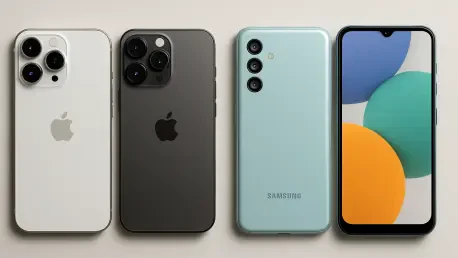

The global smartphone market presents a fascinating picture of concentrated power, where the latest Q3 sales data reveals that every single one of the top-ten best-selling models belongs to either Apple or Samsung. This duopoly, however, is not a story of direct competition for the same customer but rather one of a market elegantly divided by two profoundly different philosophies. This analysis explores the divergent strategies that allow Apple to dominate the premium tier with its flagship iPhones while Samsung commands the budget-friendly category with its Galaxy A-series, creating a clear and effective split at the top of the industry.
A Tale of Two Strategies: Market Performance Breakdown
Apple’s Premium Command: The Flagship Formula
Apple’s strategy is one of focused dominance at the high end, a formula that continues to yield exceptional results. The third quarter saw the iPhone 16 secure the top spot as the world’s best-selling smartphone, capturing a 4% market share on its own. It was not a solitary victory; the iPhone 16 Pro, 16 Pro Max, and 16e followed directly behind, locking down the top four positions globally.
This remarkable performance is fueled by a potent combination of unwavering brand loyalty and the powerful allure of its tightly integrated hardware and software ecosystem. Strong demand for premium devices in key growth markets such as India and Japan further solidifies Apple’s position, demonstrating that a significant portion of consumers is willing to invest heavily in cutting-edge technology and a seamless user experience.
Samsung’s Volume Victory: The Budget-Conscious Approach
In contrast, Samsung’s success lies in its mastery of the opposite end of the market spectrum. While Apple claims the top, Samsung populates the middle of the top-ten list, with its Galaxy A-series models like the A16 5G and A06 securing the fifth through eighth spots. This highlights a strategy centered on volume and accessibility.
By offering a portfolio of feature-rich smartphones at highly competitive price points, Samsung effectively captures a massive segment of the global population. This approach is particularly successful in emerging economies where affordability is a primary purchasing driver, allowing the brand to achieve immense shipment volumes that rivals in the premium space cannot match.
Price vs. Prestige: Defining the Consumer Divide
The success of these two giants illuminates a fundamental divide in consumer priorities. Apple’s target demographic values prestige, top-tier performance, and the convenience of its interconnected ecosystem, viewing the high cost as a worthwhile investment. The appeal is rooted in having the best technology, from camera systems to processing power, wrapped in a premium package.
Samsung’s A-series, on the other hand, resonates with a more pragmatic consumer. These buyers prioritize value, seeking dependable performance, long battery life, and modern features without the flagship price tag. For them, a smartphone is a practical tool, and Samsung delivers an accessible, reliable option that meets everyday needs effectively.
Strategic Challenges and Inherent Limitations
Neither strategy is without its vulnerabilities. Apple’s reliance on a high-cost, premium-only model inherently limits its market penetration in price-sensitive regions, making it susceptible to shifts in high-income consumer spending. The company’s growth is tied to its ability to convince customers to continuously upgrade at a premium price point.
Samsung, however, faces the challenge of navigating the intensely competitive and low-margin budget sector. Maintaining profitability requires immense sales volume, and the brand must constantly innovate to differentiate itself from a sea of aggressive competitors. This balancing act also risks brand dilution, as its prestige is primarily associated with its less-sold flagship S-series, not the A-series that drives its volume.
Conclusion: Two Paths to Market Supremacy
This comparative analysis revealed how Apple and Samsung achieved their shared global dominance through fundamentally different yet equally effective strategies. Apple cultivated an exclusive, high-margin empire built on prestige and ecosystem loyalty, while Samsung built a volume-driven powerhouse by making capable technology accessible to the masses. Their distinct approaches showed that there is more than one way to win in the fiercely competitive smartphone market.
Ultimately, the findings provided clear guidance for consumers. The choice between an Apple flagship and a Samsung budget model came down to personal priorities. For users who prioritized cutting-edge technology and seamless software integration, Apple’s flagships stood as the superior option. In contrast, for those who sought practicality, affordability, and robust everyday performance, Samsung’s budget offerings presented a more logical and value-driven choice.