
With a keen eye on the frontiers of quantum computing, robotics, and open-source projects, technology expert Oscar Vail has consistently been at the forefront of the industry’s most significant shifts. We sat down with him to dissect the rumors surrounding Apple’s potential entry into the AI-powered wearable market, a field already marked by high-profile failures. Our conversation explored the practical applications and privacy implications of such a device, how Apple could succeed by leveraging its ecosystem where others have stumbled, and the critical decisions the company faces in bringing a product like this to life.
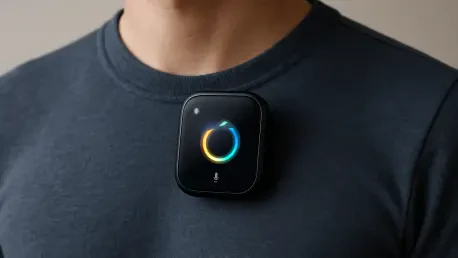
A rumored AI pin is described with multiple cameras, microphones, and a speaker, designed to be worn by the user. What specific daily tasks could this hardware enhance, and what are the primary privacy challenges Apple would need to address before a public launch?
The hardware described—a double camera system and three microphones packed into a small, wearable form—is built for ambient computing. Imagine walking into a meeting and having the pin discreetly transcribe the conversation, or pointing at a plant and having it instantly identify the species and provide care instructions. It could act as a universal translator in real-time or a hands-free camera for capturing life’s fleeting moments without fumbling for your phone. However, this “always-on” capability is a double-edged sword. The primary challenge is trust. Apple would need to be absolutely transparent about when those cameras and microphones are active, likely with clear physical indicators. The data processing must be heavily skewed towards on-device to prevent a privacy backlash, as the thought of your entire day being streamed to a server is, frankly, terrifying for most consumers.
Given the recent failure of Humane’s AI Pin, how could Apple leverage its existing ecosystem to make a similar wearable successful where others have failed? Describe a specific user journey where the pin and an iPhone might work together to provide unique value.
Humane’s AI Pin was a classic case of over-ambition; it tried to replace the smartphone and ended up being one of the biggest tech flops of the year. Apple’s genius isn’t in replacing its core products but in extending them. The success of an Apple pin would depend entirely on it being a seamless companion to the iPhone, not a competitor. Picture this: you’re cooking and your hands are covered in flour. You ask the pin, “Show me the next step of this recipe.” The pin uses its camera to identify where you are in the process and then wirelessly casts the relevant video or text to your nearby iPad or iPhone screen without you ever touching a device. This synergy, where the pin is the quick-action sensor and the iPhone is the powerful display and processing hub, is a value proposition that standalone devices simply can’t match.
This potential AI gadget is reportedly in a very early development stage and could be cancelled. What key benchmarks or user feedback metrics do you believe Apple’s team would need to see to move forward with a full-scale launch, and how should they decide its market positioning?
For a project this speculative, Apple’s internal teams would be looking for a “magic moment” in user testing—a task that feels so intuitive and useful with the pin that going back to a phone feels clumsy. They’d need to see high engagement metrics around a few core, killer use cases rather than a broad, mediocre feature set. Key benchmarks would be task completion speed, user dependency (how often do testers reach for it instinctively?), and battery life that comfortably lasts a full day. As for market positioning, they should avoid the “phone killer” narrative at all costs. It should be positioned as an intelligent accessory, perhaps bundled with other wearables, that supercharges your existing Apple devices with ambient AI, making your entire ecosystem smarter and more responsive to your environment.
With competitors like OpenAI also exploring small AI devices, what unique features rooted in Apple’s hardware and software integration could set its AI pin apart? Please explain how the company’s reported partnership with Google for Gemini AI might influence its strategy for this new product category.
Apple’s key differentiator has always been the deep, vertical integration of its hardware and software. An Apple pin could tap directly into your Photos, Calendar, and Messages with a level of security and fluidity that a third-party device could only dream of. Imagine asking it, “What was the name of that restaurant my sister recommended last week?” and it instantly pulls the answer from your iMessage history. The reported Gemini partnership is fascinating because it suggests Apple knows it needs best-in-class AI models to power the experience. This allows Apple to focus on what it does best—designing elegant hardware, intuitive user interfaces, and a secure ecosystem—while leveraging a powerful, pre-trained AI engine from Google. This hybrid approach could accelerate development and allow Apple to deliver a more robust and intelligent product right out of the gate.
What is your forecast for the AI-powered wearable market?
I believe the future of AI wearables isn’t a single, all-powerful device, but rather a constellation of specialized, interconnected gadgets. We’re moving away from a single glass screen as our only portal to the digital world. The market for standalone AI pins trying to do everything will likely fail, as we saw with Humane. The real growth will be in devices that serve specific functions incredibly well—smart glasses for navigation, rings for health tracking, and perhaps a pin for quick AI queries and captures—all working in concert with the smartphone, which will remain the central hub. Success will be defined not by raw AI power alone, but by thoughtful design, genuine utility, and seamless integration into a person’s life and existing tech ecosystem.