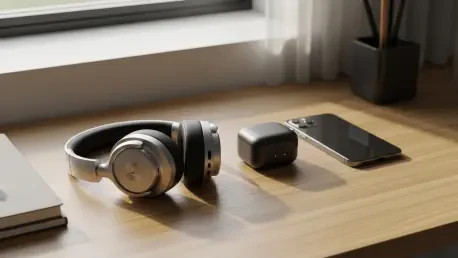

The decision to choose between the expansive soundstage of over-ear headphones and the discrete portability of modern earbuds often hinges on the specific logistical demands of a user’s daily routine rather than pure audio fidelity. For several years, the market trend favored large, noise-canceling cans that promised a sanctuary of silence amidst the chaos of urban life. Models like the Sony WH-1000XM5 became the gold standard for those seeking “pillowy” comfort and top-tier isolation. However, as the pace of life in 2026 continues to accelerate, a noticeable shift is occurring among tech enthusiasts and casual listeners alike. Many individuals who previously swore by their bulky headwear are returning to the compact efficiency of earbuds for their daily needs. This transition is not merely about sound; it is a direct response to the physical friction that large accessories introduce during gym sessions, crowded commutes, and the constant movement of a modern professional day. The weight of carrying a dedicated case just to protect a pair of headphones is increasingly viewed as an unnecessary burden.
Efficiency in Motion and Power Management
One of the most compelling arguments for the resurgence of earbuds is their unrivaled portability and spatial efficiency in an increasingly mobile world. Modern over-ear headphones, while technologically advanced, have trended toward designs that do not fold, requiring significant space in a backpack or a dedicated carrying case. In contrast, earbuds—whether they are high-end wireless units or specialized wired models like the Meze Audio Alba—offer a “pocketable” form factor that integrates seamlessly into a minimalist lifestyle. The ability to carry a complete, high-fidelity audio system in a jeans pocket allows for a level of spontaneity that bulky headphones simply cannot match. For the commuter navigating tight subway spaces or the traveler trying to minimize carry-on weight, the absence of a large headband around the neck or a protruding case in a bag represents a significant upgrade in physical freedom. This spatial economy is becoming a primary driver for users who prioritize agility over the absolute peak of acoustic immersion provided by larger headsets.
Beyond physical size, the evolving landscape of power management provides a practical edge to the earbud format for long-term daily usage. Wireless earbuds utilize a charging case that functions as a secondary power reservoir, enabling “top-off” charging during brief intervals of inactivity. This mechanism ensures that the devices are frequently at full capacity without the user needing to seek out a wall outlet or carry long USB cables throughout the day. Furthermore, the inclusion of wired earbuds in a daily rotation serves as a definitive solution to “battery anxiety,” offering a plug-and-play simplicity that remains immune to the limitations of lithium-ion longevity. This hybrid approach to power—combining the quick-charging capabilities of modern Bluetooth cases with the zero-maintenance reliability of analog wired connections—ensures that audio is always accessible. Such versatility is particularly valuable during extended travel or high-intensity workdays where pausing to recharge a large pair of headphones is often an inconvenient disruption to focus and productivity.
Comfort Hurdles and Physical Constraints
Despite the logistical advantages of a smaller footprint, earbuds introduce specific ergonomic challenges and interface frustrations that over-ear headphones naturally avoid. Because earbuds must be inserted directly into the sensitive tissues of the ear canal to create an effective seal, they often cause physical fatigue and internal pressure during extended listening sessions. While a pair of over-ear headphones might offer a soft, weight-distributing headband and breathable ear pads, the constant friction of silicone or foam tips can become a significant deterrent for those working eight-hour shifts. Additionally, the reliance on touch-sensitive controls in modern wireless earbuds frequently leads to a high “fidget factor.” Users often trigger accidental commands—such as pausing a track or activating a voice assistant—while simply trying to adjust the fit or secure a loose bud. This lack of tactile, physical buttons makes the user experience feel less stable and more prone to technical annoyance compared to the reliable, fixed controls found on larger over-ear models.
The return to wired earbuds, while solving power issues, highlights a specific “leash” effect that fundamentally limits a user’s range of motion during tasks. While Bluetooth technology has liberated listeners from being tethered to their playback devices, a wired connection necessitates that the smartphone or laptop remain within a few feet of the user at all times. This physical link creates practical hazards during active tasks, such as household chores or office movements, where a snagged cable can easily pull an expensive device off a surface or jerk the buds painfully from the ears. This tethering stands in stark contrast to the freedom provided by over-ear wireless models that allow a user to move between rooms without interruption. Consequently, the choice to use earbuds often involves a calculated trade-off: one gains portability and ease of storage but sacrifices the unencumbered movement and long-term physical comfort that larger headwear provides. This delicate balance requires a thoughtful evaluation of whether the convenience of a pocket-sized device outweighs the potential for strain.
Strategic Integration for Diverse Environments
To navigate these trade-offs, savvy consumers moved toward a multi-device strategy rather than seeking a singular, universal solution for every audio need. Industry experts suggested that the most effective approach involved matching the hardware to the specific environment: over-ear headphones remained the preferred choice for stationary, long-duration tasks, while earbuds reclaimed their status as the essential tool for mobile and spontaneous activities. Users who prioritized long-term ear health found that rotating between different form factors reduced the risk of localized pressure sores and acoustic fatigue. Future considerations for buyers included evaluating the specific folding mechanisms of headphones and the sensor sensitivity of earbud interfaces before committing to a primary device. By diversifying their audio toolkit, individuals effectively bypassed the inherent limitations of each design. This balanced methodology ensured that the premium sound of over-ear models and the extreme portability of earbuds complemented one another, providing a comprehensive listening experience.