
With a sharp eye on the ever-evolving landscape of wearable technology, Oscar Vail stands out as a leading voice, dissecting the nuances of quantum computing, robotics, and the open-source projects that fuel innovation. His expertise provides a unique lens through which to view the latest advancements in consumer devices. In this conversation, we explore the subtle art of commemorative design in smartwatches, delve into the sophisticated health sensors transforming personal wellness, and examine the strategic choices behind new product variations. We also unpack the delicate balance of feature-richness and battery longevity that defines the user experience, looking ahead to what the future holds for these powerful wrist-worn companions.
The new Watch 5 10th Anniversary edition features a special nylon braided strap and a logo on the crown. Could you walk me through the design philosophy behind these commemorative elements and explain how this special edition aims to appeal differently to consumers than the standard model?
Of course. When a brand creates a special edition like this, it’s about more than just aesthetics; it’s about telling a story and creating a sense of exclusivity. The choice of a nylon braided composite strap isn’t accidental. It offers a unique tactile feel—durable yet comfortable—that sets it apart from standard silicone or leather. Engraving the ’10 Years’ logo on both the strap and the crown are subtle, premium touches. These elements are designed to resonate with loyal customers and collectors who appreciate the brand’s journey. While the standard Watch 5 appeals to the user focused purely on technology and function, this 10th Anniversary edition targets someone who values heritage and wants a device that feels like a milestone marker on their wrist.
The Watch 5 includes an X-Tap sensor for advanced health readings like ECG and PPG. Can you describe the real-world health insights this provides a user and detail the step-by-step process someone would follow to get an accurate reading using this technology?
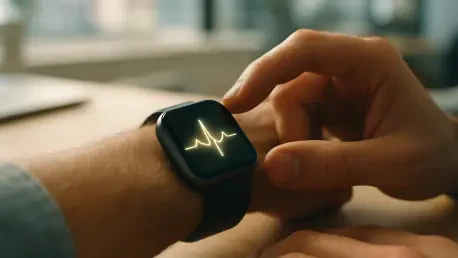
The inclusion of the X-Tap sensor is a significant step toward making proactive health monitoring mainstream. In the real world, these sensors provide a window into your cardiovascular health that was once only available in a clinical setting. An ECG, or electrocardiogram, can help detect atrial fibrillation, while PPG, which measures blood volume changes, is used for heart rate and rhythm tracking. To get a reading, a user would typically launch the specific health app on the watch, sit down, and rest their arm on a flat surface to minimize electrical interference. They would then be prompted to place a finger from their opposite hand on the watch’s crown for about 30 seconds, staying completely still. The watch then analyzes the electrical signals from their heart, providing a detailed reading and an immediate sense of their cardiac rhythm right there on their wrist.
You’ve introduced an ‘Ice Blue’ variant for the 41mm Watch GT 6. What market trends or consumer feedback led to this specific color choice, and why was a fluororubber strap selected to accompany it over other potential materials like leather or metal?
The ‘Ice Blue’ color choice is a direct response to current market trends leaning towards softer, more expressive and versatile color palettes in tech. Consumers are moving away from purely utilitarian black and silver and want devices that reflect their personal style. This lighter, cooler tone has a modern, sophisticated feel. Pairing it with a fluororubber strap is a very deliberate, functional decision. Fluororubber is an excellent material for an active lifestyle—it’s incredibly durable, resistant to sweat and oils, and easy to clean, unlike leather which can degrade over time. It’s also more comfortable for continuous wear and exercise than a heavier metal bracelet. This combination delivers the best of both worlds: a fashion-forward look with the practical resilience needed for a daily-wear smartwatch.
The Watch 5 promises up to 5 days of battery with the always-on display active, extending to 11 days in power-saving mode. Could you break down which specific features are managed or disabled to achieve this extended life and describe a typical usage scenario for that 5-day metric?
Achieving that impressive 11-day figure in power-saving mode involves a smart, aggressive triage of functions. The system would absolutely disable the power-hungry always-on display, reduce the frequency of background health monitoring like continuous heart rate tracking, and limit push notifications to only the most essential apps. It likely also turns off Wi-Fi and dims the screen brightness. A typical 5-day usage scenario, by contrast, represents a fully engaged user. This person would have the always-on display active, receive dozens of notifications throughout the day, use GPS to track a couple of workouts during the week, and maybe take an ECG reading periodically. That 5-day metric is a realistic benchmark for someone using the watch to its full potential without feeling like they have to constantly ration its features.
What is your forecast for the future of health monitoring in consumer smartwatches?
I believe we are on the cusp of a major shift from passive tracking to predictive, personalized health management. The current generation of sensors, like those offering ECG and HRV, has already set a high bar. The next frontier will be the integration of non-invasive sensors for metrics that are currently much harder to track, such as blood pressure and, the holy grail, blood glucose levels. The real magic, however, will be in the software and AI. Instead of just showing you raw data, future smartwatches will analyze your long-term trends, cross-reference them with your activity and sleep patterns, and provide actionable insights. They will be able to warn you of potential health issues days in advance, suggest lifestyle adjustments, and function less like a gadget and more like a personal health guardian on your wrist.