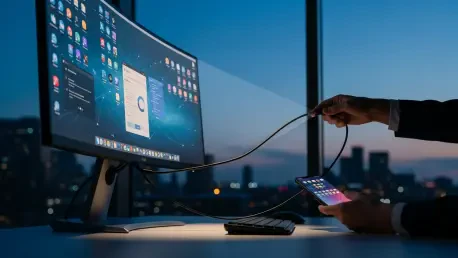

The long-held ambition of consolidating all personal computing into a single, pocket-sized device has driven innovation for years, and now a new contender from Nex Computer aims to turn that vision into a practical reality. The company has unveiled the NexPhone, a smartphone engineered not just for mobile tasks but as a fully-fledged desktop replacement. At the heart of this ambitious project is its custom NexOS, a sophisticated software layer that enables the device to multi-boot three distinct operating systems: the familiar Android 16 for on-the-go use, the powerful and open-source Linux (Debian) for development and advanced tasks, and a specialized Arm-based version of Windows 11 for productivity. This unprecedented versatility allows a user to simply connect the phone to an external monitor via a standard USB-C cable, instantly transforming the handset into a desktop computer running their preferred OS, thereby challenging the conventional need for separate mobile and stationary computing hardware.
Under the Hood of a Hybrid Device
To support its lofty aspirations of replacing a dedicated PC, the NexPhone is built on a solid foundation of mid-range hardware carefully selected to balance performance, efficiency, and cost. Powering the device is a Qualcomm QCM6490 chipset, a processor known for its robust performance in industrial and IoT applications, which suggests a focus on stability and sustained workloads over peak gaming speed. This is paired with a generous 12GB of RAM, a crucial component for handling demanding desktop applications and multitasking across different operating systems. For storage, it includes 256GB of internal memory, which can be further expanded using a microSD card, offering ample space for applications, documents, and media. The visual experience is delivered through a 6.58-inch FHD+ IPS display with a smooth 120Hz refresh rate. A 5,000 mAh battery keeps the device running, supporting both 18W wired and convenient wireless charging. Rounding out its practical features are a capable camera system featuring a 64MP main sensor and a highly durable chassis with an IP69 rating for superior water and dust resistance, making it a rugged tool for both work and daily life.
A Glimpse into a Converged Future
The introduction of the NexPhone presented a compelling case for a future where the distinction between mobile and desktop computing became increasingly blurred. With shipments anticipated in the third quarter of 2026 and a retail price set at $549, the device was positioned to challenge the market’s perception of what a smartphone could be. Its core value proposition was not just in its specifications but in the fundamental flexibility it offered through its triple-boot system. This capability catered to a wide spectrum of users, from a corporate professional needing a Windows environment on the go to a developer requiring a native Linux terminal. The success of this approach depended heavily on the seamlessness of the NexOS software and the performance of the Arm-based desktop environments. Ultimately, the NexPhone stood as a significant experiment in device convergence, prompting a broader industry conversation about whether a single, adaptable piece of hardware could truly satisfy the diverse demands that were once met by multiple specialized machines.