
The rectangular slab of glass that has lived in the human pocket for nearly two decades is finally facing a coordinated insurrection from the architects of the artificial intelligence revolution. While the smartphone has become a functional extension of the human nervous system, the tech industry is currently betting billions that the next great leap in personal computing will not involve a screen at all. From the highly secretive labs at Apple to the collaborative design studios of OpenAI and Jony Ive, the goal is no longer just to build a better phone, but to dismantle the very idea that we need to look at a display to remain connected to the digital world.
This shift represents more than just a change in form factor; it is a fundamental gamble on the economic and social future of consumer electronics. As global supply chains buckle under the weight of rising component costs and memory prices soar, the pressure to move beyond the saturated smartphone market has reached a boiling point. For established tech giants and hardware startups alike, the race to develop the first definitive “AI wearable” is a matter of survival in a volatile landscape where incremental updates to existing handsets no longer suffice to drive growth.
The End of the Screen Age or a Tech Industry Fever Dream?
The current atmosphere in Silicon Valley feels less like a measured progression and more like a frantic gold rush toward a screenless horizon. Major players are convinced that the “screen age” has reached its plateau, leading to a surge of investment in devices that aim to move our digital interactions from the palm of the hand to the lapel or the ear. This vision of ambient computing suggests that the best computer is the one that disappears entirely, functioning as a silent partner that observes the world alongside the user.
However, many critics view this pivot as a desperate attempt to create “solutions” for problems that the average consumer does not actually have. While the promise of a life unchained from the glowing rectangle is romantic, the reality of current AI hardware often feels like a regression. Startups entering this space are navigating a precarious financial tightrope, attempting to innovate faster than their capital depletes while trying to convince a skeptical public that a wearable pendant or a pair of smart earrings can provide more value than a device that already does everything.
Beyond the Hype: Why the Push for Dedicated AI Hardware Matters
This aggressive push for dedicated AI hardware is fundamentally altering the global economic landscape by shifting the primary drivers of consumer sales. We are witnessing a transition where software capabilities are no longer enough; the hardware itself must be reimagined to support the heavy computational demands of real-time machine learning. This demand has created a high-stakes environment where the cost of entry is skyrocketing, potentially forcing out smaller players and leaving the future of the medium in the hands of a few well-capitalized titans.
Despite the marketing fervor surrounding these developments, a significant utility gap persists between what AI can do and what users actually need. Most current “AI-first” features, such as the ability to summarize a long thread of emails or identify a plant in a park, often feel redundant when compared to the speed and reliability of a simple search. To justify their existence, these new devices must move beyond being mere reactive tools and become proactive companions that anticipate a user’s schedule and environmental context before being asked.
The Design Evolution: From Glass Slabs to Ambient Wearables
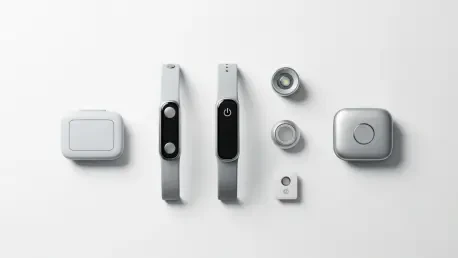
Designers are currently engaged in radical sensory experiments that challenge the traditional understanding of personal computing. Apple, for instance, has moved beyond the iPhone to investigate form factors like AI-integrated pendants and AirPods equipped with low-power cameras. By turning audio accessories into visual sensory inputs, the goal is to allow the AI to “see” what the user sees, providing a level of contextual awareness that a phone tucked away in a pocket can never achieve.
Simultaneously, the high-stakes partnership between OpenAI and Jony Ive is reportedly aiming to create a “portable friend”—a device that bridges the gap between a home speaker and a wearable assistant. This collaboration seeks to move away from the reactive nature of modern tech, where a user must initiate every interaction. Instead, these devices utilize constant microphone and camera feeds to monitor the environment, preparing information for upcoming events or identifying people in a room to streamline social and professional interactions.
Expert Perspectives on the Displayless Dilemma
Industry analysts remain deeply skeptical about the social viability of a device that lacks a visual interface, citing the “public etiquette nightmare” of voice-only interaction. The reality of modern life involves crowded subways, quiet offices, and busy streets—environments where dictating private thoughts or listening to AI-generated summaries via speaker is socially intrusive. Research consistently shows that users are uncomfortable performing vocal tasks in public, which creates a massive barrier for any device that relies solely on sound and speech.
Furthermore, there is a glaring “judgment deficit” in current AI models that makes them poor substitutes for human decision-making. While AI excels at processing vast amounts of data, it frequently fails at providing the nuanced, subjective judgment required for personal advice. When asked for an opinion, these systems often default to a non-committal list of pros and cons, offering no definitive direction. This limitation, combined with the fact that a screenless device cannot support gaming, video streaming, or visual social media, suggests that wearables may remain niche accessories rather than phone replacements.
Evaluating the Path Forward: How to Spot a Functional AI Wearable
For a wearable to truly challenge the smartphone’s dominance, it must navigate specific functional frameworks that respect the user’s need for privacy and utility. A successful device should prioritize “output privacy,” perhaps through bone conduction audio or discreet AR-integrated visuals, ensuring that the user isn’t broadcasting their digital life to everyone nearby. Hardware that offers tangible utility—such as solving high-friction professional workflows—will always outperform devices that merely offer generic summarization tools.
Many experts recognize that Augmented Reality (AR) glasses may offer a more logical evolution than screenless pendants. By providing a private, high-resolution display within the user’s field of vision, AR glasses solve the entertainment and privacy paradox while still allowing for the “hands-free” experience the industry craves. As we look toward the next generation of devices, the focus must shift toward creating tools that enhance human capability without stripping away the visual richness and private autonomy that the smartphone era established.
The era of the experimental AI wearable has officially begun, yet the transition required a more grounded approach to human-centric design. Developers focused on integrating these systems into existing social norms rather than forcing users to adopt awkward vocal behaviors. Looking ahead, the most successful path involved hybrid models where AI acted as a silent background layer, appearing only when genuinely needed through non-intrusive interfaces. Future iterations of this technology were built upon the realization that a device without a screen must offer something far more valuable than a screen can provide: the gift of undivided attention to the physical world.