
The global telecommunications landscape is undergoing a profound transformation as the 2026 Mobile World Congress in Barcelona becomes the stage for China Mobile to unveil its ambitious “Co-Creating the AI+ Future” roadmap. This vision centers on the revolutionary concept of Carbon-Silicon Symbiosis, a framework that seeks to harmonize biological human experiences with the relentless precision of digital computational power. By shifting focus toward the three strategic pillars of mobile connectivity, ubiquitous computing, and advanced artificial intelligence, the organization is transcending its traditional role as a mere network provider. The objective is to establish a unified, intelligent ecosystem where digital and physical realities are no longer distinct entities but interconnected components of a global infrastructure. This strategic pivot highlights a commitment to driving the next era of digital-intelligent transformation through autonomous systems and integrated services that redefine how society interacts with technology. The roadmap emphasizes a holistic approach to innovation, ensuring that the integration of human activity and machine intelligence fosters a sustainable and highly efficient environment for global commerce and personal life.
Scaling 5G-Advanced: The Path Toward 6G Connectivity
The maturation and widespread deployment of 5G-Advanced technology represent a cornerstone of this new digital era, with infrastructure now spanning more than 330 cities across the globe. This extensive network provides the ultra-low latency and high reliability required for sophisticated industrial applications, as evidenced by successful implementations in European smart industrial parks. By leveraging passive Internet of Things platforms, these facilities have achieved frictionless access control and integrated energy management, serving as a replicable blueprint for smart campuses worldwide. The integration of autonomous network solutions allows for a level of operational efficiency that was previously unattainable, utilizing AI-driven operations to ensure service delivery remains consistent and fault-tolerant. This robust foundation facilitates a transition from basic data transmission to a sophisticated service model where connectivity is seamlessly woven into the fabric of industrial production and urban management systems.
As the industry looks toward the transition to 6G technology over the next few years, the focus is shifting from human-centric networks to agent-centric ecosystems that support autonomous decision-making. China Mobile is currently laying the groundwork for this evolution by developing intelligent agents capable of managing complex commercial service scenarios without direct human intervention. This vision of “zero-touch” service delivery aims to minimize operational costs while maximizing the speed and accuracy of network responses to real-time demands. By anticipating user needs through predictive modeling and collaborative intelligence, the network evolves into a sentient layer of the digital economy. The integration of 5G-A with early 6G research ensures that the current infrastructure remains compatible with future advancements, providing a stable platform for long-term technological growth. This approach emphasizes the necessity of building networks that are not only faster but also significantly more intuitive and adaptive.
Redefining Computing: The Universal Utility Strategy
Central to the strategic vision is the reimagining of computing power as a universal public utility, accessible to all on-demand in a manner similar to electricity or water distribution. To facilitate this transition, an extensive computing ecosystem has been unveiled, featuring ultra-large AI computing clusters that are equipped with high-capacity “Scale-Across” interconnection devices. This technological breakthrough allows for training efficiency exceeding 98 percent across distances greater than 100 kilometers, effectively neutralizing the traditional bottlenecks associated with geographical latency. By transforming high-performance computing into a shared resource, the company enables diverse industries to leverage massive computational loads without the need for prohibitive capital investment in private hardware. This shift ensures that the engine of the digital age is available to startups and established enterprises alike, fostering a more inclusive environment for global technological advancement and creative innovation.
This computing strategy is further reinforced by a massive global infrastructure that includes over 110 submarine and terrestrial cable systems and nearly 300 data centers strategically located worldwide. A primary highlight of this network is the Hong Kong Fo Tan Data Center, which has been designed to support an impressive 26 EFLOPS of computing capacity, positioning it as a critical hub for the Greater Bay Area. This facility serves as a gateway for international digital services, bridging the gap between regional needs and global computational requirements. By integrating network sensing and computing at the edge, the framework creates a closed-loop system that brings high-speed processing power closer to the end user. This proximity reduces response times and enhances the performance of real-time applications, ensuring that the global computing grid is both resilient and capable of meeting the escalating demands of generative AI and large-scale data analytics across various geographic borders.
Implementing the AI+ Initiative: Scenario-Based Intelligence
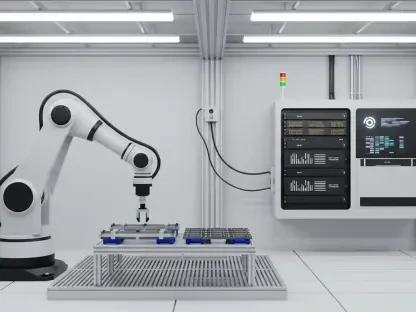
The “AI+” initiative serves as the most diverse application of this technological synergy, utilizing the “Jiutian” foundation model and the “Wutong” big data platform to infuse intelligence into daily life. In the consumer sector, the “Lingxi” AI assistant ecosystem has been developed to manage complex tasks such as home security and health monitoring through natural, conversational interfaces. These intelligent agents are capable of planning intricate travel itineraries and handling dining reservations autonomously, representing a significant leap in personalized digital companionship. Furthermore, the deployment of embodied AI is demonstrated through unmanned restaurants where specialized robots collaborate throughout the entire service lifecycle. This level of automation not only enhances the consumer experience but also provides a glimpse into a future where routine tasks are handled by intelligent systems, allowing humans to focus on higher-level creative and social endeavors while maintaining a high standard of living.
Industrial transformation is also being accelerated through scenario-based intelligence, particularly within heavy sectors like petrochemical production where stability and safety are paramount. By implementing advanced AI models, facilities have successfully reduced the time required for industrial reporting from an entire day to just one hour while maintaining unit stability at 99.9 percent. This optimization is mirrored in the emerging low-altitude economy, where 5G-A sensing technology is used to track and manage drone operations with incredible precision. This system effectively reduces false alarms by 80 percent and provides detection within five seconds, making the commercial use of drones safer and more manageable in urban environments. These advancements illustrate how the integration of connectivity and intelligence can drive significant improvements in industrial output and public safety. By deploying these solutions at scale, the theoretical benefits of artificial intelligence are converted into tangible economic value.
Strategic Insights: Navigating the Future of Digital Services
The presentation at the 2026 Mobile World Congress solidified the transition from basic telecommunications connectivity to a comprehensive model of intelligent sci-tech services. Industry leaders reached a consensus that the success of the digital economy depended on the deep integration of network infrastructure with generative artificial intelligence and high-performance computing. China Mobile demonstrated that achieving near-perfect stability and near-instantaneous response times was no longer a theoretical goal but a functioning reality in hundreds of cities. Moving forward, stakeholders should focus on adopting open, inclusive development models that allow these digital solutions to be scaled globally. Organizations must prioritize the transition toward autonomous networks to remain competitive, as the reduction in operational costs and the increase in service reliability provided a clear advantage. The benchmarks set in international industrial parks offered a practical roadmap for regional governments seeking to modernize their own technological frameworks.
Strategic investments in edge computing and high-capacity data centers were identified as essential steps for supporting the next wave of AI-driven applications. The shift toward agent-centric ecosystems suggested that future service designs should prioritize autonomous decision-making capabilities within devices and networks alike. To capitalize on these trends, businesses were encouraged to integrate AI foundation models into their core operations, much like the petrochemical and drone industries have already done. Furthermore, the focus on sustainable development through efficient energy management and localized processing provided a responsible path for socio-economic growth. As the industry moved toward 6G, the importance of maintaining a human-centric experience despite the heavy reliance on silicon-based intelligence remained a central theme. The synthesis of these technologies created a cohesive environment where intelligence served as the primary catalyst for a more connected and efficient world, providing a clear vision for the next decade of progress.