
With a deep understanding of emerging fields from robotics to open-source projects, technology expert Oscar Vail is consistently at the forefront of industry advancements. We sat down with him to unpack the recent revelation at CES of a truly crease-free foldable display. Our conversation explores the intricate engineering behind this breakthrough, the high-stakes strategic maneuvering between Samsung and Apple it ignites, and what it signals for the future design and pricing of our most personal devices.
A new foldable display technology reportedly uses a metal plate to distribute pressure and eliminate the crease. Could you elaborate on the engineering behind this and explain how it fundamentally differs from previous hinge and screen designs aimed at minimizing creasing?
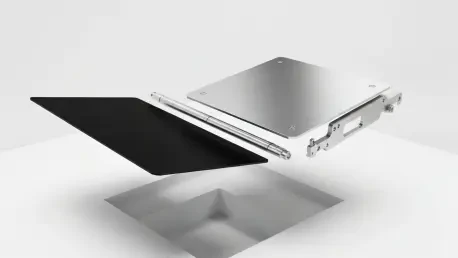
What we saw at CES was more than an incremental improvement; it was a fundamental shift. For years, the industry has focused on clever hinge designs to create a wider, gentler fold, which only minimized the crease. This new approach tackles the problem at the screen level itself. The secret sauce appears to be a metal plate integrated into the display stack. This plate acts as the missing piece of the puzzle, evenly distributing the immense pressure of folding across a much larger surface area. The result is stunning. There’s no visible line, even when you look at it from an angle. This isn’t just about hiding a crease; it’s about preventing one from forming in the first place, potentially even after repeated use. It’s a huge leap from the already durable display on the Galaxy Z Fold 7.
Considering Apple’s historic insistence on a flawless user experience, how might its specific requirements have driven Samsung’s R&D for a creaseless screen? What are the strategic implications for Samsung if it uses this Apple-centric technology in its own Galaxy Z Fold 8 first?
I have a nagging feeling that Apple’s shadow looms large over this innovation. It’s no secret why Apple has waited this long to enter the foldable market; they simply wouldn’t accept a product with a visible crease, as it detracts from their vision of a seamless user experience. This insistence likely drove Samsung, their primary display supplier, to pour resources into solving this specific problem. Now, the strategic implications are fascinating. If Samsung deploys this technology in the Galaxy Z Fold 8, which could launch a month or two before any foldable iPhone, it’s a brilliant preemptive strike. They get to claim the “world’s first” title for a truly creaseless foldable, positioning themselves as the primary innovator, not just the supplier for Apple’s vision.
If Samsung does launch a crease-free phone before Apple, what impact will that have on market dynamics and consumer perception? In your view, how crucial is being “first to market” with this specific feature for establishing long-term dominance in the foldable category?
Being first is incredibly important for Samsung right now. For the first time in generations, they’ve actually increased sales expectations for their foldables after the excellent performance of the Galaxy Z Fold 7 and Z Flip 7. They are more invested in this segment than ever. Launching a creaseless device first solidifies their image as the pioneer and leader in this space. However, we can’t discount the Apple effect. Even if Samsung beats them to the punch, a foldable iPhone will probably sell like crazy. But for Samsung, this isn’t just about sales figures; it’s about perception. It allows them to control the narrative and demonstrate that they are setting the technological pace, which is crucial for long-term brand strength in a category they built.
The prototype display was also noted to have under-display cameras. How does integrating this feature alongside a novel folding mechanism complicate the manufacturing process, and what does it signal about the future design priorities for flagship foldable devices?
Combining these two technologies is an immense engineering challenge. You’re layering complexity upon complexity. You have to perfect a folding mechanism with a new internal pressure plate while simultaneously ensuring a portion of that same delicate, flexible display can become transparent enough for a camera to see through it clearly. It pushes manufacturing precision to its absolute limits. What this signals is a relentless pursuit of a truly uninterrupted, all-screen device. The goal is to eliminate every compromise: the crease, the notch, the pinhole. It feels like this is precisely the direction Apple is going, moving toward a future that might one day include an all-glass iPhone.
With a potential price point of $2,400, how does a truly crease-free display justify such a premium for a foldable iPhone? Describe the key milestones needed for this technology to become affordable and mainstream for the average consumer in the coming years.
That $2,400 price tag is justified by the delivery of an uncompromised experience. The crease has always been the asterisk on foldable phones—the one thing you had to accept to get the innovative form factor. By eliminating it, a device finally delivers the pure, magical promise of a phone-sized device that unfolds into a flawless, small tablet. That perfection is the premium. For this to become mainstream, two major milestones are needed. First, manufacturing yields for these complex displays must improve dramatically to bring down unit costs. Second, the technology needs to mature and scale. As more companies adopt it and production volumes increase, the costs of the core components, like that novel metal plate, will inevitably fall, eventually making this revolutionary feature a standard expectation rather than a luxury.
What is your forecast for the foldable phone market over the next five years, especially concerning the race between Apple and Samsung for technological supremacy?
The next five years will be defined by this escalating rivalry. Apple’s entry will supercharge the market, validating the entire category for millions of new customers. This will force Samsung, which could have a head start with a creaseless Galaxy Z Fold 8, to innovate at an even more aggressive pace. We’ll see this crease-free technology rapidly become the industry standard, and the battle will shift to the next frontier: software optimization, new form factors like the rumored Galaxy Z Wide Fold, and deeper ecosystem integration. The race won’t just be about who builds the best folding screen, but who creates the most intuitive and powerful experience for a device that is both a phone and a tablet. Samsung currently leads in hardware, but Apple’s strength is its seamless software ecosystem. It’s going to be a thrilling technological clash to watch.