
Huawei has fundamentally altered the expectations for mid-range mobile endurance by introducing the Enjoy 90 series, a lineup that prioritizes extreme battery longevity without sacrificing modern performance. This strategic expansion into the Chinese market demonstrates a clear intent to dominate the value-driven segment by offering hardware that feels significantly more premium than its price suggests. The series consists of three distinct tiers: the flagship Enjoy 90 Pro Max, the mid-tier Enjoy 90 Plus, and the entry-level Enjoy 90, each serving a specific niche in the consumer ecosystem.
At the heart of this release is the integration of high-capacity silicon-carbon (Si-C) battery technology, a move that places Huawei ahead of many competitors still relying on traditional lithium-ion solutions. By pairing these massive power cells with the proprietary HarmonyOS 6.0 and in-house Kirin chipsets, the company has created a closed-loop system optimized for efficiency. These devices are specifically designed to provide a seamless, long-lasting experience for users who require their phones to last through multiple days of intensive use.
Key Hardware and Performance Differences
Display Technology and Visual Quality
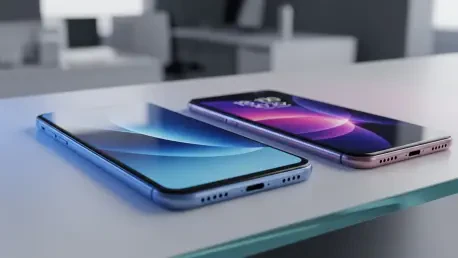
The most immediate distinction between these two models lies in the visual experience provided by their respective screens. The Enjoy 90 Pro Max boasts a sprawling 6.84-inch OLED panel that supports a 120Hz refresh rate, ensuring that animations and scrolling remain buttery smooth. In contrast, the Enjoy 90 Plus utilizes a slightly smaller 6.67-inch LCD, which, while capable, lacks the deep blacks and vibrant contrast ratios inherent to OLED technology.
Choosing between these displays involves weighing the importance of color accuracy and motion fluidity against cost. The Pro Max’s OLED screen is not just larger; it offers a more immersive environment for media consumption and gaming. Meanwhile, the Plus model’s LCD is a more budget-conscious choice that still provides reliable clarity but misses out on the premium “pop” that defines the flagship’s visual output.
Battery Capacity and Power Management
Power is where the Pro Max truly pulls away from the competition, featuring an industry-leading 8,500 mAh Si-C battery. This massive unit allows for an incredible 28 hours of continuous video streaming on a single charge, supported by 40W wired charging to minimize downtime. The Enjoy 90 Plus is no slouch, carrying a 6,620 mAh battery that outperforms most standard flagships, yet it remains a step below its more powerful sibling in terms of raw capacity.
Both smartphones utilize the Kirin 8000 7nm architecture, which plays a crucial role in managing how this energy is spent. This shared chipset ensures that even with different battery sizes, the software remains responsive and power-efficient. However, the sheer volume of the Pro Max’s cell means it is inherently better suited for users who are frequently away from a power outlet for extended periods.
Camera Systems and Storage Configurations
Photographic capabilities also differentiate these two variants, as the Pro Max incorporates a 50MP main sensor featuring RYYB technology. This specific pixel arrangement is designed to capture more light than standard sensors, resulting in better performance in dim environments. The Enjoy 90 Plus maintains a solid camera setup but lacks some of the advanced light-gathering optimizations found in the flagship, making it a more traditional choice for daytime photography.
Storage options further separate the devices, with the Pro Max offering a top-end 512GB configuration for power users with massive libraries of data. The financial gap between them is surprisingly narrow; the Pro Max starts at CNY 1,699, while the Enjoy 90 Plus enters the market at CNY 1,499. This CNY 200 difference presents a compelling argument for the Pro Max, given the substantial upgrades in screen and battery tech.
Implementation Challenges and Consumer Considerations
Despite the impressive specs, the inclusion of such massive batteries introduces physical trade-offs, particularly regarding the weight and thickness of the handsets. The silicon-carbon technology helps keep the dimensions manageable, but users may still find these devices heavier than typical mid-range phones. Ergonomics becomes a vital consideration for those who prefer one-handed use or have smaller hands, as the Pro Max is a substantial piece of hardware.
Software also remains a regional factor, as the HarmonyOS 6.0 ecosystem is highly optimized for the Chinese market but may present learning curves for those accustomed to other platforms. While the interface is fluid and deeply integrated with the Kirin hardware, international users must consider how this affects their specific app requirements. Additionally, the choice between the lower-cost LCD of the Plus and the superior OLED of the Pro Max remains a primary point of friction for the value-conscious buyer.
Final Verdict and Buying Recommendations
The primary distinctions between the Enjoy 90 Pro Max and the Enjoy 90 Plus centered on the balance of endurance and display luxury. While both devices shared the same efficient processor, the Pro Max established itself as the superior choice for media enthusiasts who demanded the best possible screen and the longest possible battery life. The Plus model functioned as a highly capable alternative for those who prioritized a lighter feel and a lower price point without falling into the entry-level category.
For power users, the Pro Max was the clear winner, justifying its slightly higher price through a significantly better viewing experience and nearly unparalleled battery stats. Value-driven consumers had to decide if the CNY 200 savings were worth the step down to an LCD and a smaller battery, a choice that often depended on individual daily usage patterns. As the April rollout progressed, these devices provided a blueprint for how future mid-range phones might balance high-end features with accessible pricing.