
The smartwatch market has long been defined by a significant divide, with premium devices offering a universe of customization while more budget-friendly options remain locked into a handful of static, pre-installed displays. This bifurcation has meant that for millions of users, the most prominent digital real estate on their wrist has been largely unchangeable, serving as a constant reminder of the feature gap between price tiers. However, a series of strategic partnerships announced at CES 2026 by the customization platform Facer is set to dismantle this barrier. Through collaborations aimed at both democratizing access and fundamentally evolving what a watch face can do, the company is poised to extend its vast library and introduce advanced interactivity to a massive new segment of the wearable market. These initiatives signal a major shift, promising to transform the smartwatch experience from a one-size-fits-all model to one that is deeply personal, functional, and accessible to a much broader audience of consumers.
Expanding Customization to New Frontiers
A cornerstone of this expansion is a new partnership with LVGL, an open-source graphics library that powers the user interface for millions of embedded devices worldwide. This collaboration is specifically engineered to bring Facer’s extensive catalog, which boasts over 500,000 unique watch faces, to smartwatches operating on a Real-Time Operating System (RTOS). This is a pivotal development for the owners of more affordable smartwatches from major manufacturers like Xiaomi and IDO. Historically, these users have been confined to a very limited selection of manufacturer-provided faces with minimal room for personalization. By integrating with LVGL, Facer effectively bypasses this closed ecosystem, opening the floodgates of customization to devices that were previously excluded. This move represents a significant democratization of personalization in the wearables space, ensuring that a rich, dynamic user experience is no longer the exclusive domain of high-end Wear OS and Apple Watch devices, but a standard feature accessible to millions more.
In a complementary strategic move, Facer has also announced a partnership with Vitalist, the manufacturer responsible for the new line of Reebok smartwatches. This collaboration ensures that the new devices will launch with Facer’s powerful customization capabilities fully integrated into their native VitalOS platform from day one. Unlike the LVGL initiative, which brings customization to a broad range of existing device types, this partnership represents a deeper, more foundational integration with a new hardware entrant. It signifies a growing industry recognition that robust personalization is not an optional add-on but a core component of a competitive smartwatch offering. By embedding its platform at the factory level, Facer establishes a new standard for out-of-the-box user experience, providing consumers with immediate access to its vast library without the need for additional setups or workarounds, and positioning itself as an essential partner for brands looking to make a significant impact in the crowded wearables market.
Redefining the Role of the Watch Face
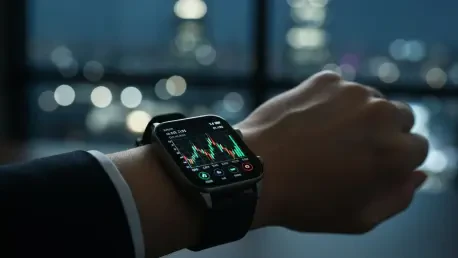
Beyond simply broadening its reach, Facer is fundamentally transforming the purpose of a watch face through a landmark integration with Citizen’s “Riiiver” technology. This partnership propels the watch face beyond its traditional role as a passive display for time, date, and basic health metrics like step counts. With Riiiver’s “Internet of Things” (IoT) capabilities, watch faces on the Facer platform can now become interactive control hubs and conduits for live, dynamic information. This enables users to execute complex external actions directly from their wrist, such as adjusting smart home lighting, changing the thermostat, or triggering a smart coffee maker. Furthermore, it allows for the display of real-time data from a multitude of external services, effectively turning the watch face into a personalized dashboard for everything from live stock market tickers and cryptocurrency prices to up-to-the-minute sports scores and breaking news alerts, making it an active and indispensable tool for daily life.
This evolution from a static decorative element to a dynamic, functional utility addresses a long-standing desire among smartwatch users for more capable and interactive interfaces. For years, the potential of the smartwatch screen has felt underutilized, but the integration of Riiiver unlocks a new dimension of usability that aligns with the broader trend of ambient computing. The watch face is no longer just a background; it is the command center. This shift significantly enhances the value proposition of the smartwatch itself, transforming it from a device for passive notification consumption into an active tool for managing one’s digital and physical environment. For the market, this development signifies a maturation point, bridging the gap between the promise of wearable technology and its practical application. It pushes the entire industry forward, setting a new benchmark for what consumers can and should expect from the primary interface of their most personal computing device.
A New Baseline for Wearable Interaction
The strategic initiatives unveiled by Facer at CES 2026 ultimately established a new paradigm for the smartwatch industry. By simultaneously tackling the challenges of accessibility for budget-friendly devices and the demand for deeper functionality across the board, the company reshaped consumer expectations. The partnerships with LVGL and Vitalist effectively dismantled the walls that had segregated the market, ensuring that a rich, personalized experience was no longer a luxury feature. Concurrently, the integration of Citizen’s Riiiver technology marked a definitive evolution of the watch face itself, transforming it from a passive display into a powerful, interactive hub for controlling the connected world. These announcements were not merely product updates; they represented a foundational shift in how wearables were designed to integrate into a user’s life, creating a new baseline for interactivity and personalization that would influence device development for years to come.