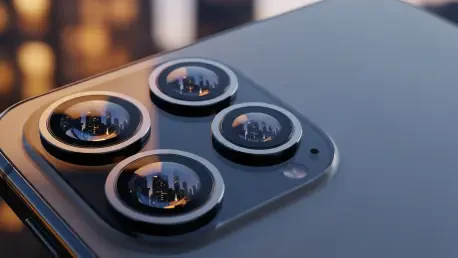

The rapid pace of mobile innovation has reached a crossroads where raw zoom numbers no longer dictate the hierarchy of flagship excellence, forcing a pivot toward optical purity and sophisticated light management. Samsung’s latest flagship, the Galaxy S26 Ultra, serves as the primary evidence of this shift, moving away from the “Space Zoom” marketing of previous years to focus on a more nuanced imaging architecture. This review investigates how this transition from periscope prisms to traditional optics redefines what a professional-grade mobile camera can achieve.
Evolution of Samsung’s Imaging Architecture
Modern smartphone photography is moving beyond the gimmick of extreme magnification, focusing instead on the reliability of every captured pixel. The Galaxy S26 Ultra represents a departure from the experimental phase of ultra-long-range hardware, signaling a return to foundational principles that prioritize color accuracy and dynamic range. By rethinking the internal layout of the camera module, Samsung has managed to create a system that behaves more like a standalone mirrorless camera than a digital telescope.
This structural overhaul is not merely a minor update but a strategic realignment. In previous models, the emphasis was on capturing distant subjects regardless of the visual artifacts produced. However, the current landscape demands high-fidelity output that remains consistent across various lighting conditions. This evolution suggests that the industry is entering a phase of maturity where refined quality takes precedence over the sheer distance of the reach.
Core Hardware and Optical Innovations
The 200MP Main Sensor and Variable Aperture
At the heart of the system lies a massive 200MP sensor, now enhanced by a significantly wider f/1.4 aperture that captures a substantial amount of additional light. This hardware combination allows for deep pixel binning, which merges data from multiple pixels to reduce noise and improve clarity in challenging environments. The wider opening creates a natural shallow depth of field, allowing for a physical blur that software-based portrait modes often struggle to replicate accurately.
Beyond resolution, the integration of this sensor into the broader ecosystem means that high-detail shots are now more manageable. Users can crop into a photo without losing the texture and sharpness necessary for large-format prints or high-resolution displays. This capability provides a level of versatility that bridges the gap between casual snapshots and professional-grade photography, ensuring that the primary lens remains the most reliable tool for most shooting scenarios.
The Transition to Traditional 5x Telephoto Optics
In a surprising move, Samsung replaced the periscope prism—a staple of their zoom technology—with a parallel lens stack in the 5x module. This technical shift eliminates the light-bending mirror, allowing for a wider f/2.9 aperture. While periscope designs are excellent for saving space, they often suffer from light loss and “boxy” bokeh. The new traditional design produces circular, aesthetically pleasing highlights that many photographers find more natural and appealing for portraiture.
However, this engineering choice comes with a notable physical trade-off. Because the lenses are stacked vertically without a prism, the physical distance between elements is limited by the phone’s thickness. This results in a much cleaner image with fewer internal reflections, yet it sacrifices some of the extreme zoom capabilities that enthusiasts had grown accustomed to. It is a bold wager that users will value the quality of a 5x shot over the reach of a 100x digital zoom.
Emerging Trends in Computational Photography and Video
The rise of high-motion social content has pushed Samsung to introduce the “Horizon Lock” video mode, which uses a combination of hardware stabilization and AI cropping to keep the frame perfectly level regardless of the device’s orientation. This innovation reflects a broader trend toward professionalizing mobile videography. By offloading complex stabilization tasks to the onboard processor, the device enables creators to film cinematic sequences without the need for external gimbals or heavy stabilization gear.
Moreover, the underlying AI-driven processing has become less intrusive, moving away from the “over-sharpened” look that plagued earlier iterations. Instead, the computational engine focuses on intelligent scene optimization, subtly adjusting shadows and highlights to preserve the natural atmosphere of a shot. This indicates a shift in consumer behavior where users expect the phone to act as an invisible editor, enhancing the reality of the scene rather than rewriting it with aggressive filters.
Real-World Applications and Professional Use Cases
In the field, the Galaxy S26 Ultra has found a specialized niche in mobile journalism and event coverage, where lighting is often unpredictable. The improved light sensitivity of the 5x telephoto lens allows journalists to capture clear, usable footage from the back of a room without relying on grainy digital zoom. This utility extends to the social media sector, where the rounder bokeh and natural skin tones produced by the new optical stack make it a formidable tool for high-end portraiture.
Furthermore, the device’s ability to maintain high frame rates while recording in 4K across all lenses provides a seamless experience for multi-camera setups. This consistency is vital for professionals who need to match footage from different focal lengths in post-production. Whether it is a quick interview on a bustling street or a detailed product shot in a studio, the camera system provides a level of dependability that was previously reserved for dedicated imaging hardware.
Technical Hurdles and Functional Trade-offs
The pursuit of better optical quality has introduced a significant limitation: a doubled minimum focus distance. The S26 Ultra now requires a distance of 52cm to lock focus on its 5x camera, compared to the 26cm of its predecessor. This change effectively eliminates the possibility of “tele-macro” shots, where one could get close to a subject while maintaining a zoomed-in perspective. For users who enjoyed photographing small details like flowers or insects, this physical constraint represents a genuine regression.
Addressing these hardware limitations requires a heavy reliance on software patches and “hybrid” focus modes. While Samsung has attempted to bridge this gap by automatically switching to the ultra-wide lens for close-ups, the perspective shift and change in sensor quality can be jarring for the user. These technical hurdles highlight the ongoing struggle between improving light intake and maintaining the versatile ergonomics that define modern smartphones.
Future Outlook for Mobile Optical Systems
Looking ahead, the shift away from periscope technology might signal a broader industry trend toward larger primary sensors and shorter, high-quality telephoto lenses. As sensor technology improves, the need for complex prisms may diminish, replaced by high-resolution sensors that can achieve “lossless” digital crops. This could lead to a future where smartphone designs are no longer dictated by the need to house long, horizontal camera assemblies, allowing for more creative form factors and larger batteries.
The long-term impact of these choices will likely reshape the premium smartphone sector, forcing competitors to choose between optical zoom distance and sensor size. If Samsung’s bet on quality over distance pays off, we may see a decline in the “zoom wars” and a renewed focus on color science and low-light performance. This transition marks the beginning of an era where the smartphone camera is judged by its ability to replicate the human eye rather than its ability to see through walls.
Final Assessment of the Galaxy S26 Ultra Camera
The transition away from periscope technology proved to be a calculated gamble that favored artistic rendering and low-light performance over sheer zoom versatility. While the increased focus distance was a notable setback for macro enthusiasts, the improvement in bokeh quality and light gathering provided a more professional aesthetic. Samsung successfully reoriented its flagship toward a more mature audience that prioritized image integrity. Ultimately, the camera system established a new baseline for how mobile devices balance physical hardware constraints with the growing demands of high-end computational imaging.