
The dream of capturing cinematic, perfectly leveled footage without carrying a bulky motorized stabilizer has finally moved from the realm of professional sets into the palm of a hand. While previous flagship smartphones have offered various forms of electronic smoothing, the Samsung Galaxy S26 Ultra introduces a level of poise that fundamentally changes how one interacts with a mobile camera during high-intensity movement. This device represents a shift where hardware constraints are no longer the primary bottleneck for quality, as intelligent software now performs the heavy lifting once reserved for dedicated gimbal systems.
The Evolution of Mobile Motion Control
Mobile stabilization has traveled a long road from the primitive optical image stabilization (OIS) systems that merely compensated for a shaky hand. In the past, OIS relied on physical springs and magnets to shift the lens, but this mechanical approach had strict physical limits that could not handle the violent rotations of modern action filming. The Galaxy S26 Ultra marks a transition toward an AI-driven paradigm where the physical lens movement is just the first step in a complex processing chain.
This evolution matters because it democratizes high-end production values for creators who lack a support crew. By integrating advanced software processing that anticipates movement, the device effectively bridges the gap between consumer electronics and professional-grade cinema gear. For the modern journalist or vlogger, this means the difference between a nauseating handheld clip and a usable, steady broadcast.
Defining the Digital Gimbal Experience
Super Steady with 360-Degree Horizontal Lock
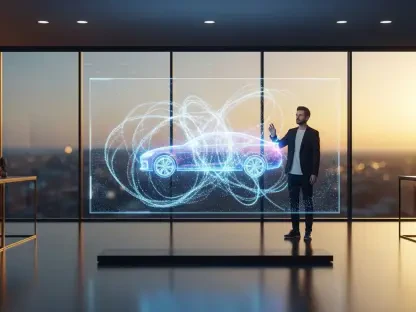
The standout achievement of this generation is the Super Steady mode featuring a 360-degree Horizontal Lock. This feature allows a user to physically rotate the phone a full circle while the video feed remains perfectly level. It is a startling experience to watch the device turn upside down in one’s hand while the screen displays a rock-steady horizon that refuses to budge.
This capability is powered by a sophisticated fusion of gyroscope data and real-time pixel remapping. As the sensors detect a change in orientation, the software instantly realigns the frame to counteract the tilt. Unlike its predecessors, which would eventually “give up” and let the horizon slip during extreme angles, the S26 Ultra maintains its composure through the entire rotation, providing a level of reliability that mimics a three-axis mechanical gimbal.
Computational Processing and Sensor Cropping
Achieving such extreme stability requires a significant “buffer” area, which is where the 200MP high-resolution sensor becomes indispensable. The phone captures a much wider field of view than what is finally shown, using the extra pixels as a digital canvas to shift the frame around. This ensures that even during aggressive movements, the software has enough visual data to keep the center of the action in focus without showing the edges of the sensor.
The onboard chipset plays a critical role here, managing massive amounts of data with negligible latency. Processing 4K video at high frame rates while simultaneously applying complex stabilization algorithms is a monumental task that would have throttled older hardware. On the S26 Ultra, this happens in real-time, allowing creators to see the stabilized result on the viewfinder as they shoot, rather than waiting for a post-processing render.
Shifting Trends in Smartphone Videography
The industry is witnessing a clear departure from the era of bulky external stabilizers. Just a few years ago, a serious mobile filmmaker would never leave the house without a motorized grip; however, the S26 Ultra suggests those days are numbered. The trend is moving toward “invisible” technology—tools that work within the existing form factor of the phone rather than requiring additional peripherals that scream “production in progress.”
Consumer behavior is following suit, as users now expect cinematic results from spontaneous, handheld captures. Whether it is a parent running alongside a child or a traveler documenting a bumpy jeep ride, the expectation is that the hardware will “fix” the environment. This shift places an immense pressure on manufacturers to prioritize computational photography over traditional optics, as the software is now the primary differentiator in a crowded market.
Real-World Implementations for Creators
In practical scenarios, such as action sports filming or high-intensity vlogging, the Horizontal Lock provides a competitive advantage that traditional cameras struggle to match. A mountain biker can mount the phone to a chest rig and navigate sharp turns, yet the resulting footage looks as though the camera were floating on a rail. This level of immersion was previously impossible without expensive, specialized mounting hardware.
Mobile journalists also benefit significantly from this tech, as it allows them to capture stable “run-and-gun” footage in chaotic environments. When filming in a crowd or during a fast-paced event, the ability to tilt the phone to get a better grip without ruining the shot is invaluable. The software ensures that the narrative remains the focus, rather than the physical limitations of the person holding the camera.
Technical Constraints and Physical Hurdles
Despite the impressive progress, the technology is not without its compromises. Sharp observers will notice a slight “micro-bouncing” effect during heavy footfalls, where the digital smoothing cannot quite mask the vertical impact of a human stride. Additionally, because the system relies on cropping into a high-resolution sensor, there is an inherent loss of raw detail compared to shooting in a non-stabilized, full-frame mode.
Low-light environments remain the ultimate test for these algorithms. In dark settings, the shorter shutter speeds required for sharp stabilization often lead to “motion blur artifacts,” where the image appears to smear or jitter unnaturally. While the AI attempts to clean these frames, the physics of light capture still presents a challenge that even the most advanced software cannot entirely overcome without introducing noise.
The Horizon of AI-Enhanced Stabilization
The trajectory of this technology points toward predictive stabilization. Instead of just reacting to movement that has already occurred, future iterations will likely use AI to analyze the scene and predict the photographer’s intent. If the system understands that a user is trying to perform a smooth “pan” versus an accidental “jerk,” it can pre-emptively smooth the motion for a more professional aesthetic.
As these predictive algorithms mature, the professional gimbal industry may find itself relegated to a niche market for heavy cinema cameras. The total elimination of jitter and the arrival of “floating” handheld footage will likely become the standard for all flagship devices. This suggests a future where the physical motion of the camera operator becomes irrelevant to the quality of the final output.
Final Assessment of the Galaxy S26 Ultra
The Galaxy S26 Ultra set a new benchmark for mobile videography by successfully integrating a digital gimbal that defied traditional expectations. Its Horizontal Lock feature proved to be a shocking leap forward, offering a level of stability that its closest competitors, including the iPhone 17 Pro Max, could not quite replicate during extreme rotations. While minor artifacts remained in challenging conditions, the overall effectiveness of the system transformed the device into a formidable tool for professional creators. This advancement signaled that the future of cinematography lies in the mastery of computational processing rather than the size of the lens. Samsung’s implementation established a clear trajectory for the industry, suggesting that the next phase of innovation will focus on perfecting predictive AI to eliminate the last vestiges of handheld instability.