
The landscape of global technology underwent a seismic shift as Xiaomi evolved from a mobile-first manufacturer into a diversified industrial titan capable of dominating both the digital and physical worlds. While competitors in the Silicon Valley and Europe struggled to reconcile the high-speed cycles of consumer electronics with the capital-intensive rigors of automotive engineering, this firm achieved the unthinkable. By successfully launching a profitable electric vehicle line while simultaneously elevating its smartphone brand to premium status, the company provided a masterclass in strategic expansion. This transition highlights a unique ability to leverage a massive existing user base to conquer entirely new market segments.
Foundations of the “Human x Car x Home” Ecosystem
To understand the current dominance of the brand, one must look back at the foundational “Human x Car x Home” strategy. Long before the first vehicle rolled off the assembly line, the company spent years building a robust Internet of Things platform that connected millions of household devices. This interconnected web of technology created a level of brand stickiness that few other manufacturers could replicate. By the time the automotive division launched, the software infrastructure was already mature, allowing the car to function not as a standalone machine, but as a sophisticated extension of the user’s digital life.
This historical focus on integration provided a significant advantage over traditional automakers who often struggle with software-defined vehicle architecture. The company utilized its existing expertise in user interface design and cloud services to ensure that the transition from a handheld screen to a dashboard display was entirely seamless. Consequently, the massive investment in R&D over the past few years has finally converged, creating a unified ecosystem where every product informs and enhances the performance of the others.
Deconstructing the 2025 Performance Surge
The Strategic Shift Toward Premium Smartphone Dominance
The smartphone division demonstrated incredible resilience last year, shipping over 165 million units and maintaining a firm grip on a top-three global position. However, the real story lies in the successful pivot toward the high-end market, where devices priced above CNY 3,000 now account for over 27% of total sales. This shift has fundamentally altered the company’s financial health, moving away from low-margin volume toward a more sustainable, profit-driven model. By focusing on professional-grade camera systems and proprietary processing chips, the brand has effectively challenged the long-standing duopoly in the premium segment.
Hyper-Growth and Profitability in the EV Sector
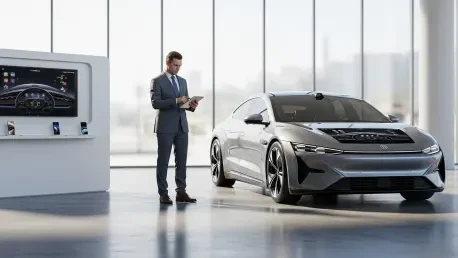
The most transformative development was the explosive financial success of the automotive arm, which saw revenue surpass the CNY 100 billion milestone. Achieving profitability in the EV sector is a feat that has eluded most startups, yet this division recorded positive income supported by the delivery of over 411,000 vehicles. The SU7 sedan and YU7 SUV became instant benchmarks in mainland China, outperforming established rivals through a combination of superior battery range and deep software integration. This rapid scaling proved that the company’s supply chain agility could be successfully transplanted into the complex world of heavy manufacturing.
Leveraging Global Reach and Ecosystem Synergy
Beyond hardware, the company’s influence is anchored by a digital footprint of over 750 million monthly active users, fueling a thriving internet services segment. Geographically, the brand has fortified its presence in emerging markets, ranking as a top-two player in Latin America and Southeast Asia while maintaining a strong foothold in Europe and Africa. This global diversification acted as a buffer against regional economic shifts, providing the steady cash flow necessary to fund ambitious innovations in autonomous driving and wearable technology.
The Road Ahead: Navigating Future Challenges and Innovation
Looking forward, the company shows no signs of slowing down, with an ambitious delivery target of 550,000 vehicles for the current cycle. The industry expects to see a deeper integration of artificial intelligence across all device categories, which will likely enhance the predictive capabilities of smart home systems and the safety features of the automotive fleet. However, the path is not without obstacles, as evolving international trade regulations and increasing competition from legacy automakers will test the firm’s resilience. Success will depend on maintaining an aggressive R&D pace while managing the complexities of a truly global supply chain.
Lessons in Agility: Strategic Takeaways for the Global Market
The success of this dual-industry strategy offers vital insights for modern enterprises looking to diversify. First, the importance of ecosystem synergy cannot be overstated; by creating a unified user experience, companies can build immense customer loyalty that transcends individual product categories. Second, the move into the premium market highlights the necessity of constant innovation to elevate brand perception and margin. For businesses seeking to emulate this path, the primary takeaway was the value of operational efficiency—pivoting a massive supply chain from phones to cars in record time required unprecedented internal coordination.
Conclusion: A New Era of Integrated Technology
The performance observed last year solidified the reality that the boundaries between consumer electronics and the automotive industry have permanently blurred. By mastering the art of high-end mobile devices and profitable electric vehicles simultaneously, the firm redefined the requirements for technology leadership in the modern age. The strategic expansion into the automotive sector provided a blueprint for how legacy tech companies can find new growth engines in saturated markets. Ultimately, the transition demonstrated that a well-executed software ecosystem could serve as the ultimate competitive advantage in an increasingly connected world.