
Oscar Vail stands at the cutting edge of mobile technology, possessing an uncanny ability to dissect the complex relationship between industrial design and real-world performance. With a background rooted in robotics and open-source hardware, he approaches consumer electronics not just as gadgets, but as intricate systems where every millimeter of aluminum and every drop of thermal paste matters. In this discussion, he explores the structural evolution of the latest flagship smartphone, examining how shifts in material choices and internal cooling layouts influence the longevity of the devices we carry every day.
The shift from titanium back to an aluminum frame, paired with more rounded corners, alters the device’s structure. How do these material changes impact energy absorption during a corner drop, and what trade-offs were likely made regarding weight versus structural rigidity?
The return to an aluminum frame represents a pivot toward a material that is naturally more ductile than the rigid titanium used in previous iterations. When a device hits the pavement, aluminum tends to deform and “give” slightly, which can actually act as a crumple zone to soak up kinetic energy before it reaches the fragile internal glass layers. However, this means the frame will show battle scars much more easily, resulting in visible scrapes and deep gouges that titanium might have resisted. By rounding the corners, the designers have ensured that impact forces are distributed across a wider surface area rather than being concentrated at a single sharp point. It is a classic engineering trade-off where you sacrifice the pristine, unyielding feel of premium metal to gain a lighter chassis that behaves more predictably under the violent stress of a fall.
While the display glass remains robust, the camera island is now more exposed, leading to shattered lens glass in stress tests. Why is the 5x telephoto lens particularly vulnerable, and how should designers balance aesthetic exposure with protecting specialized glass components?
The vulnerability of the 5x telephoto lens is a direct consequence of its physical prominence; it sits like a target on the back of the device, just waiting for an unlucky angle of impact. In the recent drop tests, we saw the glass in front of this specific lens crack on the second fall and completely shatter by the third, which is a heartbreaking sight for any tech enthusiast. This happens because the “island” design leaves the edges of the lens glass proud of the protective housing, meaning the glass itself takes the full brunt of the concrete’s grit and force. Designers are constantly walking a tightrope between making the camera look like a high-end piece of optical equipment and burying it deep enough in the chassis to keep it safe. To truly protect these specialized components, we might need to see a return to more recessed designs or the use of raised protective rings that can take a hit without passing the shock directly to the lens.
Internal inspections show increased thermal paste around the motherboard and a reshaped vapor chamber. What specific cooling advantages does this new layout offer for high-performance tasks, and how does the altered chamber shape improve heat dissipation compared to older designs?
Seeing the extra globs of thermal paste around the back of the motherboard is a clear signal that the hardware is being pushed to its thermal limits and needs every bit of help to stay cool. This additional interface material bridges the gap between the hot silicon and the metal shielding, ensuring that heat doesn’t get trapped in a pocket of stagnant air. While the vapor chamber maintains its overall size from the previous generation, the slightly altered shape is designed to optimize the internal flow of the working fluid as it evaporates and condenses. This refined geometry allows for a more efficient “wicking” action, pulling heat away from the processor more rapidly during sustained gaming sessions or 8K video recording. It is a game of marginal gains where even a small tweak in shape can prevent the processor from throttling down and ruining the user experience.
Maintaining a 9/10 repairability score is quite an achievement for a modern flagship. Which specific internal components are now the easiest to replace, and how does the simplified disassembly process benefit independent technicians looking to extend the life of the hardware?
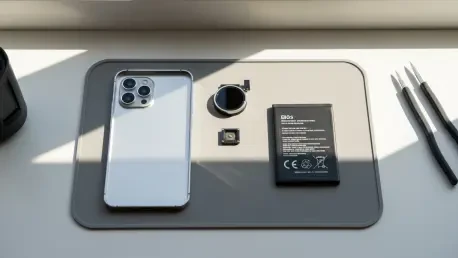
A 9/10 repairability score is a massive win for sustainability, largely because the disassembly process has remained remarkably consistent and logical compared to the nightmare of glued-together devices we saw a few years ago. The battery and the screen remain the most straightforward components to service, which is vital since those are the two parts most likely to fail over a three-to-five-year period. By keeping the internal architecture nearly identical to the previous model, the manufacturer allows independent technicians to use familiar tools and techniques without the fear of hidden ribbon cables or proprietary traps. This predictability means a technician can confidently crack open the device to replace a charging port or a speaker, effectively doubling the lifespan of the hardware for a fraction of the cost of a new unit. It turns the device from a disposable commodity into a piece of equipment that can be maintained and cherished.
Even with frame scrapes and shattered lens glass, the device remains fully functional after significant impact. In the world of premium hardware, where is the line between acceptable cosmetic damage and total device failure, and what should buyers prioritize for long-term resilience?
In the high-stakes world of premium electronics, the line of failure is drawn the moment the display loses touch sensitivity or the motherboard’s integrity is compromised by a hairline fracture. It is a testament to modern engineering that a phone can look like it was dragged behind a truck—with a shattered telephoto lens and a mangled aluminum rim—yet still snap photos and make calls perfectly. For buyers, long-term resilience is less about keeping the frame scratch-free and more about the quality of the glass protection, such as the Gorilla Armor and Victus 2 used here. You should prioritize a device that can survive the “catastrophic” drop without the screen going black, even if you have to live with a few cosmetic dings on the corners. True durability is found in the ability to function through the chaos of daily life, where a cracked lens is a minor inconvenience compared to a dead motherboard.
What is your forecast for the future durability and design of the Galaxy S series?
I anticipate that we will see a shift toward even more modular internal designs that prioritize heat management as AI-driven processing demands continue to skyrocket. We will likely see the vapor chamber evolve into an even more integrated part of the frame, perhaps utilizing new composite materials that offer the weight savings of aluminum with the dent resistance of titanium. The camera housing will remain the biggest challenge; I suspect we may see a move toward “liquid lens” technology or sapphire covers to prevent the kind of shattering we witnessed in these recent tests. Ultimately, the future of the series lies in “invisible” ruggedness—phones that look like delicate pieces of art but possess the structural reinforced backbone of a professional tool.