
The long-standing assumption that a flagship smartphone must be a dense, heavy brick of glass and silicon has been shattered by a hardware lineup that forces consumers to choose between raw power and radical portability. As mobile technology enters a phase where incremental speed increases no longer define the user experience, the distinction between the iPhone 17 Pro and the ultra-slim iPhone Air marks the most significant architectural fork in a decade. This strategic bifurcation suggests that the premium market is no longer a monolithic entity seeking the highest specifications, but rather a divided landscape where aesthetic elegance is increasingly traded against hardware depth.
Introduction to the iPhone 17 Hardware Evolution
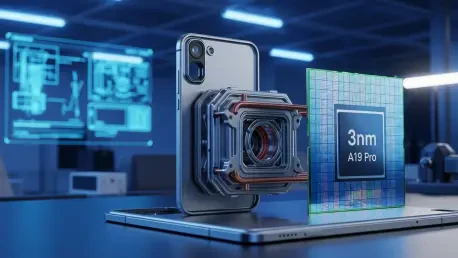
The arrival of the A19 Pro silicon has facilitated a fundamental restructuring of what constitutes a “high-end” device. Built on a refined 3nm process, this chipset provides the computational overhead necessary to drive complex AI tasks while allowing engineers to experiment with radically different thermal and physical footprints. In the current market, the tension lies between the “Pro” philosophy—which packs as much hardware as possible into a traditional frame—and the “Air” philosophy, which treats the smartphone as a luxury lifestyle object. This shift reflects a maturing industry where the novelty of a faster processor has been replaced by the desire for a device that feels fundamentally different in the hand.
Titanium and ultra-thin engineering have become the primary battlegrounds for this new era. While the Pro model utilizes these materials to maintain structural integrity amidst a massive array of internal sensors, the Air model uses them to push the boundaries of miniaturization. This is not merely a cosmetic change; it represents a redirection of research and development toward weightless ergonomics. In an environment where users spend five to seven hours a day holding their devices, the reduction of physical fatigue has become as valuable a feature as a high-resolution camera or a long-lasting battery.
Technical Architecture and Core Features
The A19 Pro Chipset and Computational Performance
The internal engine driving these devices is the A19 Pro, a marvel of semiconductor design that achieves peak efficiency through a 3nm architecture. However, the implementation of this chip varies significantly between the two models to accommodate their specific physical constraints. The Pro model utilizes a 6-core GPU configuration, designed to handle the sustained thermal load of professional video editing and high-frame-rate gaming. This is supported by a sophisticated vapor chamber cooling system that prevents the processor from throttling during intense workloads, ensuring that the device remains a reliable tool for power users who demand consistency over long durations.
In contrast, the iPhone Air employs a 5-core GPU version of the same silicon. While this may seem like a minor downgrade on paper, it is a deliberate choice necessitated by the lack of internal volume for advanced cooling. The Air relies on passive heat dissipation through its titanium frame, which is sufficient for high-speed bursts of activity but lacks the stamina of the Pro’s vapor chamber. This distinction highlights the trade-off inherent in modern engineering: you can have peak performance for short intervals in a thin chassis, or sustained excellence in a thicker one. For the average user, the difference is negligible, but for the enthusiast, it defines the limits of the hardware.
Display Innovation and ProMotion Integration
Visual interaction remains the centerpiece of the experience, with both models featuring OLED panels that push the limits of brightness and fluidity. The integration of 120Hz ProMotion technology across the lineup ensures that scrolling and animations remain buttery smooth, regardless of whether the user chooses the power-focused Pro or the design-focused Air. With a peak brightness of 3,000 nits, these displays are engineered to remain legible even under direct midday sun, a feat that requires precise power management to avoid draining the battery or overheating the thin glass laminates.
The divergence appears in the specific dimensions and resolutions of the screens. The Pro model offers a 6.3-inch display, maintaining a familiar footprint for those accustomed to a balanced size. The Air, however, introduces a unique 6.5-inch panel, a size that creates a more immersive viewing experience without the overwhelming bulk of a “Max” device. By using thinner bezels and a more efficient backplane, Apple has managed to offer more screen real estate in a device that weighs significantly less than its predecessors. This makes the Air an ideal choice for content consumption, even if it lacks some of the Pro’s internal hardware.
Divergent Camera Systems: Fusion vs. Triple-Lens Arrays
Photographic capability is perhaps the most visible indicator of the philosophical split between these two devices. The iPhone 17 Pro continues the tradition of the triple-lens array, featuring a 48MP wide, ultra-wide, and telephoto setup. This system is designed for versatility, allowing the user to move from a sprawling landscape to a distant subject with 8x optical-quality zoom. The inclusion of these multiple sensors requires significant physical depth, resulting in the “Camera Plateau” that has become a signature of the Pro line. For those who view their phone primarily as a creative instrument, this depth is a necessary price for professional-grade optics.
The iPhone Air takes a much more minimalist approach, utilizing a single 48MP Fusion lens. Because the 5.64mm chassis cannot physically accommodate the stacked glass elements required for a telephoto zoom, the Air relies on high-resolution sensor cropping and AI-driven computational photography to simulate different focal lengths. While this single lens performs admirably in standard lighting and portraits, it cannot match the raw optical reach of the Pro. This represents a return to a simpler era of photography, where the focus is on the quality of the primary shot rather than the flexibility of multiple perspectives. It is a bold gamble that many users who only take casual photos will prefer a thinner phone over extra lenses they rarely use.
Emerging Trends in Mobile Industrial Design
The shift toward “weightless” ergonomics is the defining trend of the current mobile landscape. As the internal components of smartphones have become standardized, the physical frame has become the primary site of innovation. The move toward ultra-thin titanium alloys is not just about aesthetics; it is about changing the relationship between the user and the device. When a phone drops below 170 grams, it ceases to be a heavy object in the pocket and becomes a seamless extension of the user’s attire. This favors a segment of consumers who are increasingly fatigued by the “spec-war” and are looking for hardware that complements their lifestyle.
Furthermore, we are seeing a transition where traditional frames are being replaced by mono-body constructions that prioritize thinness over modular repairability. The internal layout of the Air model is a puzzle of tightly packed flex cables and custom-shaped battery cells, reflecting a move toward devices that are essentially “solid-state” in their construction. This design language suggests that the future of mobile technology is not in adding more features, but in refining the ones that exist into the smallest possible form factor. The market is slowly pivoting toward a reality where the most expensive and desirable device is not the one that does the most, but the one that feels the best to hold.
Real-World Applications and User Scenarios
In professional environments, the iPhone 17 Pro remains the undisputed king of mobile journalism and high-end content creation. Its ability to record 4K video at 120 fps and its rapid data transfer via USB 3 makes it a viable replacement for traditional camera gear in fast-paced settings. For a social media manager or a field reporter, the extra weight of the Pro is a non-issue compared to the utility of the telephoto lens and the security of a larger battery. In these scenarios, the device is a tool first and a phone second, and the Pro’s hardware-dense architecture justifies its presence.
The iPhone Air, meanwhile, has found its niche in the high-fashion and enterprise sectors where portability is paramount. In an ultra-portable enterprise environment, where executives may spend their day moving between meetings with only a phone, the Air’s slim profile and 6.5-inch screen provide the perfect balance for reviewing documents and managing communication. It functions as a high-fashion accessory that does not ruin the line of a suit or a slim pocket. For users whose photographic needs are limited to high-quality selfies and occasional snapshots, the Air offers all the power they need without any of the bulk they don’t.
Technical Hurdles and Market Obstacles
Despite the impressive engineering of the Air, it faces significant physical limitations that are difficult to overcome with software alone. Battery energy density remains the primary hurdle; a 5.64mm chassis simply cannot hold the same amount of lithium-ion as the thicker Pro. This leads to a measurable gap in endurance, with the Air requiring more frequent charging cycles. Additionally, the thermal limitations of such a slim design mean that during prolonged heavy use, the device must aggressively manage its clock speeds to prevent internal damage. These are the “laws of physics” trade-offs that consumers must accept in exchange for the ultra-thin form factor.
Ongoing development efforts are focusing on mitigating these issues through smarter software optimization and the eventual move toward solid-state batteries. By using AI to predict user behavior and shut down unnecessary background processes, manufacturers are trying to squeeze every possible minute out of smaller cells. However, until a major breakthrough in battery chemistry occurs, the “Air” philosophy will always be at a disadvantage compared to more robust models. The market must decide if the convenience of a slim device outweighs the occasional need to reach for a charger by late afternoon.
Future Outlook and Technological Trajectory
Looking ahead, the trajectory of mobile hardware is clearly moving toward the further miniaturization of optical components. We are likely to see the “Air” philosophy influence the entire ecosystem, as under-display sensors and AI-driven photography reduce the need for physical lens depth. If a single lens can eventually replicate the performance of three through sheer computational power, the “Camera Plateau” of the Pro may eventually disappear, allowing the two lines to merge into a single, impossibly thin flagship. This would mark the final evolution of the smartphone into a transparent sheet of glass and metal.
Furthermore, the long-term impact of AI will likely shift the focus away from local hardware specs and toward cloud-assisted processing. As 5G and subsequent networks become more reliable, the need for a massive GPU inside the phone may diminish, as complex tasks are offloaded to remote servers. This would further enable the thin-and-light design trend, as the thermal and power requirements of the device would drop significantly. The iPhone Air is not just a single product; it is a prototype for the next decade of mobile computing, where the physical presence of the hardware becomes secondary to the services it provides.
Final Assessment and Review Summary
The dual-path strategy employed by the iPhone 17 lineup revealed a fundamental truth about modern consumer priorities: technical supremacy is no longer the only path to the premium tier. The iPhone 17 Pro stood as a utilitarian masterpiece, delivering a surplus of power, photographic flexibility, and battery life that ensured it remained the default choice for the professional and the enthusiast. It functioned as the ultimate insurance policy against technological limitations, providing a tool that could handle any task thrown at it. Its success was measured in its reliability and the depth of its feature set, solidifying its place as the peak of traditional smartphone design.
In contrast, the iPhone Air succeeded by challenging the very definition of a flagship. It proved that a significant portion of the market was willing to trade specific hardware metrics for a superior physical experience. By prioritizing aesthetics, weight, and thinness, it carved out a new luxury niche that resonated with users who valued how a device integrated into their daily lives over how many lenses it possessed. The Air was not a compromise, but a focused reimagining of the smartphone.
Moving forward, the industry must prepare for a future where the “lifestyle” segment of hardware carries as much weight as the “professional” segment. Developers and manufacturers should focus on optimizing software for lower thermal envelopes and smaller battery capacities, as the trend toward miniaturization shows no signs of slowing down. For the consumer, the choice became a matter of identity: whether to carry a heavy-duty tool or a lightweight companion. This bifurcation changed the trajectory of the mobile hardware industry, ensuring that the next generation of devices will be judged not just by what they can do, but by how effortlessly they can be carried.