



Oscar Vail is a seasoned technology expert who has spent over a decade analyzing the intersection of hardware engineering and user experience. With a background that spans quantum computing and robotics, he brings a unique perspective to the wearable market, often identifying trends long before they hit the mainstream. Recently, his focus has shifted toward the Google ecosystem and the evolving philosophy of “passive” technology. In this conversation, we explore the implications of Google’s unreleased, screenless Fitbit—a device recently spotted on the wrist of NBA legend Stephen Curry—and what this minimalist shift means for the future of digital health and biometric tracking.
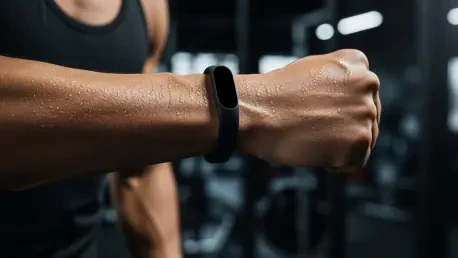
Stephen Curry has been seen wearing a screenless, loop-style tracker that is thinner than current market competitors. How does removing the display impact user psychology during high-intensity workouts, and what are the technical advantages of moving toward a minimalist, passive tracking form factor?
Removing the screen is a deliberate move to shift the user’s focus away from “glanceable” metrics and back toward the physical sensation of the workout itself. When an athlete isn’t constantly checking their wrist for a heart rate number, they enter a state of flow that is often interrupted by the glowing notifications of a standard smartwatch. Technically, this thinner, loop-style design allows for a much more flush fit against the skin, which significantly reduces “signal noise” caused by the device shifting during explosive movements. By ditching the display, engineers can also reallocate that physical space to a larger battery or more sophisticated sensor arrays that wouldn’t fit in a traditional chassis. This creates a piece of hardware that feels less like a gadget and more like a second skin, providing a seamless data stream without the psychological burden of a digital interface.
The companion app for this new hardware centralizes data like cardio load and live heart rate because the device lacks an interface. How does this “phone-first” architecture change the way athletes interact with their metrics, and what design challenges arise when building a purely passive wearable?
This architecture forces a transition from real-time distraction to intentional analysis, where the smartphone becomes the primary dashboard for deep dives into cardio load and energy burned. For an athlete, this means they are no longer reacting to a tiny screen mid-set; instead, they review comprehensive data post-session or keep a tablet nearby for live monitoring during a controlled training environment. The biggest design challenge here is ensuring the Bluetooth synchronization is flawless and ultra-low latency, as any lag between the sensor and the phone app makes “live” metrics useless. Developers must also create a highly intuitive mobile UI that can handle the heavy lifting of data visualization that used to be split between two devices. It requires a robust backend capable of processing complex biometrics in the cloud while maintaining a simple, one-touch experience for the user.
Generative AI coaching is becoming a central feature for modern fitness ecosystems, often requiring monthly subscriptions. What specific value must these AI-powered insights provide to justify a recurring fee, and how do you see these digital coaches evolving to offer more than basic data summaries?
To justify a recurring fee, a Gemini-powered coach must move beyond simply telling you that you slept poorly and start explaining why and what specific actions will fix it. If the AI can correlate your 5:00 PM caffeine intake with a 15% drop in deep sleep recorded by the tracker, that is a tangible insight worth paying for. We are looking at an evolution where these digital coaches act as proactive health concierge services, predicting potential burnout before the athlete even feels fatigued. They will eventually integrate with other parts of your digital life, such as your calendar or local weather, to suggest the optimal 45-minute window for a high-intensity workout. The value lies in the transformation of raw numbers into a personalized, actionable roadmap that adapts to your body’s recovery state in real-time.
Many users find full-sized smartwatches too bulky for overnight use, which creates significant gaps in recovery data. In what ways can a lightweight, screenless band improve the long-term accuracy of sleep analysis, and how should hardware teams balance the trade-off between battery life and continuous sensor monitoring?
The lack of bulk is a game-changer for longitudinal health studies because the best data is the data that is actually collected; a watch on the nightstand provides zero insight. A screenless band that is thinner than a WHOOP MG is comfortable enough to be forgotten, ensuring that users maintain 24/7 compliance and provide a complete picture of their resting heart rate and respiratory patterns. To balance battery life, hardware teams often utilize “intelligent sampling,” where the device stays in a low-power state until it detects specific movement or heart rate signatures that trigger high-fidelity tracking. This allows the device to remain small and light without requiring a daily charge, which is the primary friction point for most wearable users. By prioritizing a passive form factor, Google can focus entirely on the quality of the PPG (photoplethysmography) sensors rather than worrying about the power-hungry demands of an OLED display.
Publicly testing unreleased hardware on high-profile athletes suggests a shift in how tech companies handle product reveals. What are the strategic benefits of this “hiding in plain sight” approach, and how does it influence consumer expectations compared to a traditional, secretive product launch?
Placing a device on Stephen Curry’s wrist since January is a masterclass in organic marketing because it associates the product with elite performance long before the public can even buy it. This “hiding in plain sight” strategy builds a sense of mystery and authenticity, as tech enthusiasts and eagle-eyed fans hunt for clues across YouTube appearances and Instagram stories. It lowers the barrier of skepticism; if a four-time NBA champion finds the data reliable enough for his training regimen, the average consumer feels more confident in the device’s accuracy. This approach creates a “slow burn” of excitement that a traditional, one-hour keynote event often struggles to sustain in our fast-paced media cycle. It shifts the conversation from “what is this?” to “when can I get the tool that Steph is using?”, which is a much stronger position for a brand.
What is your forecast for the future of screenless wearables in a market currently dominated by feature-heavy smartwatches?
I believe we are entering an era of “device bifurcation” where users will choose between a primary communication hub on their wrist or a secondary, invisible health layer. The screenless wearable market will explode as a complementary category for people who still love traditional mechanical watches but want the advanced biometrics that Google and Fitbit offer. We will see these trackers become even more specialized, perhaps moving to different parts of the body like the bicep or even integrated into smart clothing to capture more accurate torso metrics. Within the next three years, the “brain” of the wearable will reside entirely in the cloud, powered by generative AI that treats the physical band as merely a high-fidelity data straw. Ultimately, the most successful wearables will be the ones that provide the most value while demanding the least amount of your visual attention.







