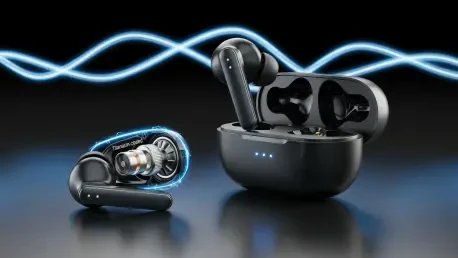

Achieving a high-resolution audio experience without the burden of a premium price tag has long been the white whale for budget-conscious audiophiles navigating the crowded wireless market. The OnePlus Nord Buds 4 Pro enters this landscape as a sophisticated contender, attempting to disrupt the traditional hierarchy that separates entry-level utility from flagship luxury. Positioned as the apex of the Nord audio family, these earbuds aim to provide a bridge for users who demand professional-grade features, such as high-bitrate codecs and advanced noise suppression, without the triple-digit investment typical of industry leaders. This review examines how the device balances technical prowess with the inevitable compromises of its price bracket.
The strategic importance of this release lies in its effort to democratize high-fidelity sound. In the current market, the distinction between “budget” and “premium” has become increasingly blurred, yet many manufacturers still gate-keep essential acoustic technologies. OnePlus, through the Nord Buds 4 Pro, challenges this status quo by integrating a dual-driver-inspired philosophy and robust software customization into a package that remains accessible. It is not merely a replacement for its predecessor but a calculated move to capture a demographic that is technically savvy enough to appreciate LHDC support but practical enough to seek value.
Evolution of the Nord Audio Series
The trajectory of the Nord audio series has been marked by a steady transition from utilitarian simplicity toward more complex engineering. Initially conceived as a basic companion to the company’s mid-range smartphones, the series has evolved into a standalone ecosystem that occasionally rivals the primary flagship line in specific metrics. This evolution reflects a broader trend in consumer electronics where the “Pro” moniker is no longer reserved for the most expensive products but is instead used to signify a specific tier of technical capability and material refinement.
In the broader technological landscape, the Nord Buds 4 Pro represents the maturation of the TWS (True Wireless Stereo) market. As the underlying components like Bluetooth chipsets and dynamic drivers become more efficient and affordable, brands are forced to innovate through tuning and software rather than just raw hardware. The Nord series has moved away from the “crude” bass-heavy profiles of early iterations, opting instead for a more balanced acoustic signature that mirrors the preferences of a global audience. This shift illustrates a growing recognition that even budget users possess a discerning ear for detail and soundstage.
Technical Architecture and Core Capabilities
Acoustic Engineering and Driver Performance
At the heart of the Nord Buds 4 Pro is a sophisticated acoustic arrangement centered on 12mm dynamic drivers. These drivers utilize a specialized titanium coating, a choice that significantly enhances the rigidity of the diaphragm. By increasing stiffness without adding substantial weight, the system can reproduce rapid transients with greater precision, reducing the distortion that often plagues larger drivers in budget earbuds. This engineering choice results in a sound that is powerful yet surprisingly controlled, providing a low-end response that feels impactful rather than overwhelming.
The significance of this driver architecture becomes apparent when analyzing the separation between frequency bands. Unlike many competitors that allow the low-end frequencies to bleed into the mid-range, the Nord Buds 4 Pro maintains a clear distinction. This allows for a mellow timbre in the mid-section, where vocals and acoustic instruments reside, ensuring that the nuances of a recording are preserved. The high frequencies are handled with similar care, avoiding the sibilance or “tinny” quality often found in mass-market tuning. It is a mature implementation that prioritizes clarity and imaging, creating a three-dimensional soundstage that punches well above its weight class.
Active Noise Cancellation and Transparency Logic
OnePlus has implemented an ambitious Active Noise Cancellation (ANC) system capable of mitigating up to 55dB of environmental sound. This is achieved through a multi-microphone array and an intelligent processing algorithm that analyzes external noise in real-time. The system provides users with three manual intensity levels—Low, Moderate, and High—alongside an adaptive “Auto” mode. This flexibility is crucial for urban environments where the noise floor varies dramatically between a quiet office and a bustling subway station.
However, the logic governing the “High” ANC setting reveals some technical nuances that users must navigate. Rather than simply increasing the volume of the anti-noise wave, the algorithm shifts its focus toward higher frequency bands when pushed to its maximum. In moderately noisy environments, this can sometimes create a sensation where the “High” setting feels less effective than the “Moderate” one, as it may let in certain mid-frequency hums while targeting sharp sounds. This behavior suggests that the ANC is optimized for extreme scenarios rather than general daily use. The transparency mode, while functional, aims for utility over naturalism, ensuring that the user remains aware of their surroundings during commutes or brief conversations.
Current Industry Trends and Software Integration
The integration of the HeyMelody application highlights a shift toward cross-platform compatibility and deep user customization. In 2026, the expectation for a “connected” audio experience has moved beyond simple pairing to include granular control over every aspect of the device. The Nord Buds 4 Pro allows for extensive gesture remapping, enabling functions like Spotify Tap, which bypasses the need to interact with a phone screen to initiate playback. This level of software depth is a response to a consumer base that increasingly views their earbuds as a primary interface for their digital lives.
Moreover, the inclusion of features like Game Mode and Sound Space reflects the trend of diversifying the use cases for audio wearables. Game Mode specifically addresses the inherent latency challenges of Bluetooth by optimizing the transmission protocol for near-instantaneous audio-visual synchronization. Meanwhile, the Sound Space feature provides a library of ambient white noise, catering to the growing wellness and productivity markets. These additions transform the earbuds from a passive listening device into a multifunctional tool that supports both entertainment and focus throughout a typical day.
Real-World Applications and Use Cases
In professional settings, the Nord Buds 4 Pro excels as a communication tool. The microphone array utilizes AI-driven noise reduction algorithms to isolate the user’s voice from background chatter or wind noise. This makes the earbuds a reliable choice for remote workers or individuals who frequently conduct calls in public spaces. Even when the system is working hard to filter out a loud environment, the clarity of the speech remains high, avoiding the muffled or robotic quality that often occurs with aggressive software filtering.
For the active user, the IP55 rating provides the necessary protection against dust and sweat, making them suitable for rigorous exercise or outdoor activities. While the case itself lacks this rating, the earbuds are designed to withstand the elements, ensuring longevity for those with an active lifestyle. The ergonomic shape allows for several hours of continuous use without the ear fatigue that often accompanies bulkier flagship models. This combination of durability and comfort positions the device as a versatile daily driver capable of transitioning seamlessly from a morning run to a long afternoon of virtual meetings.
Adoption Challenges and Technical Constraints
Despite the impressive list of specifications, the Nord Buds 4 Pro faces hurdles related to the broader Bluetooth ecosystem and material choices. A primary challenge is the inconsistent performance of high-bitrate codecs like LHDC across different source devices. While the earbuds are technically capable of high-resolution playback, the actual bitrate is often limited by the host smartphone’s Bluetooth implementation. This creates a bottleneck where the user may not experience the full potential of the 1000kbps stream unless they are using specific, high-end hardware, which ironically contradicts the budget-friendly nature of the Nord line.
Furthermore, the physical interface between the earbud and the user presents a minor constraint. The choice of ear tip materials, while functional, lacks the premium feel of medical-grade silicone found in more expensive alternatives. This can occasionally impact the passive seal, which is critical for both bass response and effective noise cancellation. While these issues do not render the device ineffective, they serve as a reminder of the compromises required to hit a specific price point. Ongoing development in standardized audio protocols, such as LE Audio, aims to eventually solve these connectivity discrepancies, but for now, they remain a factor for the technical user to consider.
Future Outlook and Market Trajectory
Looking ahead, the success of products like the Nord Buds 4 Pro suggests a future where high-end audio features become standard even at the entry level. The market is moving toward a state of parity where the “extra” money paid for flagship devices will increasingly go toward branding and niche luxury features rather than fundamental sound quality or ANC performance. We are likely to see more widespread adoption of specialized codecs that offer better stability and efficiency, potentially closing the gap between wireless and wired audio performance for the mass market.
As machine learning continues to advance, the next generation of budget audio will likely feature even more sophisticated environmental awareness. Future iterations could potentially adjust not just the volume of ANC, but the entire EQ profile in real-time based on the specific acoustic properties of the room or the user’s unique hearing profile. The Nord Buds 4 Pro is a significant step in this direction, proving that sophisticated digital signal processing is no longer a luxury but a baseline requirement for any competitive audio product in the modern era.
Final Assessment and Value Proposition
The OnePlus Nord Buds 4 Pro offered a compelling argument for the viability of high-performance audio in the sub-fifty-dollar category. By prioritizing acoustic maturity and software flexibility over flashy, non-essential gimmicks, the device managed to carve out a unique space for itself. It successfully addressed the core needs of the modern consumer—comfort, clear communication, and an engaging sound profile—while pushing the boundaries of what is technically possible at this price point. The refined tuning of the 12mm drivers stood out as the product’s greatest achievement, delivering a listening experience that was both sophisticated and enjoyable.
While the inconsistencies in ANC logic and the limitations of the high-bitrate streaming ecosystem were noted, they did not detract from the overall utility of the earbuds. The device represented a strategic triumph in balancing cost against capability, making it an excellent recommendation for those who valued audio quality above brand prestige. Ultimately, the Nord Buds 4 Pro functioned as a catalyst for change in the industry, forcing competitors to reconsider their feature sets and proving that a “Pro” experience was well within the reach of the average user. Moving forward, the focus must remain on refining the synergy between hardware and software to ensure that these advanced features are accessible and reliable across all platforms.