
Today, we’re sitting down with Oscar Vail, a technology expert who has been at the forefront of tracking the industry’s most significant advancements. We’ll be exploring the resurgence of hardware in smartphone photography, a field recently dominated by software and AI. Our conversation will touch upon how foundational elements like large sensors and wide apertures are redefining image quality at the source, the mechanics behind achieving true optical-level zoom without dedicated lenses, and how this hardware-first philosophy enhances everything from low-light shots to portrait mode. We’ll also delve into the user experience, examining how on-device AI tools are streamlining the creative process from capture to sharing.
With smartphone photography becoming so reliant on computational imaging, how does re-emphasizing hardware like a large 1/1.4-inch sensor and wide f/1.65 aperture fundamentally change the image-making process? Please describe the tangible benefits for a user before any AI processing is even applied.
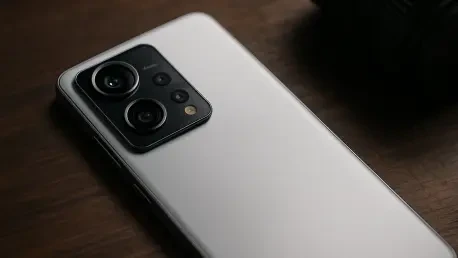
It’s a foundational shift, moving the focus back to capturing the best possible “raw ingredient” for an image. Think of it this way: software can be brilliant, but it’s always working with the information it’s given. By using a massive 1/1.4-inch sensor paired with a wide f/1.65 aperture, the camera is physically pulling in significantly more light and data from the very first moment the shutter is pressed. For a user, this means the initial capture is inherently richer and more detailed. The immediate, tangible benefit is an image with stronger detail retention and more balanced, natural exposure, creating a far more robust file for any subsequent processing to work with.
The 200MP sensor enables up to 4x optical-level in-sensor zoom. Can you walk us through how this technology avoids the typical softness of digital zoom? In what specific photography scenarios, like cityscapes or architecture, does this feature provide a crucial advantage?
This is where that massive 200-megapixel count becomes a powerful tool for composition. Traditional digital zoom simply enlarges a portion of a standard-resolution image, which inevitably leads to that soft, pixelated look because you’re stretching limited data. In-sensor zoom, however, leverages the sheer abundance of pixels on the 200MP sensor. When you zoom in 4x, you’re not stretching anything; you are intelligently cropping a high-resolution section from the center of the full sensor area. This crop still contains more than enough pixels to generate a crisp, detailed final image. This is a game-changer for shooting cityscapes, where you might want to isolate a distant building without losing the sharp lines, or for architectural photography, where capturing intricate details from afar is key. It gives you the flexibility of a zoom lens without the physical bulk.
In low light, many phones rely on aggressive post-processing, which can create an unnatural look. How does combining a large sensor with a wide aperture deliver cleaner, more natural results at the source? Please elaborate on the impact on shadow detail and image noise.
Many phones essentially try to “invent” light with software, which often results in an overly brightened, artificial scene with waxy textures. The approach here is far more organic. By combining a large sensor that has a greater surface area with a wide aperture that lets more light pass through, the system physically captures a stronger, cleaner signal in dim conditions. The direct impact is that you see far more authentic detail in the shadows, which are often crushed to black by other systems. The noise levels are also inherently lower because the sensor isn’t struggling to amplify a weak signal. The result is a photo that actually feels like it was taken in the evening, preserving the mood and atmosphere without looking like a poor imitation of daylight.
Portrait modes often struggle with accurate edge detection. How does a high-resolution sensor improve the depth information used by portrait algorithms? Could you explain how this helps create more natural background blur and maintain balanced skin tones, even in busy or complex environments?
The accuracy of any portrait mode is entirely dependent on the quality of its depth map—its understanding of what’s near and what’s far. A high-resolution sensor provides an incredibly detailed and data-rich canvas for the portrait algorithms to work with. This allows the system to create a much more precise map of the subject, discerning fine details like individual strands of hair from a complex, busy background. This high-fidelity depth information leads to a more natural-looking background blur that gracefully falls off, mimicking a real lens. Furthermore, because the initial capture is so strong, the algorithms can better analyze and preserve balanced, realistic skin tones, even when the lighting is tricky or the background is full of distracting elements.
Integrated tools like the AI Creativity Assistant aim to streamline the editing workflow. How do features like AI Remove Reflection and direct sharing to social platforms change the creative process for the average user? Please explain the benefits of keeping these functions on-device.
These integrated tools fundamentally lower the barrier to creativity and make the entire process, from shooting to sharing, feel immediate and seamless. In the past, removing a pesky reflection from a window in your shot would have required exporting the photo to a separate, often paid, third-party application. Now, with a feature like AI Remove Reflection built-in, that’s a one-tap fix right in your gallery. This immediacy encourages experimentation. Keeping these AI functions on-device is also crucial for privacy and speed; your photos aren’t being sent to a cloud server for processing. This streamlined workflow, combined with direct sharing to platforms like Instagram, transforms the smartphone from just a capture device into a complete, self-contained creative suite.
Positioning a device with a flagship-grade camera at a more accessible price point is a key strategy. Where do you see the most significant performance overlap with ultra-premium devices, and in which specific areas, such as cropping flexibility, might it even have an edge?
The most significant overlap is in pure, high-resolution image quality in good light. The level of detail captured by the 200MP sensor truly stands shoulder to shoulder with devices that cost far more. Where it might even have an edge is in cropping flexibility. An ultra-premium phone might take a fantastic 12MP or 50MP photo, but the sheer pixel density of a 200MP sensor gives users an incredible amount of freedom to reframe and crop their shots after the fact without a noticeable loss in quality. This is a practical advantage that many users will appreciate. It also competes very strongly in portrait mode accuracy and delivers impressively clean low-light results that challenge the dominance of more expensive flagships by prioritizing strong source data over heavy-handed software fixes.
What is your forecast for smartphone photography?
I believe we’re going to see a continued rebalancing toward this hardware-first philosophy. While computational photography and AI will remain essential, the industry recognizes that you can’t build a great house on a weak foundation. My forecast is that manufacturers will increasingly compete on the quality of their core components—larger sensors, better optics, and higher native resolutions—using them as the primary drivers of image quality. AI will evolve from a corrective tool, fixing flaws from small sensors, into a creative partner that enhances an already excellent image. The ultimate goal will be to make the technology so good that the final photo looks effortlessly natural, not artificially perfect.