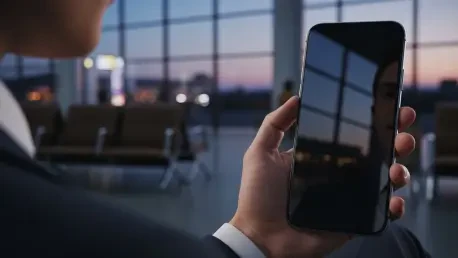

The simple act of checking a private message or banking information on your phone in public has become a calculated risk, with prying eyes seemingly lurking over every shoulder in coffee shops and on crowded commutes. Samsung’s rumored answer to this modern dilemma, a hardware-based privacy display for the Galaxy S26, aims to make “visual hacking” a thing of the past. But as details emerge, a critical question arises: is this a revolutionary leap in mobile security or an over-engineered feature destined for obscurity?
Is the Next-Gen Privacy Shield a Necessity or a Nuisance?
This review seeks to cut through the speculation and evaluate the rumored hardware-based privacy display of the Galaxy S26. The goal is to determine whether this advanced technology offers a genuinely practical solution to the persistent problem of shoulder surfing. The feature promises a level of security that software overlays and stick-on screen protectors have never quite managed to deliver, integrating privacy directly into the phone’s core hardware.
However, innovation often comes with a learning curve, and the Galaxy S26’s new shield is no exception. The central question is whether its complexity and potential drawbacks make it an impractical feature for the average user. This analysis will weigh the promise of absolute on-screen secrecy against the rumored costs in usability, battery life, and even personal data, ultimately deciding if it is a necessary evolution or an unnecessary nuisance.
Unpacking the Technology: A Hardware-Based Approach to Secrecy
At the heart of this feature is an “optical viewing-angle control layer,” a sophisticated piece of hardware integrated directly into the display panel. Unlike traditional software-based privacy filters that simply darken the screen, this physical layer is engineered to actively manipulate light, narrowing the viewable cone so that content is only clearly visible to the person looking directly at the phone. This approach promises a cleaner, more effective method of obscuring the screen from off-angle observers.
The true ambition of the feature, however, is revealed in its extensive customization options. Leaked information points to a settings menu filled with granular controls, including an “Auto-privacy” toggle designed to intelligently activate the shield when using sensitive apps or when the phone’s sensors detect a crowded public space. Furthermore, users can allegedly choose to selectively obscure specific on-screen elements, such as incoming notifications or picture-in-picture windows, offering a tailored approach to on-the-go privacy.
Performance in Practice: Innovation Meets Usability Hurdles
Based on early reports, the real-world functionality of the privacy display may struggle to live up to its technological promise. The sheer number of toggles and conditions presented in the leaked settings menu suggests a user experience that could be overwhelming for many. While deep customization is appealing in theory, a feature designed for quick, situational security could become bogged down in a complex configuration process, discouraging its use altogether.
Critically, the effectiveness of the feature’s most secure modes is in question. The “maximum privacy” setting, which provides the narrowest viewing angle, reportedly dims the screen so significantly that it becomes difficult for even the primary user to see clearly. This creates a usability paradox where the highest level of protection renders the device impractical, offering little advantage over simply lowering the screen’s brightness manually. This fundamental flaw could undermine the entire purpose of the hardware.
Moreover, the feature comes with significant performance trade-offs that cannot be ignored. To power the context-aware “Auto-privacy” mode, the system may require constant access to the device’s camera and location data to determine if a user is in a public area. This raises serious privacy concerns—an ironic twist for a security feature—and points toward a high likelihood of severe battery drain, a critical issue for any mobile user.
The Good, the Bad, and the Invasive
The primary advantage of the Galaxy S26’s privacy display lies in its impressive hardware-level innovation. Moving beyond software solutions to create a physical barrier to prying eyes is a significant engineering feat that offers a more robust form of protection. For users with extreme privacy needs—such as executives, journalists, or activists—the deep, granular control over when and how the screen is obscured provides a level of security previously unavailable on a smartphone.
On the other hand, the disadvantages are substantial and multifaceted. The overly complicated user interface stands as the most immediate barrier to widespread adoption, potentially alienating the very mainstream users it aims to protect. More troubling are the privacy concerns raised by its permission requirements; a feature that needs to watch and track you to protect your privacy is a hard sell. This could ultimately create more user anxiety than it alleviates, fostering a sense of paranoia that every bystander is a potential threat.
Final Verdict: An Ambitious Feature with Critical Flaws
The key findings from the leaked information paint a picture of a feature caught between its technological ambition and its practical implementation. The concept of a dynamic, hardware-based privacy shield is undeniably forward-thinking and addresses a real-world concern. The engineering that allows a screen to physically restrict its viewing angle on command is a marvel and a testament to Samsung’s innovative spirit.
However, the final assessment is that in its current rumored state, the privacy display is more of a “party trick” than a revolutionary, must-have feature. Its potential is severely undermined by critical flaws in usability, performance, and its own paradoxical approach to privacy. The technology is impressive, but its execution appears to fall short of creating a seamless and genuinely useful tool for the everyday user.
Recommendations: Who Should Be Excited for This Feature?
The technology itself represented a step forward, but its rumored execution may have prevented widespread adoption. The complex interface and significant performance compromises seemed to position it as a niche tool rather than a mainstream feature. Its value was not in its universal appeal but in its specific application for a select group of users.
This feature would have most benefited tech-savvy individuals and professionals with extreme privacy needs. These are users willing to navigate a complex settings menu and accept the associated battery and permission compromises in exchange for best-in-class visual security. They possess the technical knowledge to manage its intricacies and a use case that justifies its drawbacks.
For most consumers, the advice was to wait and see if Samsung could simplify the feature and mitigate its drawbacks in future software updates or hardware revisions. Until then, the privacy display remained a fascinating but flawed innovation, not a key selling point for the average user upgrading their device.