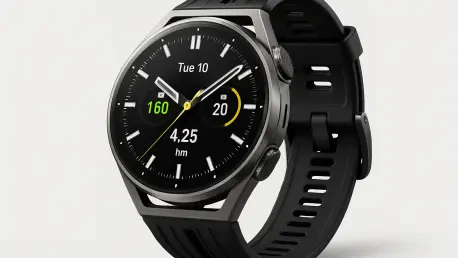

The relentless pursuit of a perfect split time often reveals that the greatest obstacle for a modern athlete is not physical fatigue, but the frustration of unreliable data caused by signal interference in urban environments. As cities grow denser and skyscrapers climb higher, the ability of a wearable device to maintain a consistent connection with orbital satellites has become the true benchmark of its engineering. The Huawei Watch GT Runner 2 enters this competitive landscape as a specialized instrument designed to solve these specific atmospheric and architectural challenges. This review examines whether the device successfully transitions from a high-end luxury accessory to a critical piece of performance equipment for those whose training spans from 2026 into the future.
Assessing Value: Is the Huawei Watch GT Runner 2 the Right Investment?
Defining the Objective of This Review
The purpose of this evaluation is to determine if the hardware refinements found in this second-generation runner-specific watch justify its premium positioning in a saturated market. While many manufacturers attempt to build a “jack-of-all-trades” device, Huawei has narrowed its focus toward a specific subset of the fitness community. This analysis peels back the marketing layers to see if the internal components match the ambitious claims of being a dedicated professional tool rather than a mere aesthetic upgrade of its predecessor.
Identifying the Target Audience and Core Challenges
Serious marathoners and trail runners frequently struggle with the weight of ruggedized watches and the inaccuracy of standard GPS sensors when navigating under heavy tree cover or between glass-walled office towers. The target user for this device is the individual who views a five-second tracking discrepancy as a significant failure. By addressing the core challenges of signal bounce and wrist discomfort during high-cadence movement, the GT Runner 2 seeks to provide a specialized solution for those who prioritize data integrity over a broad library of third-party casual applications.
Product Overview: Engineering a Specialized Running Tool
Physical Architecture and Material Choices
Constructed with a high-strength titanium case, the watch manages to balance a sophisticated appearance with a weight profile that feels almost nonexistent during a long-distance trek. Titanium was selected over stainless steel or plastic because it provides the necessary durability to survive accidental impacts without the heavy penalty typically associated with metal watches. The structural design includes a 1.32-inch high-resolution display that remains legible even under the harsh glare of direct midday sun, ensuring that metrics are readable at a quick glance without breaking stride.
Core Features and Technical Specifications
Beneath the exterior, the watch is powered by a specialized chipset optimized for the HarmonyOS ecosystem, providing a fluid user interface that responds instantly to touch or crown rotations. It includes a comprehensive array of sensors, ranging from the expected optical heart rate monitor to more advanced barometric altimeters and skin temperature sensors. The internal storage allows for offline music playback, which, when paired with the device’s independent communication capabilities, enables runners to leave their smartphones behind while maintaining a safety net for emergency calls and navigation.
The Unique Selling Proposition: Specialized Running Hardware
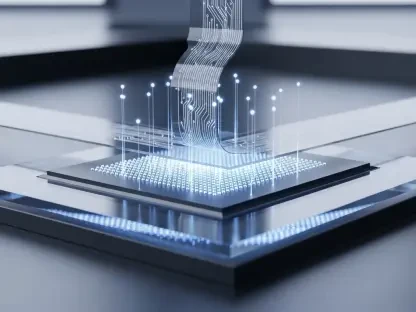
What sets this device apart from its contemporaries is the integration of the 3D floating GPS antenna. By repositioning the antenna system within the lugs and utilizing a dual-band five-system GNSS, the watch achieves a level of spatial awareness that standard wrist-mounted trackers rarely reach. This unique architecture is specifically designed to minimize signal interference, allowing for a more consistent connection to the satellite grid. This focus on hardware-level signal reception marks a shift away from software-based estimation, leaning instead on raw data accuracy.
Performance Evaluation: Real-World Testing and Accuracy
Precision Tracking in Urban Environments
During testing in dense city centers, the dual-ring antenna system demonstrated a remarkable ability to mitigate the “drift” often seen when running alongside tall buildings. While other devices might show a runner clipping through walls or zig-zagging across streets on a map, the GT Runner 2 maintained a linear path that closely mirrored the actual route taken. Moreover, the inclusion of inertial positioning algorithms ensured that even during brief signal drops in tunnels or underpasses, the pace and distance metrics remained remarkably stable and reflective of actual effort.
Battery Endurance and Long-Distance Reliability
Battery performance proved to be one of the most reliable aspects of the user experience, particularly during continuous tracking sessions. The device comfortably handled over 30 hours of active GPS usage, a feat that places it in the upper echelon of endurance wearables. For most users, this translates to nearly two weeks of standard use between charges. This longevity ensures that the watch is not just a tool for the daily commute, but a reliable companion for multi-day events where access to power outlets is limited or nonexistent.
Health Monitoring and AI-Driven Coaching Metrics
The integration of health data goes beyond simple heart rate tracking by incorporating an AI-driven running coach that analyzes historical performance to suggest optimal training loads. By calculating the “Running Ability Index,” the watch provides a dynamic assessment of fitness levels, helping to prevent overtraining and injury. The health sensors also monitor blood oxygen levels and sleep quality with high granularity, providing a holistic view of recovery that is just as vital to performance as the actual workout data.
Strategic Analysis: Weighing the Strengths and Weaknesses
Key Advantages for Serious Athletes
The primary benefit for the athlete lies in the combination of lightweight materials and precision sensors. The “AirDry” woven strap, for instance, prevents the skin irritation that often accompanies silicone bands during humid summer runs. Furthermore, the specialized software provides deep insights into VO2 max and recovery times that are presented in a clear, actionable format. These features collectively create an environment where the athlete can focus entirely on their physical output rather than worrying about the technical limitations of their equipment.
Limitations and Software Hurdles
Despite the hardware excellence, there are notable limitations regarding the software ecosystem, particularly for users residing in regions with restricted access to Huawei’s full service suite. The lack of a broad third-party app store means that users are tethered to the native health application for data analysis. While the native app is robust, the inability to easily sync with certain niche third-party fitness platforms without workarounds remains a point of friction. Additionally, the setup process for non-Huawei smartphone users requires extra steps that may deter those seeking a “plug-and-play” experience.
Ecosystem Compatibility and User Experience Challenges
Compatibility varies significantly depending on the paired smartphone’s operating system. While the watch works with both iOS and Android, certain advanced features like remote camera shutters or specific messaging replies are often restricted to the HarmonyOS ecosystem. This creates a tiered experience where the hardware’s full potential is only unlocked when the user is fully invested in the brand’s wider product family. For those outside this ecosystem, the watch remains a powerful tracker, but it loses some of its more convenient “smart” functionalities.
Final Assessment: Summarizing the GT Runner 2 Experience
Hardware vs. Software Trade-offs
The GT Runner 2 represented a clear trade-off between world-class physical engineering and a somewhat restrictive software environment. The titanium build and the revolutionary antenna design offered a level of reliability that was difficult to match in the mid-range price bracket. However, the user experience was largely defined by how much the runner was willing to adapt to Huawei’s proprietary systems. For those who prioritized raw tracking accuracy and battery life over app diversity, the hardware strengths significantly outweighed the software limitations.
Pricing and Market Positioning
At its price point, the watch occupied a strategic gap between budget fitness bands and ultra-premium multi-sport computers. It offered the premium materials of the latter at a cost that was more accessible to the dedicated amateur. The market positioning was successful because it did not try to be everything to everyone; instead, it leaned heavily into its identity as a runner’s companion. This clarity of purpose allowed it to stand out in a crowded marketplace where many devices suffered from an identity crisis.
Concluding Opinion: Who Should Buy the GT Runner 2?
Practical Advice for Potential Buyers
Prospective owners should carefully evaluate their existing digital habits before committing to this device. If the primary requirement is a highly accurate, durable, and long-lasting tracker that requires minimal maintenance, this watch remains a top-tier choice. However, users who rely heavily on specific third-party productivity apps or who demand deep integration with non-Huawei ecosystems might find the experience restrictive. It is a tool for the minimalist athlete who values data precision above social media notifications or extensive app libraries.
Final Verdict on Adoption and Use Cases
The decision to adopt the GT Runner 2 ultimately depended on the specific environment of the user’s training. It excelled as a specialized instrument for urban athletes who faced the constant challenge of “GPS shadows” and needed a device that could survive the wear of daily high-intensity use. While it may not have been the universal choice for every casual user, it established a high standard for what a focused sports watch should accomplish. Moving forward, the industry will likely see a greater shift toward this type of hardware specialization as athletes demand more than just basic step counting from their wearable technology.