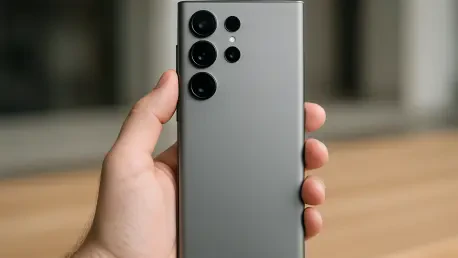

Owners of the premium Galaxy S26 Ultra recently discovered that their high-resolution captures at the specific three-times magnification level were suffering from an unexpected lack of clarity and sharpness. This development arrived as a surprise to many tech enthusiasts who invested in the flagship for its promised professional-grade imaging capabilities and advanced hardware integration. While the primary sensor and the new five-times optical telephoto lens received widespread acclaim during the initial launch phase, the intermediate zoom range began showing signs of struggle under various lighting conditions. Reports surfaced across digital forums highlighting that the transition between lenses resulted in images that appeared washed out or fundamentally out of focus. This discrepancy between the hardware potential and software execution created a ripple of frustration among mobile photographers who rely on the three-times focal length for portraits. Samsung addressed these concerns by acknowledging a software bug.
1. Identifying the Source of Photographic Distortion
Technical investigations conducted by the user base revealed that the blurriness was not limited to extreme environments but persisted even in well-lit scenarios where the sensor should have performed optimally. The most significant degradation occurred during low-light photography when the flash was active, leading to a visible loss of detail that suggested a processing error rather than a physical lens defect. Many consumers provided detailed side-by-side comparisons showing that the preceding model often outperformed the current flagship at the same magnification level. This prompted a wave of diagnostic data submissions to the manufacturer to isolate whether the problem resided in the autofocus algorithm or the image signal processor handling the ten-megapixel telephoto data. The feedback loops established between the engineering teams and the early adopters proved essential in pinpointing the specific lines of code that prevented the aperture from stabilizing correctly during the initial shutter activation.
Further scrutiny of the camera system indicated that the three-times zoom module, which remains a cornerstone of the versatile quad-camera array, was failing to lock focus when subjects were positioned at mid-range distances. This specific focal range is critical for subjects such as food photography or medium-distance architecture where the perspective of the primary wide lens is too broad. By analyzing logs sent through the official community applications, technicians observed that the software was occasionally misinterpreting depth data, causing the lens to hunt for focus rather than snapping to the intended subject. This mechanical jitter was exacerbated by aggressive noise reduction algorithms that misinterpreted the lack of focus as luminance noise, resulting in a smeary watercolor effect that stripped away textures and fine lines. Consequently, the user experience was compromised for those who utilize the device for professional-style social media content or high-detail documentation where optical precision is the expected standard.
2. Deploying the April Software Update
Recognizing the urgency of the situation, the engineering department prioritized a fix that integrated seamlessly with the scheduled maintenance cycle of the device. The corrective measures were officially bundled into the April 2026 security patch, representing a rapid turnaround for a problem that threatened to overshadow the launch success of the flagship series. This update specifically targets the camera controller logic to ensure that the hand-off between the ultra-wide, wide, and telephoto lenses occurs without synchronization delays. By refining the way the image signal processor handles the input from the smaller telephoto sensor, the developers managed to restore the expected levels of sharpness and contrast. Early testers who received the patch noted a substantial improvement in the reliability of the autofocus mechanism, particularly when switching quickly between different magnification tiers in the native camera app. The speed of this deployment reflects a modern approach to device maintenance where software agility compensates for early production oversights.
Users are encouraged to verify the installation of the latest firmware by navigating through the system settings and checking the software update section for the most recent build. While the distribution of the April patch follows a phased rollout based on carrier agreements and geographic regions, the broad availability of the fix ensures that most global markets will receive the stability improvements within a short window. It is important to note that the update does not just address the photographic blur but also includes broader security definitions and performance optimizations that benefit the entire Android environment. Once the installation is complete, the camera application undergoes a background recalibration process that ensures all optical elements are correctly aligned with the new processing parameters. This proactive maintenance strategy minimizes the risk of long-term hardware dissatisfaction and maintains the resale value of the high-end device by ensuring that core features function as advertised. The update process remains straightforward.
3. Strategic Reliability in Modern Mobile Imaging
Maintaining the reputation of a flagship requires consistent performance across every advertised feature, regardless of whether a specific component is considered a minor part of the overall package. In an era where mobile devices are replacing traditional cameras for the majority of the population, the reliability of each lens in the array becomes a primary factor in consumer loyalty. The incident with the three-times zoom bug serves as a reminder that the complexity of modern computational photography necessitates rigorous real-world testing that goes beyond laboratory simulations. As hardware reaches its physical limits, the burden of quality falls increasingly on the software layers that interpret the light data into a final image. Manufacturers who invest heavily in rapid response teams for software debugging demonstrate a commitment to the consumer experience that justifies the premium price point of their hardware. This event also highlights the importance of open communication channels between developers and the user community in identifying niche issues.
The resolution of the camera bug through a swift software intervention demonstrated the importance of a resilient update infrastructure for modern flagship smartphones. Owners who previously experienced inconsistent results found that the corrective patch successfully restored the precision of the zoom system, effectively neutralizing the risk of a broader public relations crisis. Moving forward, consumers should prioritize regular system checks to ensure they are utilizing the most optimized versions of their device software to prevent similar performance hurdles. Manufacturers are likely to implement more comprehensive pre-launch beta testing cycles involving a diverse range of lighting scenarios to prevent such technical lapses from reaching the retail market. This situation proved that while even high-end technology can encounter early difficulties, the true measure of a company’s value lies in its ability to deploy effective solutions without delay. The focus transitioned from fixing a flaw to exploring the full creative potential of the corrected imaging system.