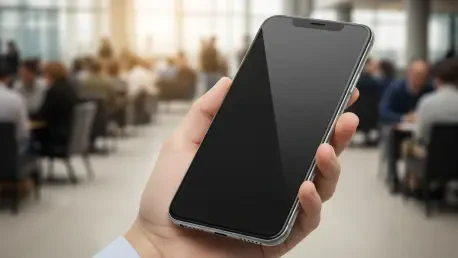

The global smartphone landscape is currently witnessing a paradigm shift where the traditional metrics of success, such as megapixels and raw clock speeds, are being eclipsed by the urgent consumer demand for integrated digital sovereignty and physical data protection. In an environment where personal mobile devices serve as the primary conduits for both high-stakes corporate communication and intimate personal interactions, the hardware itself is now expected to act as a first line of defense. The premium “Ultra” tier has consequently evolved into a specialized proving ground for such technologies, where the integration of a titanium chassis and elite-grade silicon is no longer a luxury but a baseline requirement for market relevance.
Current industry dynamics are increasingly defined by the tension between providing expansive, immersive visual experiences and the inherent security risks of using such large displays in densely populated public environments. As manufacturers navigate this transition, they are forced to justify climbing price points by offering features that software alone cannot replicate. This shift toward hardware-centric security solutions marks a departure from the iterative design cycles of the past, signaling a new era where the physical architecture of a device is as critical to the user experience as the operating system it runs.
Evolution of Mobile Privacy and Next-Generation Hardware
Emerging Trends in Secure Display Technology and Design
One of the most disruptive trends identified in the recent Galaxy S26 Ultra disclosures is the transition from external, adhesive privacy filters toward a sophisticated, hardware-level privacy shield integrated directly into the OLED stack. This innovation specifically targets the growing threat of “visual hacking,” allowing users to maintain confidentiality while multitasking in transit or in open-office environments. By providing a toggleable viewing-angle restriction, the device ensures that sensitive on-screen information remains visible only to the primary user, effectively rendering the display dark when viewed from the periphery.
Beyond security, the current design philosophy emphasizes an extreme refinement of the device’s physical footprint to balance massive screen real estate with ergonomic portability. The leaked specifications for the S26 Ultra indicate a significant reduction in chassis thickness to just 7.9 mm, down from the 8.2 mm profile of its predecessor. This drive toward a sleeker aesthetic is achieved without abandoning the structural rigidity of the titanium frame, suggesting that the industry is moving toward a “minimalist-yet-durable” standard that prioritizes a premium hand-feel while maintaining the resilience expected of a high-end flagship.
Market Projections and Performance Indicators for the S26 Series
Market data and early consumer sentiment indicators suggest that the Ultra variant will continue to dominate the sales mix, consistently outperforming standard and plus-sized models in terms of both pre-order volume and long-term retention. The heavy reliance on the Snapdragon 8 Elite Gen 5 chipset is expected to be a primary driver for this growth, as power users seek out the most efficient 2 nm processing architecture available. Analysts project that if the hardware-level privacy display gains widespread traction, it will likely catalyze a new industry-wide design trend, forcing competitors to rethink their screen assemblies to include similar directional light-control technologies.
Looking toward the immediate future, the success of the S26 series will likely depend on Samsung’s ability to maintain a consistent hardware experience across different global regions. While the Ultra model appears to be standardized with high-performance silicon, the broader market remains sensitive to regional variations in chipsets. Despite these complexities, the overall outlook for the lineup remains positive, with forecasts suggesting that the introduction of specialized security hardware will open new revenue streams within the enterprise and government sectors, where data protection is a non-negotiable prerequisite.
Navigating Thermal Management and Performance Hurdles
The pursuit of an ultra-thin 7.9 mm profile introduces significant engineering challenges, particularly regarding the dissipation of heat generated by high-performance internal components. Early performance reports indicate that the S26 Ultra may encounter thermal throttling issues when the Snapdragon 8 Elite Gen 5 is pushed during sustained workloads, such as recording 8K video or running complex generative AI tasks. To mitigate these risks, manufacturers are increasingly forced to innovate within the limited internal volume of the device, employing advanced vapor chamber designs and graphite cooling sheets to prevent performance degradation.
Furthermore, the complexity of optimizing “Day 0” firmware for a device with such advanced hardware frequently leads to early-stage connectivity and stability issues. Leaked reports have mentioned inconsistent Wi-Fi performance and minor software lag, which are common symptoms of a global supply chain that moves faster than the final software optimization phase. While these glitches are typically resolved through post-launch patches, they highlight the ongoing difficulty of launching a hardware-heavy flagship in a market that demands immediate, flawless performance from the moment of unboxing.
The Regulatory Landscape of Mobile Data and Security
As mobile devices become the central repositories for digital identities and financial records, they are increasingly falling under the jurisdiction of global privacy regulations that demand “privacy by design.” The integration of a physical privacy display is a direct response to this regulatory environment, providing a tangible barrier that complements existing biometric and encryption-based security layers. This proactive approach to hardware security allows manufacturers to stay ahead of potential legislation regarding data visibility in public spaces, particularly as more jurisdictions look to protect citizens from unauthorized data observation.
Compliance with international security standards is no longer just a legal necessity but a significant competitive advantage in the professional market. Enterprise users, in particular, favor hardware that minimizes the risk of corporate espionage or accidental data exposure. By baking privacy features directly into the screen hardware, manufacturers are appealing to a high-value demographic that views the smartphone as a secure mobile workstation. This shift suggests that the future of mobile innovation will be increasingly dictated by the intersection of high-end consumer technology and stringent government-level security requirements.
Future Horizons in Smartphone Innovation and Connectivity
The trajectory of the mobile industry is moving toward a future where generative AI is integrated at the silicon level, transforming the smartphone from a passive tool into an active personal assistant. While the Galaxy S26 Ultra leads the charge with its 2 nm architecture and privacy-centric display, the broader market is expected to focus on the expansion of “Pro” features into more affordable segments. We are likely to see a greater emphasis on rapid charging standards, with 60W becoming the new baseline, alongside more efficient battery chemistries that can support the increased power demands of AI-driven applications.
Innovation will also likely concentrate on the sustainability of premium materials and the longevity of device lifespans. As global economic conditions encourage consumers to hold onto their devices for longer periods, the durability of titanium frames and the repairability of specialized screen assemblies will become key selling points. The tension between achieving a thinner aesthetic and maintaining a powerful, long-lasting battery will remain the central design challenge for the foreseeable future, as brands strive to deliver a no-compromise experience that meets the evolving needs of a more discerning and security-conscious global audience.
Summary of Findings and Market Outlook
The analysis of the Galaxy S26 Ultra disclosures highlighted a strategic shift toward hardware-level security as the primary differentiator in the luxury flagship segment. By successfully integrating a privacy shield into the OLED assembly and refining the titanium architecture to a sub-8 mm profile, the manufacturer addressed a specific, high-value demand for digital sovereignty. Although initial observations regarding thermal management and early firmware stability indicated that the path to a seamless launch was fraught with technical complexities, the overarching market sentiment for the device remained exceptionally strong.
The findings suggested that for future growth, the industry must prioritize the optimization of cooling systems to match the thermal output of next-generation 2 nm chipsets. Investors and stakeholders should look toward the integration of generative AI and specialized security as the next frontiers for value creation. Ultimately, the transition from software-reliant privacy to hardware-embedded protection established a new standard for mobile design, forcing a broader re-evaluation of how premium devices protect user information in an increasingly public digital world.