
The digital landscape is currently buzzing with the discovery of internal firmware assets that suggest a tectonic shift is coming to the foldable smartphone market. Leaked data from the One UI 9 development cycle, specifically linked to model number SM-F971B, indicates that Samsung is moving away from the narrow, tall designs that have defined its portfolio for half a decade. This upcoming device, dubbed the Galaxy Z Wide Fold, signals a sophisticated strategic pivot toward a wider, more utilitarian form factor that bridges the gap between a pocketable phone and a high-performance tablet. As mobile professionals demand more screen real estate for complex workflows, this development represents a direct response to a changing consumer appetite for productivity-first hardware.
A New Era for Samsung Foldables: Introducing the Galaxy Z Wide Fold
The revelation of the SM-F971B model number suggests that Samsung is no longer content with incremental updates to its existing flagship line. By introducing a “Wide” variant, the company is diversifying its offerings to capture different segments of the premium market. This strategy acknowledges that the standard Galaxy Z Fold, with its roughly 1:1.11 aspect ratio, may be reaching its limit for users who prioritize document editing and video consumption. The Galaxy Z Wide Fold aims to solve the “narrow cover screen” issue while providing an expansive internal canvas that rivals dedicated slate devices.
This shift is particularly important as the industry moves through 2026 toward a more mature foldable ecosystem. In previous years, the novelty of a folding screen was enough to drive sales, but today’s consumers are more discerning about ergonomics and software optimization. The introduction of the Wide Fold highlights a transition from experimental engineering to intentional design, where the form factor is dictated by how people actually use their devices in professional and creative environments. This move positions Samsung to maintain its lead in a sector that is becoming increasingly crowded with high-quality alternatives.
Tracing the Evolution of the Foldable Form Factor
Looking back at the trajectory of the Galaxy Z series, the design philosophy was originally centered on portability and the “cool factor” of a device that could change size. Early models prioritized a slim profile, which resulted in a cover display that felt cramped for typing and an inner screen that was nearly square. While this worked for early adopters, the market began to shift as competitors experimented with different proportions. These industry movements have forced a reevaluation of the foldable’s identity, pushing Samsung to move toward a layout that feels more natural for long-term use.
The significance of this evolution cannot be overstated, as it reflects a broader trend in mobile computing where the “phone” is becoming a secondary function to the “workstation.” The historical reliance on a narrow chassis was a safety measure to ensure one-handed usability, but the rising popularity of larger devices has proven that users are willing to trade some pocketability for a superior viewing experience. The Wide Fold is the culmination of years of iterative feedback, representing a departure from the “tall and thin” aesthetic in favor of a “wide and immersive” philosophy that aligns with modern content consumption patterns.
Engineering the 4:3 Experience: A Tablet in Your Pocket
The Strategic Shift to a 4:3 Aspect Ratio
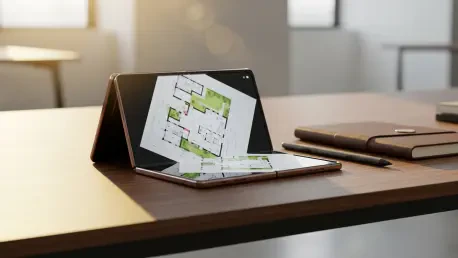
The most significant technical detail found in the recent firmware leak is the implementation of a 4:3 aspect ratio for the internal display. This specific ratio is a departure from the square-ish screens of the past and mimics the proportions of professional-grade tablets. By adopting a wider footprint, Samsung is providing a canvas that is naturally suited for side-by-side multitasking. This change reduces the need for awkward app scaling and allows users to view spreadsheets, emails, and web pages with the same density they would expect from a traditional tablet, effectively turning a smartphone into a legitimate mobile office.
Software Integration and the Power of One UI 9
Hardware changes are only as effective as the software that drives them, and the Galaxy Z Wide Fold appears to be the primary vehicle for the new One UI 9. Based on the upcoming Android 17, this software iteration is expected to introduce advanced window management tools that take full advantage of the 4:3 layout. Firmware indicators show that Samsung is refining how the taskbar and split-screen functions operate on wider displays. This ensures that the extra width is not just empty space but is instead utilized to enhance productivity through better app continuity and more intuitive navigation gestures.
Overcoming Hardware Hurdles: The Crease-Free Goal
A major hurdle for the foldable industry has always been the physical integrity of the screen, specifically the visible crease. Reports associated with the Wide Fold suggest that Samsung has achieved a breakthrough in its Ultra Thin Glass (UTG) technology, resulting in a nearly invisible hinge area. This advancement is critical for a 4:3 display, as a wider surface area makes any imperfection more noticeable during media playback or S Pen use. By perfecting the screen’s flatness, Samsung is removing one of the last remaining barriers to mainstream adoption, offering a seamless visual experience that rivals traditional glass displays.
Anticipating the Future: Trends and Competitive Rivalries
The move toward a wider aspect ratio is widely interpreted as a defensive play against the expected entry of new heavyweights into the foldable market. Industry analysis suggests that a 4:3 layout is the preferred choice for companies aiming to bridge the gap between their phone and tablet ecosystems. By establishing the Wide Fold as a premium standard now, Samsung is effectively setting the benchmark for what a high-end foldable should look like. This creates a challenging environment for newcomers who must now compete with a refined, third-generation engineering approach rather than a first-generation experiment.
Furthermore, we are witnessing a bifurcation in the mobile market where devices are being categorized by their specific use cases rather than just their price points. The future suggests a landscape where users choose between “compact foldables” for social media and portability, and “wide foldables” for creation and enterprise work. This specialization indicates that the industry is moving toward a more sustainable growth phase where hardware is tailored to specific lifestyles. Samsung’s decision to pursue this wider format ensures they stay ahead of the curve as the market moves from 2026 into a more specialized era of mobile technology.
Navigating the New Landscape: What This Means for Consumers
For the average consumer, the arrival of a wider foldable means that the compromise between a phone and a tablet is finally disappearing. The Wide Fold addresses the primary complaint of the “narrow” cover screen, making the device just as usable when closed as it is when open. This versatility makes it an attractive option for those who previously found the Fold series too cumbersome for quick interactions. Professionals who rely on mobile productivity will likely find the 4: office-ready proportions to be a game-changer for their daily workflows, potentially replacing the need for a separate tablet altogether.
Potential buyers should consider how this shift affects the overall ecosystem of accessories and app support. A wider screen allows for more robust cases with integrated stylus slots and keyboards that don’t feel cramped. As developers begin to optimize their applications for this 4:3 ratio, we can expect a surge in high-quality, tablet-optimized apps that were previously neglected on more square displays. This development encourages a more cohesive user experience, where the transition from a small screen to a large one feels like a functional upgrade rather than just a magnifying glass for a phone interface.
Final Reflections on Samsung’s Strategic Pivot
The emergence of the Galaxy Z Wide Fold through the SM-F971B leak highlighted a bold transformation in how hardware manufacturers perceive the relationship between size and utility. By embracing the 4:3 aspect ratio, the industry moved toward a more ergonomic and productive future that respected the needs of power users. This strategic pivot was not merely about aesthetic change; it was a calculated response to a competitive market that demanded more than just a folding screen. The integration of advanced software like One UI 9 ensured that the hardware and software worked in harmony to deliver a superior experience.
Ultimately, the decision to launch a wider format helped solidify a new standard for mobile computing that prioritized horizontal space for multitasking. Looking forward, the focus must remain on perfecting the durability of these expansive displays and ensuring that app ecosystems continue to adapt to non-traditional layouts. Companies should have invested more heavily in developer partnerships to ensure that the transition to wider screens felt seamless for the end-user. The Wide Fold served as a clear indicator that the future of the mobile industry belonged to those willing to redefine the very shape of the technology we carry every day.