
The landscape of personal computing is currently undergoing a foundational shift as traditional handheld devices begin to share the spotlight with sophisticated wearable interfaces that merge digital data with the physical environment. Samsung is at the forefront of this evolution, preparing to introduce a high-performance wearable known as the Galaxy Glasses, which aims to redefine how users interact with their surroundings through the Android XR platform. This move signifies more than just a new product launch; it represents a strategic pivot toward a world where technology is worn rather than carried, offering a persistent digital layer that enhances daily activities without the need for bulky, isolating headsets. By leveraging its established expertise in mobile hardware and software integration, Samsung is positioning these smart glasses as a versatile lifestyle companion that balances aesthetic appeal with cutting-edge functionality. The anticipation surrounding this release highlights a growing consumer demand for augmented reality solutions that are practical enough for constant use while remaining powerful enough to provide meaningful, real-time insights during both professional and personal tasks.
Strategic Hardware and Optical Versatility
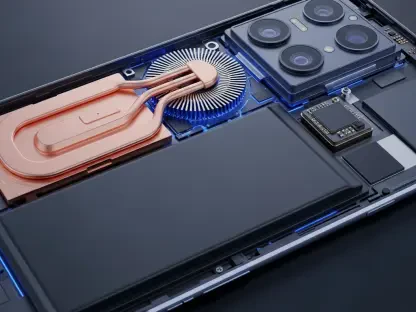
Developing a piece of wearable technology that users are willing to keep on their faces for sixteen hours a day requires a meticulous approach to both weight distribution and visual comfort. Samsung’s engineering team has reportedly settled on a 245mAh battery configuration, a decision that mirrors the power profiles of the most successful smart eyewear currently on the market. This specific capacity suggests that the Galaxy Glasses are designed to be exceptionally lightweight, avoiding the neck strain often associated with heavier mixed-reality devices while still providing enough juice to drive a heads-up display. By optimizing the energy consumption of the internal components, Samsung ensures that the device can handle continuous connectivity and visual overlays without requiring frequent recharging. This balance is critical for maintaining the illusion of “invisible” technology, where the hardware fades into the background and the user focuses entirely on the enhanced information being presented through the lenses.
The inclusion of photochromic transition technology further emphasizes Samsung’s commitment to making the Galaxy Glasses a permanent fixture of a user’s wardrobe. These advanced lenses are engineered to react dynamically to ultraviolet light, darkening instantly when the wearer steps outdoors into bright sunlight and returning to a clear state once they move back into an office or home environment. This functionality addresses one of the primary hurdles in the adoption of smart eyewear, which is the social and practical awkwardness of wearing tinted lenses indoors or needing to carry multiple pairs of glasses. By integrating this optical versatility, Samsung ensures that the digital interface remains accessible in any lighting condition, allowing the wearer to maintain access to notifications, navigation prompts, and AI assistance regardless of their location. This design philosophy prioritizes the user’s lifestyle, treating the glasses first as a necessary optical tool and second as a high-tech gateway to the Android XR ecosystem.
Integrated Camera and Multimodal AI
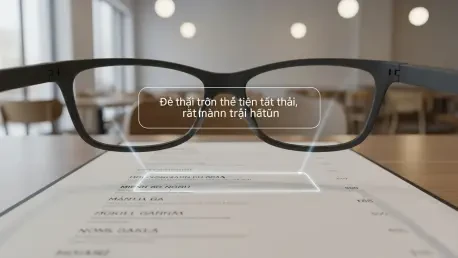
A central component of the Galaxy Glasses experience is the integrated 12MP camera system, which serves as the primary sensor for interpreting the wearer’s physical context. Unlike a smartphone camera that is typically used for posed photography, this “snapper” is positioned to capture the world from a first-person perspective, enabling a form of multimodal AI interaction that was previously limited to science fiction. By seeing exactly what the user sees, the onboard Galaxy AI can perform complex tasks such as translating foreign text on a restaurant menu in real-time or providing historical data about a landmark during a walk through a new city. This capability transforms the glasses from a simple notification screen into an active cognitive participant, offering suggestions and information based on visual cues. The 12MP resolution provides a sharp enough image for the AI to process fine details while keeping the data stream manageable for the device’s wireless connection to a paired smartphone.
Beyond the practical applications of AI assistance, the camera also facilitates a more natural way of documenting life’s moments through hands-free content creation. Users can record high-definition video or take photos without the barrier of holding a phone, allowing them to stay fully present in the moment while still preserving memories for social sharing or personal archives. This feature is particularly valuable for creators and professionals who need to document their workflow or share a “day-in-the-life” perspective with their audience. To address privacy concerns that naturally arise with face-worn cameras, Samsung is expected to include visible recording indicators, ensuring that those around the wearer are aware when the camera is active. This transparent approach to hardware design helps build trust and social acceptance, which are essential factors for the long-term success of any wearable device that features integrated imaging capabilities in public spaces.
The Android XR Software Ecosystem
The functional heart of the Galaxy Glasses lies in the Android XR software platform, a specialized version of the world’s most popular mobile operating system tailored for spatial computing. This ecosystem is being built to support a wide range of applications that go beyond simple 2D windows, allowing developers to create immersive experiences that interact directly with the user’s environment. Recent updates to major service providers like Spotify indicate that the industry is already optimizing its software to run seamlessly on these wearable displays. However, the Galaxy Glasses will likely follow a “tethered” architectural model, where the heavy computational lifting and data processing are handled by a connected Galaxy smartphone. This strategy is a masterclass in efficiency; it allows the glasses to remain slim and stylish because they do not need to house a massive processor or a large cooling system, which would otherwise compromise the form factor.
This tethered relationship creates a symbiotic bond between the user’s phone and their eyewear, reinforcing the strength of the broader Samsung ecosystem. When a user receives a message, the phone processes the data and sends a simplified visual alert to the glasses, allowing the wearer to stay informed without ever taking their phone out of their pocket. Furthermore, this deep integration enables a level of continuity that makes the technology feel like a natural extension of the user’s digital life. For instance, a navigation route started on a phone can seamlessly transition to turn-by-turn directions projected onto the pavement through the glasses. By focusing on this accessory-based model, Samsung ensures that the Galaxy Glasses are not just another gadget to manage, but a transformative interface that streamlines how people access the digital world, making it faster, more intuitive, and significantly less intrusive than traditional mobile computing.
Shifting Toward Invisible Computing
The launch of the Galaxy Glasses represents a definitive move away from the era of “screens in pockets” toward a more integrated future defined by invisible computing. This transition is characterized by a shift in focus from the device itself to the utility it provides, where technology is no longer a destination but a constant, helpful presence. As Samsung integrates high-tech sensors, transition lenses, and sophisticated AI into a frame that looks like a standard pair of spectacles, it is effectively lowering the barrier to entry for augmented reality. The goal is to create a product that appeals to the average consumer who might be intimidated by a large headset but sees the immediate value in a stylish accessory that makes their life easier. This evolution suggests that the next generation of mobile innovation will not be measured by processor speed alone, but by how effectively a device can enhance the human experience without demanding constant attention.
As these devices become more commonplace, the industry is likely to see a significant change in how digital content is created and consumed, with a greater emphasis on spatial awareness and contextual relevance. Users should prepare for this shift by familiarizing themselves with AI-driven tools and exploring how hands-free interfaces can improve their productivity and safety. For businesses, the move toward wearable XR offers new opportunities for remote assistance, real-time data visualization, and enhanced training programs that can be conducted on-site with minimal equipment. The Galaxy Glasses are a clear signal that the future of technology lies in its ability to blend into the background of our lives, providing us with the information we need exactly when we need it. Embracing this trend now will allow individuals and organizations to stay ahead of the curve as we move toward a world where our digital and physical realities are no longer separate, but are instead two halves of a single, unified experience.