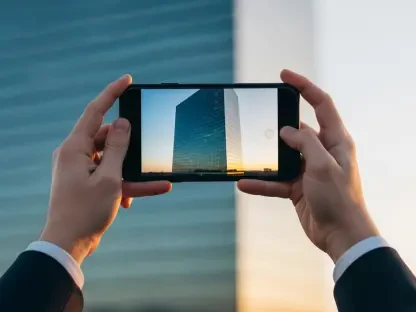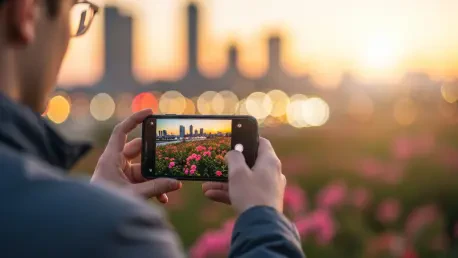

The subtle blur of a city skyline or the soft focus of a garden backdrop often serves as the invisible line separating a casual smartphone snap from a professional portrait. For years, mobile photographers have enjoyed this depth-of-field control on their primary cameras, yet the telephoto lens has remained a stubborn frontier of flat, clinical images. Samsung is now preparing to dismantle this barrier by introducing “Virtual Aperture” to the Galaxy S25 telephoto system, promising to bring the sophisticated aesthetic of high-end glass to the palm of the hand.
Rethinking the Portrait Mode Experience: Beyond the Primary Sensor
The difference between a snapshot and a masterpiece often boils down to depth, yet smartphone users have long been restricted by the physical limitations of small camera sensors. While primary lenses have seen massive improvements in light intake and clarity, the telephoto lens frequently lacks the natural background blur that makes professional portraits stand out. By prioritizing this update, Samsung seeks to ensure that zoomed-in shots no longer feel like a compromise in artistic quality.
This shift represents a fundamental change in how the Galaxy ecosystem treats secondary optics. Historically, telephoto lenses were valued purely for their reach, but modern aesthetics demand that a 3x or 5x zoom shot carries the same emotional weight as a wide-angle capture. Bridging this gap allows the Galaxy S25 to function more like a versatile camera bag than a single-lens device, catering to a generation of creators who refuse to sacrifice bokeh for distance.
Bridging the Gap: Hardware Limitations and Software Innovation
Modern smartphone photography is increasingly defined by computational power rather than just glass and silicon. Historically, variable aperture was a mechanical feat reserved for bulky professional equipment, but as devices become thinner, manufacturers are turning to sophisticated algorithms to simulate optical behavior. By focusing on software optimization for the S25 lineup, Samsung is addressing a critical trend: the desire for professional-grade bokeh on zoom shots, which are traditionally harder to stabilize and blur naturally.
Computational photography serves as the great equalizer in an industry where physical space is at a premium. Rather than trying to cram a heavy mechanical iris into a slim telephoto housing, Samsung leverages the Neural Processing Unit to calculate light fall-off and edge detection. This approach ensures that the hardware remains sleek and portable while the output matches the visual characteristics of lenses many times its size.
The Mechanics: Virtual Aperture and Telephoto Expansion
Currently, Samsung’s Expert RAW application allows for Virtual Aperture adjustments, but the feature is strictly tethered to the main wide-angle sensor. The proposed update would unlock this capability for the telephoto lens, allowing photographers to artificially adjust the f-stop to control depth of field. This expansion means that optical zoom shots can finally benefit from customized background intensity, moving beyond the “all-or-nothing” approach of standard portrait modes.
By offering granular control over every shot, users can dial in the exact amount of “creaminess” they desire for their backgrounds. Whether a photographer wants a slight separation for an environmental portrait or a complete blur for a macro-style flower shot, the Virtual Aperture tool provides the necessary precision. This move effectively transforms the telephoto lens from a simple magnifying tool into a creative instrument capable of nuanced storytelling.
Strategic Shifts: The Influence of User Feedback
The decision to bring a feature originally intended for the Galaxy S26 back to the S25 series highlights a shift in Samsung’s corporate agility. Internal reviews were prompted directly by vocal customer requests, signaling a move toward a more responsive development cycle. This strategy serves a dual purpose: it maintains the competitiveness of current flagships against the looming shadow of the iPhone 18 Pro and rewards brand loyalty by extending the functional lifespan of existing hardware through updates.
Moreover, this shift demonstrates that Samsung is listening to the enthusiast community that resides within the Expert RAW user base. By moving the release timeline forward, the company proved it could pivot based on market sentiment rather than sticking to rigid multi-year roadmaps. This responsiveness helped solidify the Galaxy brand as a platform that evolves alongside its users, rather than one that forces them to wait for the next billing cycle.
Mapping the Roadmap: Virtual Simulation to Physical Reality
While software-driven bokeh was the immediate priority for the S25 and S26, the long-term roadmap suggested a return to mechanical engineering. The potential reintroduction of a physically variable aperture on the Galaxy S27 indicated that Samsung viewed software as a bridge rather than a final destination. By mastering virtual controls, the company laid the groundwork for a future where hardware and software work in tandem, ensuring that the Galaxy ecosystem remained a primary destination for enthusiasts.
The industry observed that as digital simulations reached their peak, the return to physical optics became the next logical step to maintain a lead over competitors. Samsung successfully utilized the S25 and S26 cycles to refine the user interface and algorithmic accuracy required for such a transition. Ultimately, these software advancements functioned as a necessary training ground, preparing both the technology and the consumer for a new era of hybrid mobile photography that balanced digital intelligence with classic optical physics.