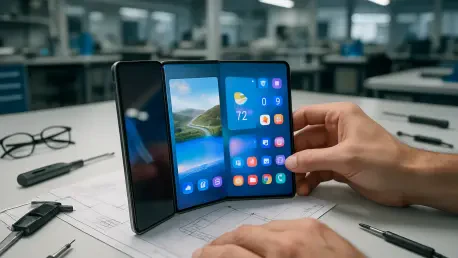

What if a single device could morph from a smartphone to a tablet to a full-fledged workstation, all while slipping effortlessly into your pocket? Samsung has unveiled a groundbreaking answer with its first-ever tri-fold smartphone, launched on December 12 in South Korea. This innovative gadget, blending futuristic design with powerful technology, is poised to redefine how users interact with mobile devices. With its sleek form and transformative features, this release marks a significant chapter in the evolution of foldable technology.
The Significance of a Tri-Fold Breakthrough
In an era where consumers crave devices that balance portability with productivity, Samsung’s latest launch stands out as a pivotal moment. This isn’t just another smartphone; it’s a response to a growing demand for versatile tools that adapt to fast-paced lifestyles. Industry projections show foldable smartphone sales climbing by 30% globally over the next two years, highlighting a shift toward multi-functional displays. Samsung, already a leader with over 16 foldable devices in its arsenal, is setting a new standard with this tri-fold marvel, challenging competitors like Huawei’s Mate XT to keep pace in a rapidly expanding market.
Unveiling the Design That Redefines Innovation
At the core of this device lies a dual titanium hinge system, a feat of engineering that allows the main screen to fold seamlessly while staying fully protected when closed. The 6.5-inch cover screen, positioned on the back, offers a crisp 2,520 x 1,080px resolution and a dazzling 2,600 nits brightness, perfect for quick glances. Unfold it, and a massive 10-inch internal display emerges—the largest in Samsung’s foldable lineup—with a 2,160 x 1,584px resolution and a smooth 1-120Hz refresh rate. Weighing 309 grams and measuring just 3.9mm at its thinnest point, the Advanced Armor Aluminum frame and IP48 dust and water resistance add durability to its elegant design.
Beyond aesthetics, the craftsmanship addresses long-standing concerns about foldable durability. Tech analyst Mia Kwon remarked, “The dual hinges are a game-changer, tackling the wear-and-tear issues that plague many foldables. This feels like a device built to last.” Such attention to structural integrity positions this smartphone as not just a novelty, but a reliable companion for daily use, pushing the boundaries of what users expect from mobile hardware.
Power and Performance Under the Hood
Driving this cutting-edge device is Qualcomm’s Snapdragon 8 Elite for Galaxy, paired with a robust 16GB of RAM and storage options up to 1TB. Though a step behind the latest chipset generation, its performance remains stellar, handling multitasking and intensive apps with ease. The camera array, akin to that of top-tier models, boasts a 200 MP main sensor, a 10MP 3x telephoto, and a 12MP ultrawide lens, delivering flagship-quality photography for every moment.
Battery life doesn’t disappoint either, with a 5,600 mAh three-cell system spread across its panels, supporting 45W wired and 15W wireless charging. This capacity ensures the device keeps up with demanding schedules, whether for work or leisure. As one early tester noted, “It powered through a full day of heavy use without breaking a sweat—truly impressive for something so thin.” This blend of power and endurance underscores Samsung’s focus on practical innovation.
Software That Elevates the Experience
Running on OneUI 8, built atop Android 16, the device takes full advantage of its expansive screen real estate. Users can run three full-sized apps simultaneously in portrait mode, making it a dream for multitaskers juggling work, chats, and research. The standalone Samsung DeX mode, accessible with a tap in Quick Settings, transforms the screen into a desktop-like interface when paired with a keyboard and mouse—a feature that redefines on-the-go productivity.
Feedback from beta users highlights this versatility. “Switching to DeX during a meeting felt seamless; it’s like having a mini-office anywhere,” shared one professional. This software integration isn’t just a gimmick; it’s a thoughtful addition catering to a diverse audience, from students to remote workers, proving that the device’s potential extends far beyond traditional smartphone functions.
Industry Buzz and Market Impact
The tech world is abuzz with reactions to this tri-fold debut. Analysts see it as a bold step forward in a competitive landscape, with one industry insider stating, “Samsung is addressing real pain points—durability, screen size, and utility—while others are still catching up.” Market trends reinforce this enthusiasm, as foldables are increasingly viewed as the future of mobile tech, blending the best of smartphones and tablets into a single package.
This launch also signals an intensifying race among manufacturers to innovate. With initial availability in South Korea and plans for expansion to regions like China, Taiwan, and the U.S., Samsung’s strategy appears geared toward capturing early adopters while refining its approach for a global audience. The buzz around this device suggests it could set a benchmark for what foldables can achieve in the coming years.
Tips to Maximize This Cutting-Edge Device
For those eager to harness the full capabilities of this smartphone, leveraging its unique features is key. Split the 10-inch display into three app windows for seamless multitasking—perfect for drafting emails while referencing data and staying connected on calls. Customizable layouts in OneUI 8 ensure these setups are just a tap away, streamlining busy workflows.
Additionally, transforming it into a workstation via DeX mode offers a laptop-like experience without extra gear. Pair it with Bluetooth peripherals for editing or browsing on a larger canvas—an ideal setup for remote tasks. Lastly, optimize battery life by adjusting the refresh rate to 60Hz for lighter use and relying on the cover screen for quick checks, preserving power for when it’s needed most.
Reflecting on a Milestone in Mobile Tech
Looking back, the unveiling of Samsung’s first tri-fold device marked a defining moment in the foldable arena. Its fusion of innovative design, robust performance, and versatile software carved a new path for what smartphones could be. As the industry evolved, this launch stood as a testament to the power of bold ideas meeting practical needs. Moving forward, the challenge lies in how such devices can continue to adapt—perhaps by integrating even smarter features or enhancing accessibility. For users and enthusiasts alike, staying attuned to these advancements offers a chance to embrace tools that truly transform daily life.