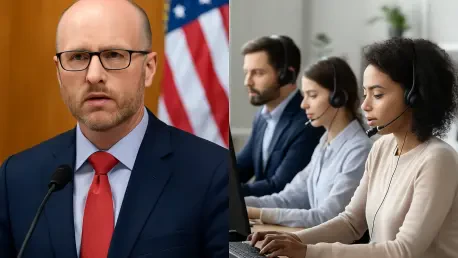

The rapid evolution of the American digital landscape has reached a critical juncture where the invisible threads of customer support are being pulled back to domestic shores. The Federal Communications Commission (FCC) is currently weighing a transformative policy shift that could fundamentally alter how millions of Americans interact with their service providers. As major wireless carriers like AT&T, T-Mobile, and Verizon face mounting scrutiny over the quality of their customer support, a proposal led by FCC Chairman Brendan Carr suggests a formal mandate for “onshoring” these critical operations. This initiative aims to address a trifecta of modern grievances: declining service quality, persistent language barriers, and growing concerns over data security. By exploring the balance between corporate efficiency and consumer rights, this analysis examines whether a government mandate is the necessary remedy for a fractured support system.
In this shifting regulatory environment, the focus has moved beyond mere cost-benefit ratios toward a more holistic view of the subscriber experience. The proposal is not just about where a call is answered, but about the integrity of the entire telecommunications infrastructure. As the FCC moves toward a potential “America First” framework, the industry must prepare for a future where proximity and cultural alignment are valued as much as technical expertise.
The Evolution: Outsourcing and the Push for Domestic Rebirth
To understand the current tension, one must look back at the radical shift in corporate strategy that defined the previous decades. Driven by the desire to slash overhead costs, nearly 70% of U.S. businesses moved at least one department—most frequently customer service—to international locations. This trend turned domestic call centers into a vanishing industry as the “Big Three” carriers prioritized bottom-line savings over localized support. While this strategy initially boosted profit margins, it created a long-term deficit in customer trust that has now reached a boiling point.
Today’s push for onshoring is not merely a nostalgic return to the past but a calculated response to the operational failures inherent in a hyper-globalized service model. The reliance on offshore labor has increasingly alienated the American consumer, leading to a demand for services that are more attuned to the domestic market. By incentivizing the return of these roles, the FCC seeks to revitalize an industry that was once a staple of the American middle class, potentially creating thousands of new jobs within the United States.
Bridging the Gap: Restoring Service Excellence
The Functional Impact: Linguistic Barriers and Technical Resolution
One of the most significant arguments for onshoring centers on the effectiveness of communication during high-stakes technical interactions. When customers call support, they are often dealing with complex billing issues or sophisticated hardware malfunctions that require nuanced explanations. Current industry data and consumer feedback suggest that offshore representatives, frequently limited by strict scripts and language hurdles, struggle to provide creative or accurate solutions. This leads to “communication fatigue,” where customers give up on resolving problems after receiving “parroted” responses that fail to address the specific context of their situation.
The proposed mandate for domestic support is framed as a way to ensure representatives possess the cultural and linguistic fluency necessary to navigate these high-friction interactions. By requiring proficiency in “Standard American English,” the FCC aims to eliminate the friction that currently defines the telecom service experience. This is not about exclusion, but about functional efficiency; clear communication is the primary tool for resolving technical disputes and ensuring that consumers are not misled by linguistic nuances lost in translation.
Enhancing Security: National Sovereignty and Data Privacy
Beyond the quality of conversation, there is a growing concern regarding the security of personal data handled in foreign jurisdictions. The FCC has highlighted a troubling link between offshore call centers and an increase in fraudulent activities, such as scam calls and identity theft. When sensitive American consumer data is accessed from overseas, the ability of regulators to provide oversight or enforce strict privacy laws is severely diminished. This creates a vulnerability that malicious actors can exploit, often using specialized technical knowledge to defraud the very people they are meant to assist.
By bringing these operations back to U.S. soil, regulators can implement more stringent protocols and ensure that workers are subject to American background checks and legal accountability. This move is seen as a vital step in fortifying the national telecommunications infrastructure against external threats. Data sovereignty has become a cornerstone of modern national security, and the onshoring of support centers represents a tactical move to reclaim control over the private information of millions of subscribers.
Navigating the Nuances: Social and Economic Perspectives
Critics of the mandate sometimes suggest that frustrations with foreign call centers are rooted in xenophobia, yet a deeper look reveals a different reality. Testimonials from a diverse range of subscribers—including non-native English speakers—indicate that the primary grievance is the functional ability to resolve a technical complaint, not the ethnicity of the agent. Users from all backgrounds report that the “language barrier” is a tangible operational failure that prevents the delivery of promised services.
Furthermore, the economic implications of an “America First” framework are substantial and reach far beyond individual customer calls. Onshoring represents a massive opportunity to revitalize the domestic job market, keeping tax revenue and employment opportunities within the country rather than exporting them to low-wage international markets. This shift aligns corporate operations with the broader national interest, suggesting that the era of prioritizing short-term savings at the expense of domestic economic health is coming to an end.
The Future Landscape: Automation, Regulation, and AI
As the FCC moves toward potential regulation, the industry is already looking for ways to mitigate the higher costs associated with American labor. Experts predict that a mandate for onshoring may inadvertently accelerate the adoption of Artificial Intelligence (AI). If hiring U.S. workers becomes a regulatory requirement, carriers may pivot toward AI-driven voice bots to maintain their margins. While these bots eliminate language barriers and operate at a fraction of the cost, they often lack the empathy and complex problem-solving skills of a human agent.
The future of telecom support will likely be a battleground between human-centric domestic service and the cost-effective efficiency of automated systems. Companies will have to decide whether to invest in a premium American workforce or double down on digital interfaces. This technological shift could redefine the “human touch” in customer service, creating a tiered system where human interaction becomes a luxury feature rather than a standard expectation.
Key Insights: Strategic Considerations for a Changing Market
The analysis of the FCC’s proposal yields several critical takeaways for both providers and consumers. For businesses, the potential mandate suggested a need to begin investing in domestic infrastructure immediately to avoid a jarring transition later. Actionable strategies included developing hybrid support models that prioritized human interaction for complex issues while utilizing technology for routine tasks. By being proactive, carriers could have turned a regulatory hurdle into a competitive advantage by marketing superior, U.S.-based support.
For consumers, the proposed “Right to a U.S. Representative” and mandatory disclosure of call routing provided unprecedented transparency. These shifts signaled a broader trend: the era of prioritizing low-cost offshore labor at the expense of consumer security and satisfaction reached its regulatory end. Providers who embraced these changes early found themselves better positioned to retain loyal customers who valued security and clear communication over the lowest possible price point.
Reclaiming Standards: The Quality of American Telecommunications
The debate over whether the FCC should mandate onshoring for telecom support reflected a larger national conversation about corporate responsibility and the value of the American worker. While the logistical and financial hurdles were significant, the potential benefits—higher service standards, improved data security, and a bolstered domestic workforce—offered a compelling case for reform. Ultimately, ensuring that communication between a carrier and its customer was clear, secure, and effective became a fundamental requirement for a functional digital society.
Moving forward, stakeholders must prioritize the integration of advanced localized training and the ethical deployment of AI to fill the gaps left by the transition. Companies should have looked toward regional talent hubs to build specialized centers that could handle high-level technical escalations. By focusing on restoring a human touch to an industry that was for too long defined by distance, the telecommunications sector can finally align its operational strategies with the actual needs and security requirements of the American public. The transition served as a catalyst for a more robust, domestic-centered service economy.