
The typical lifecycle of a modern smartphone ends not because the entire device fails, but because a single component like the battery or camera sensor falls behind the curve of rapid innovation. Tecno is currently challenging this wasteful cycle by introducing a concept phone that merges high-end aesthetics with a Lego-like modularity. By shrinking the core hardware to a mere 4.9mm while maintaining a system of swappable components, this device proposes a world where your hardware evolves with you rather than forcing a total replacement every two years.
Challenging the Status Quo: Disposable Hardware
The modern smartphone has long been a “black box”—a sealed slab of glass and metal that requires users to upgrade their entire device just to get a better lens or a fresher battery. This design philosophy creates a massive environmental footprint and limits consumer choice. Tecno’s intervention disrupts this pattern by separating the core processing unit from the specialized peripherals.
Instead of a static purchase, the phone becomes a dynamic investment. By allowing users to detach and reattach specific modules, the company addresses the core frustration of hardware obsolescence. This approach transforms the smartphone from a consumable product into a long-term platform, shifting the focus from yearly sales to sustained utility and personalized upgrades.
The Resurgence: Modular Design in a Sleek Mobile Era
The dream of a modular phone has existed for a decade, yet previous attempts often resulted in bulky, unpolished devices that failed to capture the public’s imagination. Today, the tech industry faces mounting pressure to address electronic waste and extend device lifecycles. Tecno’s approach bridges the gap between the rugged practicality of modular hardware and the ultra-slim design language that defines the current flagship market.
This shift signals a move toward sustainable tech that does not sacrifice the premium feel consumers demand. By prioritizing a slim profile, the manufacturer proves that modularity does not have to mean a compromise in pocketability or elegance. It represents a sophisticated evolution of the “Project Ara” concept, refined for an audience that values both form and function in equal measure.
Engineering the Slimmest Modular Ecosystem
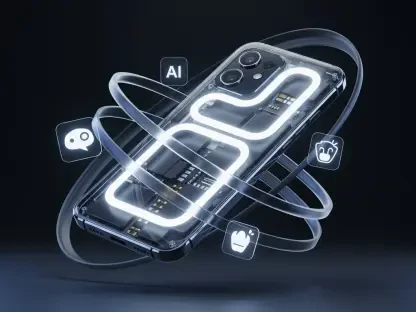
Tecno’s “Modular Magnetic Interconnection Technology” serves as the foundation of this innovation, allowing for seamless hardware transitions without the expected bulk. This proprietary system uses high-strength magnets to align components perfectly, ensuring that the modular additions feel like an integral part of the chassis rather than an awkward afterthought.
The Atom and Moda Editions: A Study in Minimalism
The company showcased two distinct prototypes—the Atom Edition and the Moda Edition—both boasting a record-breaking 4.9mm thickness. These devices feature a matte glass finish and a precision-engineered magnetic array designed to hold external modules firmly in place while maintaining a streamlined profile. The silver and red accents of the Atom contrast with the gold-on-gray Moda, offering a glimpse into how aesthetic customization can coexist with technical modularity.
High-Efficiency Power Delivery: Pogo Pins
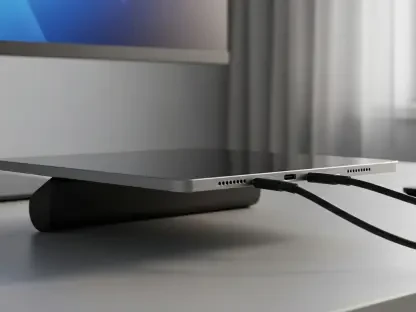
To solve the energy loss and heat issues common with wireless charging, Tecno utilizes physical pogo pins for power transfer. This allows the 4.5mm-thick external power bank module to deliver high-efficiency charging, effectively doubling the phone’s battery life without the thermal throttling associated with inductive loops. This direct connection ensures that power-heavy tasks do not degrade the internal battery unnecessarily.
Tiered Connectivity: Diverse Peripheral Demands
Data transfer within the modular ecosystem is handled through a strategic hierarchy of wireless protocols. Low-power accessories like gaming controllers connect via Bluetooth to conserve energy. In contrast, high-bandwidth components—such as the action camera or telephoto lens modules—rely on ultra-fast Wi-Fi or mmWave frequencies to ensure zero-latency performance, allowing the modules to communicate with the core processor as if they were hardwired.
Shifting from Fixed Features: An Open Ecosystem
Industry analysts view this prototype as more than just a hardware showcase; it is a blueprint for a third-party developer platform. Tecno envisions an open-source hardware environment where specialized manufacturers can create niche modules, such as professional-grade sensors or specialized medical tools. This would allow the device to transcend the traditional boundaries of consumer electronics.
By moving away from a “fixed-feature” purchase model, the company positioned the smartphone as a dynamic platform that can be tailored to specific professional or creative needs on the fly. This democratization of hardware development could lead to a marketplace of specialized add-ons, ranging from high-fidelity audio DACs to thermal imaging cameras, all compatible with the same slim base unit.
Practical Applications: The Modular User
The versatility of this modular system provided immediate, tangible benefits for various user scenarios that current smartphones could not match. It fundamentally changed how individuals interacted with their mobile technology by offering on-demand capability adjustments.
For Mobile Photographers: Content Creators
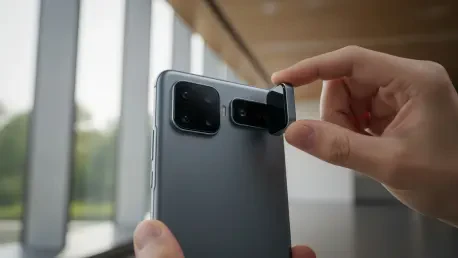
Instead of carrying a bulky camera rig, users snapped on a high-resolution telephoto lens or a dedicated action camera module for specific shoots. This allowed for professional-grade optics when needed, while maintaining a slim profile for everyday use. The ability to swap sensors meant that a photographer could choose between a high-megapixel landscape sensor and a large-pixel low-light sensor depending on the environment.
For Power Users: Gamers
Mobile gamers attached dedicated cooling fans or ergonomic controllers that drew power directly through the pogo pin system. When the workday began, these were swapped for a slim battery pack, ensuring the device lasted through heavy multitasking without requiring a wall outlet. This flexibility eliminated the need for specialized gaming phones, as any base unit could be transformed into a high-performance machine.
For Long-Term Sustainability: Repairability
Rather than replacing a phone when the battery degraded or the camera became outdated, users simply swapped the individual module. This framework provided a clear path toward reducing e-waste by allowing the core processor and screen to remain in use for years while peripheral hardware was upgraded incrementally. The modular design effectively decoupled the screen’s longevity from the camera’s rapid innovation cycle.