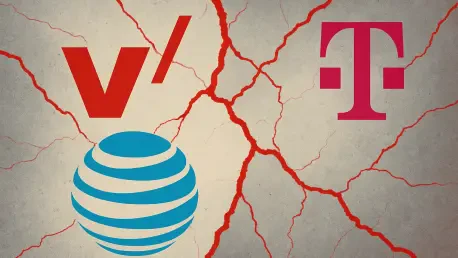

The sudden inability for millions of people to make calls or send messages on a seemingly normal Tuesday morning created a wave of confusion that incorrectly implicated every major wireless carrier in a nationwide failure. On January 14, customers of AT&T and T-Mobile began reporting service issues at an alarming rate, seeing “no signal” bars and failed connection attempts that mirrored a massive network collapse. However, the root cause was far more specific and revealed a critical vulnerability in the nation’s telecommunications infrastructure. This article will dissect the events of that day, answering the key questions about how a problem at a single carrier, Verizon, created a domino effect that disrupted service for its competitors.
The primary objective is to clarify why users of healthy, fully operational networks experienced significant connectivity problems. By exploring the interconnected nature of carrier services, readers can gain a clearer understanding of the difference between a direct network outage and the indirect, or “spillover,” effects that can be just as disruptive. This explanation will untangle the initial reports from outage-tracking websites and provide context for the official statements released by the telecommunication giants involved.
Answering Key Questions About the Service Failures
Why Were AT&T and T-Mobile Customers Reporting No Signal
The confusion began when thousands of non-Verizon customers suddenly found themselves unable to contact friends, family, and colleagues. When a user on AT&T or T-Mobile attempted to call or text someone who used Verizon’s service, the connection would fail. From the user’s perspective, this failure looked identical to a problem with their own carrier. Their phone would display an error, leading them to believe their own signal was the issue and prompting them to report an outage.
This phenomenon is a direct result of how telecommunication networks interact. A successful connection requires a complete, unbroken chain from the sender’s device, through their carrier’s network, across to the recipient’s carrier network, and finally to the recipient’s device. During the Verizon outage, that chain was broken at the destination. Consequently, even though the AT&T and T-Mobile networks were processing the outgoing requests perfectly, the requests had nowhere to go, resulting in a failed connection that was misattributed to the originating network.
Did a Widespread Outage Affect All Major Carriers
Despite appearances on outage-tracking sites like Downdetector, there was no widespread, multi-carrier outage. The data showed a dramatic spike in complaints for all three major providers starting around 11:30 AM ET, with AT&T logging over 1,724 reports and T-Mobile exceeding 1,570 by early afternoon. This concurrent data created the illusion of a systemic, industry-wide failure. However, the reality was that only Verizon was experiencing a genuine internal network problem affecting its voice and data services.
Both AT&T and T-Mobile were quick to issue statements clarifying the situation. Their official communications confirmed that their networks were stable and operating as expected. The flood of customer complaints they received stemmed entirely from the inability of their users to reach people on Verizon’s compromised network. This distinction is crucial; it was not a failure of multiple infrastructures but rather the far-reaching consequence of a single, significant point of failure.
How a Single Carrier Outage Creates a Ripple Effect
The events of January 14 serve as a powerful illustration of network interdependence. In today’s hyper-connected world, wireless carriers are not isolated islands. They are part of a complex, interconnected ecosystem where traffic is constantly routed between them. When one of the largest nodes in that system goes down, the impact is felt across the entire web. Every failed call and undelivered text from a competing carrier to a Verizon customer added to a growing perception of universal failure.
This ripple effect highlights a fundamental challenge in customer communication for telecom companies. It is incredibly difficult to explain to a customer that the network is fine when their personal experience tells them otherwise. The user whose call to a Verizon number fails does not care about the technical reason; they only know their service is not working as they expect it to. This incident underscores how a major outage at one company can damage customer confidence in others, even when those other companies are performing flawlessly.
A Recap of the Interconnected Network Impact
The central takeaway from the January 14 service disruption is that the stability of one carrier is intrinsically linked to the user experience on all others. The Verizon outage demonstrates that a network’s operational status is not the only factor determining customer satisfaction. The ability to connect seamlessly with users on competing services is just as critical, and when that bridge collapses, the perception of reliability collapses with it.
This incident also highlights the role of public data in shaping narratives. While outage-tracking websites provide a valuable real-time glimpse into user-reported problems, their data requires context. The simultaneous spike in reports for all three carriers painted an inaccurate picture of a nationwide telecom meltdown. In reality, these reports were merely symptoms of a singular problem, reflecting the interconnected frustration of users across different networks who were all trying to reach the same broken destination.
Final Reflections on Network Interdependence
The service disruptions of that Tuesday morning provided a stark lesson in the fragility of our modern communication systems. The incident revealed that while the major carriers are competitors, their services are so deeply intertwined that they effectively operate as a single, interdependent ecosystem in the eyes of the consumer. A failure within one network did not remain contained; it bled across boundaries and impacted the daily lives of customers who had no direct relationship with the failing provider.
Ultimately, this event forced a broader conversation about network resilience and the challenges of transparency. It showed that the technical reality of a network’s health could be easily overshadowed by a confusing and frustrating user experience. For countless customers, their service failed them that day, and the distinction of which carrier was truly at fault became secondary to the simple fact that their calls and messages did not go through.