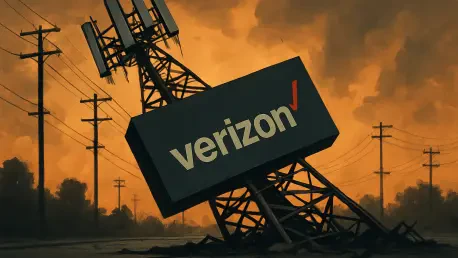

A recent and prolonged coast-to-coast service disruption for millions of Verizon subscribers, which lasted nearly eight hours, has cast a harsh spotlight on a troubling reality within the telecommunications industry. This incident is far more than a temporary inconvenience; it serves as a potent case study for a fundamental shift away from the long-standing gold standard of network performance. For decades, carriers prided themselves on achieving “five-nines” reliability, a promise of near-constant uptime. However, the very nature of modern, software-defined networks has rendered this benchmark obsolete. The architecture that allows for rapid 5G innovation and feature deployment is the same one that introduces a new level of systemic fragility. As carriers increasingly rely on complex, virtualized systems, the era of unwavering network dependability has quietly drawn to a close, forcing both consumers and enterprises to recalibrate their expectations for what it means to stay connected in a world that demands constant access.
The Immediate Fallout and Inadequate Response
The nationwide outage left a significant portion of Verizon’s customer base completely disconnected, unable to make or receive calls, send messages, or access crucial internet services for the better part of a business day. In the aftermath, the company’s response was a familiar exercise in corporate damage control, consisting of public apologies and the issuance of a standard $20 credit per account. This gesture was widely criticized by customers as woefully insufficient, particularly for those with family plans or business accounts where multiple lines were rendered useless. The flat-rate compensation failed to acknowledge the varying degrees of disruption, from minor personal inconvenience to substantial financial losses for businesses reliant on the network. In a telling sign of customer dissatisfaction, reports emerged of subscribers who, by directly contacting customer service to voice their complaints, successfully negotiated significantly larger credits, with some receiving as much as $240. This disparity in compensation highlighted a reactive, rather than proactive, approach to customer restitution and further eroded trust in the carrier’s handling of the crisis.
The technical post-mortem of the event points toward the inherent risks of modern network management, with expert analysis suggesting a flawed software update was the most probable culprit. Roger Entner of Recon Analytics estimated that the outage impacted approximately 1.5 million subscribers and likely originated from a failed update pushed to the 5G standalone core. This core is the nerve center of the 5G network, and a single error within its intricate code can have catastrophic, cascading effects across the entire system. Unlike the hardware-centric networks of the past, where a failure was often isolated to a physical component, today’s virtualized infrastructure means that a logical error can propagate instantaneously and nationally. The incident serves as a stark reminder that the speed and flexibility afforded by software-based provisioning come at a steep price: a heightened vulnerability to widespread, centrally-triggered disruptions. The reliance on continuous software deployment creates a perpetual risk, where the next major outage is potentially just one line of bad code away from being deployed.
Redefining Reliability in the 5G Era
For years, the telecommunications industry has been guided by the “five-nines” principle, a stringent standard dictating that a network should be operational 99.999% of the time. This translates to an impressively small window of just 5.26 minutes of acceptable downtime over an entire year. However, according to network development veteran Dr. Sanjoy Paul, this benchmark is no longer attainable with the current generation of cellular technology. Modern 5G networks are built on a foundation of virtualization and cloud-native principles, meaning they operate more like complex software ecosystems than traditional hardware infrastructures. While this approach allows for unprecedented agility and the ability to roll out new features rapidly, it also introduces a profound level of fragility. Dr. Paul explains that in this new paradigm, a single flawed line of code within a software update can destabilize the entire network. This stands in stark contrast to older, hardware-based systems where resolving an issue often meant physically replacing a faulty piece of equipment, a process that inherently contained the scope of the problem.
The recent eight-hour Verizon outage, along with similar incidents from other major carriers that have averaged around 10 hours in duration, provides compelling evidence for this new reality. These events align with what experts now consider a more realistic “three-nines” (99.9%) reliability level. This revised standard permits up to 8.5 hours of downtime annually—a stark departure from the minutes-per-year tolerance of the past. The consensus view among industry analysts is that the five-nines theory is effectively obsolete. As carriers continue to deepen their reliance on software-based provisioning to manage increasingly complex network functions, major service disruptions are no longer an anomaly but an inherent operational risk. The intricate web of software dependencies and the constant cycle of updates mean that the potential for a system-wide failure is a persistent threat, fundamentally altering the calculus of network stability and forcing a reevaluation of what consumers can and should expect from their wireless providers.
Navigating a Future of Inherent Instability
The industry’s evolution toward software-centric networks signaled a pivotal trade-off between the pursuit of rapid technological advancement and the guarantee of steadfast operational stability. The incident with Verizon’s network did not represent a unique failure but rather an outcome of a systemic shift that has been unfolding for years. The move to virtualized, cloud-native architectures has undeniably accelerated innovation in the 5G space, but it also cemented a new paradigm where prolonged, widespread outages are an unavoidable consequence of that complexity. This reality demanded a significant adjustment in expectations for both consumers and businesses, who had grown accustomed to a level of network dependability that the underlying technology could no longer consistently support. The focus for carriers had consequently shifted from preventing failure entirely to mastering the art of rapid recovery and transparent communication when disruptions inevitably occurred, marking a profound change in the philosophy of network management.