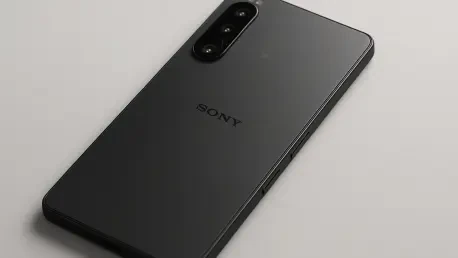

Following a period of intense speculation spurred by major strategic shifts in its other hardware divisions, Sony has moved to quell anxieties surrounding the fate of its long-standing mobile phone brand. After the company’s decision to place its renowned Bravia TV brand under the operational control of TCL, many industry observers questioned the long-term viability of its other consumer electronics, including the Xperia smartphone lineup. Responding to these concerns, Sony’s CFO, Lin Tao, issued a definitive statement, assuring stakeholders and consumers alike that there would be “no change in status” for the Xperia division. This official reassurance aims to stabilize market perception and reaffirm the company’s dedication to remaining a competitor in the mobile space, even as it restructures other parts of its electronics empire. This commitment now appears to be backed by tangible evidence emerging from regulatory databases, providing the first concrete look at the next generation of Xperia devices.
Concrete Evidence Emerges for New Models
The official pronouncements have been substantiated by new information unearthed from the GSMA IMEI database, a global registry for mobile device identifiers that often provides an early confirmation of upcoming products. The listings explicitly reference the next-generation Sony Xperia 1 VIII and Xperia 10 VIII, confirming that development is well underway. The flagship Xperia 1 VIII is identified under the primary model name PM-152X-BV, with several regional variants cataloged as XQ-GE44, XQ-GE54, and XQ-GE74, suggesting a rollout planned for multiple international markets. In parallel, the mid-range Xperia 10 VIII follows a sequential naming pattern, appearing as PM-153X-BV. Its associated regional variants are listed as XQ-GH44, XQ-GH54, and XQ-GH74. While these database entries do not offer a deep dive into technical specifications, they serve as undeniable proof that Sony’s product pipeline for the upcoming cycle remains active for both its premium and mid-tier smartphone segments, aligning with the company’s recent reassurances.
Lingering Questions and Strategic Shifts
While the database discovery confirmed the existence of two key models, it also revealed subtle but significant details about Sony’s evolving hardware strategy. A minor hardware note indicated that both the Xperia 1 VIII and Xperia 10 VIII will feature a single nano-SIM slot complemented by eSIM support, a configuration that streamlines device design but may influence users accustomed to dual physical SIMs. More telling, however, was the conspicuous absence of a new Xperia 5 model from the registry. This omission marked the third consecutive generation that a successor to the compact flagship has failed to materialize, strongly suggesting that Sony has permanently retired the line. This strategic pivot away from the niche compact flagship market, which has seen dwindling interest across the industry, indicated a consolidation of Sony’s focus. The company’s efforts appeared to be concentrated on its primary flagship and its volume-driving mid-range offering, a move that refined its market position and streamlined its product portfolio for the foreseeable future.