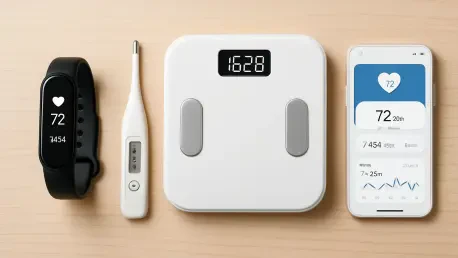

The frontier of personal wellness is no longer defined by simple fitness trackers that count steps but by a sophisticated ecosystem of devices that bring the diagnostic power of a clinical lab directly into our lives. The latest wave of innovation is shifting the paradigm from reactive health monitoring to proactive, personalized management, driven by technologies that are more discreet, more intelligent, and more attuned to the specific nuances of the human body. This evolution is marked by a profound focus on underserved health areas, the seamless integration of powerful sensors into everyday objects, and the empowerment of individuals with data that was once the exclusive domain of medical professionals. As a result, consumers are gaining unprecedented control over their well-being, using hyper-specialized tools to decode everything from complex hormonal fluctuations to the subtle indicators of metabolic health, heralding a future where technology serves as a constant, insightful partner in our lifelong health journey.
A New Era for Women’s Health
The field of femtech is undergoing a significant transformation, moving far beyond generalized menstrual cycle apps to address complex and historically overlooked stages of women’s health with remarkable specificity. A prime example of this evolution is the Peri perimenopause tracker, a device engineered to navigate the often-turbulent transition to menopause, a period that can span more than a decade. Worn discreetly on the stomach, this tracker is equipped with a comprehensive sensor suite—including an accelerometer, EDA sensor, PPG sensor, and temperature sensor—that feeds data into a proprietary algorithm. This system is designed to identify and log key perimenopausal symptoms such as hot flashes, night sweats, sleep disruptions, and mood shifts. The companion app provides users with actionable insights into these patterns, enabling them to understand their bodies on a deeper level and, for those undergoing hormone therapy, to objectively monitor the treatment’s effectiveness. This technology brings much-needed data and clarity to a vital life stage that has long been misunderstood.
This deeper focus on female wellness extends to addressing common yet debilitating issues with innovative, non-pharmaceutical solutions. The OhmBody menstrual comfort device introduces a novel approach to pain management by using targeted neurostimulation. Its patented earpiece delivers gentle electrical impulses to the auricular branches of the trigeminal and vagus nerves, helping to guide the nervous system back to a state of rest and thereby alleviate menstrual discomfort and even reduce heavy bleeding. Looking further into the future, the conceptual Vivoo FlowPad reimagines a common sanitary product as a powerful diagnostic tool. This smart pad integrates a microfluidic layer that channels menstrual blood to different biomarker zones, testing for key indicators related to fertility, ovarian health, and perimenopausal hormones. By simply scanning the pad with a smartphone, users could gain regular, non-invasive insights into their reproductive health, transforming a routine necessity into a proactive screening instrument.
Seamless Integration and Smarter Wearables
The relentless trend toward miniaturization in health technology is culminating in wearables that are not only more powerful but also virtually indistinguishable from conventional accessories. The smart ring category, in particular, is maturing rapidly, with new designs that prioritize both elegance and functionality. The Yuwell smart ring, for instance, stands out with its remarkably thin and lightweight construction, offering a stark contrast to the bulkier models that have dominated the market. At the same time, established brands like RingConn are pushing the technological envelope with their third-generation devices. Forthcoming models are set to include sophisticated features such as integrated blood pressure insights, a highly sought-after capability, alongside smart vibrations for notifications and extended battery life. This evolution demonstrates that comprehensive health monitoring can be achieved without compromising style, allowing advanced tracking to blend effortlessly into a user’s daily life.
In a market saturated with devices demanding constant attention and daily charging, a notable counter-trend is emerging, one that champions simplicity, longevity, and timeless design. The return of the Pebble Round 2 smartwatch epitomizes this philosophy. Its creators have focused on perfecting the core user experience rather than adding extraneous features. The device is nearly as slim as a traditional analog watch and features a larger, more readable e-paper display that remains visible in all lighting conditions. However, its most impressive feature is an extraordinary 10-day battery life, which directly addresses one of the primary frustrations for smartwatch users. By offering a practical, elegant, and low-maintenance alternative to its power-hungry competitors, the Pebble Round 2 proves that the future of wearable technology is not a monolithic race for more features but a diverse landscape that values user-centric design and real-world usability.
Bringing the Clinic into Your Home
The democratization of advanced medical diagnostics is accelerating, with a new generation of consumer devices making sophisticated health analysis more accessible than ever before. Sleep technology, for instance, is moving beyond passive tracking with products like the NextSense Smartbuds. These are not merely earbuds that play soothing soundscapes; they incorporate clinical-grade electroencephalogram (EEG) technology to actively enhance sleep quality. Traditionally, an EEG requires attaching numerous electrodes to the scalp with a conductive gel, but NextSense has integrated this capability into a comfortable earbud format using dry electrodes. Once the device detects the user has entered deep sleep, it employs a technique called “slow wave enhancement,” playing precisely timed pink noise to encourage the brain to produce more of the restorative slow waves essential for physical and cognitive recovery. This represents a significant leap from simply measuring sleep to actively improving it.
This trend of empowering at-home health management is further exemplified by devices that provide a holistic view of bodily functions. The Withings Body Scan 2 transforms the humble bathroom scale into a comprehensive health station. In a process that takes less than 90 seconds, it measures an extensive array of biomarkers, including an electrocardiogram (ECG), arterial stiffness, cardiac reactivity, and metabolic efficiency. This data provides a detailed snapshot of cardiometabolic health, helping users understand the impact of factors like stress, lifestyle changes, or major life stages like menopause. In a different but equally vital domain, the Allergen Alert offers a practical solution for individuals with severe food allergies. This handheld, FDA-approved device allows users to test a small food sample for cross-contamination of allergens like lactose and gluten, providing a simple, definitive result that can prevent severe reactions and alleviate the anxiety associated with dining out.
Targeted Solutions for Modern Lifestyles
The trajectory of personal health technology has clearly shifted toward highly specialized tools designed to solve the distinct wellness challenges posed by contemporary life. This move was underscored by the emergence of devices that addressed niche yet widespread issues with precision. The Sunbooster, for instance, was developed specifically to counteract the negative effects of insufficient sunlight exposure common among individuals who spend their days working indoors. By attaching to a laptop or monitor and projecting near-infrared light, it aimed to replicate a component of natural sunlight to boost energy, improve mood, and offer dermatological benefits. This product was a testament to how innovation was no longer just about broad fitness metrics but about delivering targeted interventions that integrate into modern routines. The evolution of personal health tech had culminated in a landscape where technology served not as a general observer, but as a specialized partner in navigating the unique health demands of the 21st century.