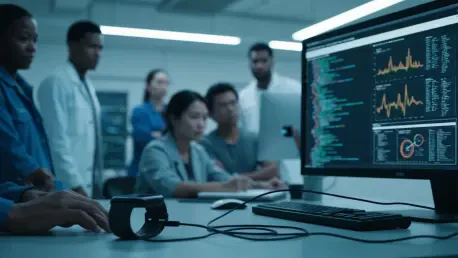

Today we’re sitting down with Oscar Vail, a technology expert who has spent years tracking the evolution of mobile and wearable devices. With the recent One UI 8 Watch update for the beloved Samsung Galaxy Watch 4 Classic causing significant issues, we wanted to get his take on the situation. We’ll be diving into the technical reasons behind such software-induced hardware failures, what the strange user-reported quirks might indicate, and the broader implications this has for user trust and Samsung’s standing in a fiercely competitive market.
The article notes that the One UI 8 Watch update is causing failures in wrist detection, BIA, and ECG sensors. Based on your experience, could you walk us through the technical reasons why a software push might completely break the functionality of physical hardware sensors?
It’s a classic case of the intricate dance between software and hardware going horribly wrong. The physical sensors themselves are likely perfectly fine; the problem lies in the software layer that acts as their brain. This new One UI 8 update contains firmware and drivers that communicate directly with the hardware. A bug in this new code could be sending incorrect initialization commands, failing to allocate the necessary power, or misinterpreting the data the sensors send back. Think of it like a skilled musician being given a sheet of music written in a language they can’t read—they can’t perform, even though their instrument is perfectly tuned. The software is essentially telling the sensors to do the wrong thing, or nothing at all, which results in them failing their diagnostic checks completely.
One user reported a strange quirk where sensors briefly worked when the watch was on the inside of the wrist. What might this specific behavior indicate about the root of the problem, and what troubleshooting steps, beyond a factory reset, would this detail suggest to you?
That is a fascinating and telling detail. It strongly suggests the issue isn’t a total hardware failure but a critical software calibration error. The sensors, particularly the BIA and ECG, rely on precise conditions for contact and reading. The inside of the wrist often has less hair, different skin tone consistency, and closer contact with blood vessels. My hypothesis is that the new software has an extremely narrow, and flawed, set of parameters for what it considers a “valid” reading. The inner wrist might just happen to fall within that tiny, bugged window of operation. A factory reset won’t fix this because it just reinstalls the same flawed operating system. The only real step, unfortunately, is to wait for a patch from Samsung or, for a more technical user, attempt to find a way to downgrade the firmware to the previous stable version, which is often a complex and risky process.
The text suggests Samsung paused the update rollout. How does a company typically manage a problematic release like this behind the scenes, and what impact could this have on user trust in Samsung’s promises of software longevity for its legacy devices like the Watch 4?
When reports like this start flooding in, it’s all hands on deck. The first step is to immediately halt the over-the-air rollout to contain the damage and prevent more devices from being affected. Internally, their engineering teams are scrambling to replicate the bug, analyzing diagnostic logs from affected users, and pinpointing the exact lines of code causing the failure. This is a high-pressure situation. For users, the impact on trust is significant. The promise of keeping older devices like the fan-favorite Watch 4 modern with new software is a huge selling point. When an update breaks the device instead of improving it, it plants a seed of doubt. Users start to wonder if these updates are properly tested on older hardware, or worse, if it’s a subtle push to force them into buying a new model. It directly undermines the value proposition of their ecosystem’s longevity.
Given the competition from Garmin and the Pixel Watch, how crucial is software stability on older devices for keeping users within an ecosystem? Could you share some examples or metrics on how botched updates can directly affect a brand’s market share or customer retention?
It is absolutely critical. The wearable market is no longer just about flashy features; it’s about reliability and trust. A user with a Galaxy Watch 4 is likely a Samsung phone user, deeply embedded in that ecosystem. But if an update cripples their watch, that trust is shattered. They’ll look over at Garmin, a brand synonymous with rock-solid stability for serious athletes, or the Google Pixel Watch with its clean software integration, and the “walled garden” suddenly seems less appealing. While I don’t have hard sales numbers in front of me, the anecdotal evidence in user forums is powerful. A single bad experience like this can be the final push for a long-time customer to switch brands when it’s time to upgrade their phone and watch combo. Customer retention in tech hinges on the promise that your expensive devices will not only last but also improve over time, not be sabotaged by the very company that made them.
Do you have any advice for our readers?
If you own a Galaxy Watch 4 Classic and haven’t installed the One UI 8 update, my advice is to hold off. Go into your settings and disable automatic software updates for the time being. The best course of action is to wait and watch for news. Keep an eye on tech publications and community forums for reports that Samsung has released a patched, stable version. For those who have already updated and are facing these issues, contact Samsung support directly. The more official reports they receive, the higher the priority this fix will become. It’s frustrating, but being patient now is far better than ending up with a device whose key features are disabled.