
Oscar Vail is a distinguished technology expert whose insights into the intersection of robotics, open-source development, and consumer electronics have made him a leading voice in the industry. With a career dedicated to tracking the evolution of wearable hardware and the software ecosystems that drive them, he offers a unique perspective on how emerging technologies transition from niche prototypes to essential daily tools. In this conversation, we explore the strategic shift toward display-free smart glasses, the critical role of AI-driven voice interfaces, and the hardware engineering required to merge high fashion with sophisticated mobile sensing.
Future smart glasses are shifting toward display-free designs using premium materials like acetate in colors like ocean blue or light brown. How does this focus on traditional aesthetics influence mainstream adoption, and what technical hurdles exist when embedding cameras and speakers into slim, rectangular, or oval frame styles?
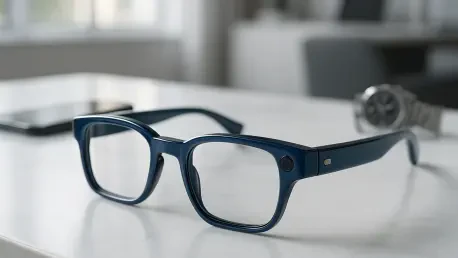
The move toward premium materials like acetate is a deliberate attempt to shed the “gadget” look that plagued early wearables and instead embrace the language of high-end eyewear. By offering four distinct styles—ranging from large Wayfarers to slim rectangular and refined oval frames—the goal is to make the technology invisible so that it feels like a personal fashion choice rather than a technical burden. However, shrinking the necessary components to fit these slim profiles is an immense engineering feat, as you have to hide cameras, batteries, and speakers within a frame that people expect to be lightweight and balanced. In shades like ocean blue or light brown, these devices must maintain the tactile quality of luxury glasses while housing the sophisticated sensors required for spatial awareness. This focus on aesthetics is the primary bridge to mainstream adoption, as most users are only willing to wear technology on their faces if it looks indistinguishable from the classic frames they already love.
These wearables are expected to rely heavily on a contextually aware assistant arriving with iOS 27. What specific improvements must a voice interface demonstrate to replace a visual display, and how does deep integration with a phone’s operating system change the way a user interacts with their surroundings?
For a display-free device to succeed, the voice interface must evolve from a simple command processor into a proactive, contextually aware companion that understands the world exactly as the user does. With the release of iOS 27, we expect to see an assistant that doesn’t just answer questions but interprets visual data from the glasses’ cameras to provide real-time insights about what the wearer is looking at. This deep integration allows the device to pull from the iPhone’s processing power and personal data, creating a seamless loop where the glasses act as the eyes and ears of the smartphone. When the assistant is truly “aware,” it can whisper a person’s name into your ear during a meeting or give you walking directions without you ever needing to glance at a screen. This shift fundamentally changes human interaction by removing the “phone barrier,” allowing users to remain fully present in their environment while staying digitally connected.
The strategy for wearable AI includes a three-pronged approach involving glasses, camera-equipped earbuds, and pendants. How would these different form factors synchronize to provide a complete picture of a user’s environment, and what are the specific benefits of using multiple sensors across different parts of the body?
This three-pronged approach—combining smart glasses, camera-enabled earbuds, and pendants—creates a multi-perspective sensor mesh that captures a 360-degree view of the user’s life. By distributing sensors across different points, the system can overcome the limitations of a single device, such as the glasses being obstructed by a hat or the earbuds being tucked away. For instance, the pendant might capture wide-angle environmental data while the glasses focus on the user’s direct line of sight, feeding all that information into a central intelligence system. This synchronization allows for a much richer data set, enabling the AI to understand complex social cues, physical obstacles, and ambient sounds with incredible precision. Ultimately, this multi-device ecosystem ensures that the digital assistant always has a clear “line of sight” to the user’s context, making the AI’s suggestions much more accurate and timely.
Rather than partnering with established fashion houses, some tech companies are choosing to design frames in-house in styles like the Wayfarer. Why is controlling the design and manufacturing process internally a significant move, and how does the choice of premium materials like acetate impact the device’s long-term durability?
Designing frames in-house allows a company to maintain absolute control over the structural integrity and internal layout, which is vital when every millimeter of space is needed for circuitry. Unlike a partnership with a traditional eyewear brand, internal design ensures that the hardware isn’t an afterthought squeezed into an existing frame, but rather a cohesive unit where the acetate and electronics are integrated from day one. Acetate is particularly valuable here because it is a high-quality, plant-based plastic that is both hypoallergenic and significantly more durable than the cheap injected plastics found in budget electronics. It can be polished to a high luster and maintains its shape over years of use, which is essential for a device that is meant to be worn daily for several years. By taking this path, the manufacturer can ensure that the “tech” doesn’t compromise the “wear,” resulting in a product that feels like a premium heirloom rather than a disposable gadget.
With products expected to hit the market in late 2026 or 2027, the gap between announcement and availability is significant. How does a multi-year development cycle affect a company’s ability to compete with existing smart glasses, and what key metrics will determine if these devices successfully replace traditional headsets?
A long development cycle is a double-edged sword; while it risks the product looking “late” compared to competitors who hit the market in 2023, it also provides the necessary time to perfect the software ecosystem and custom silicon. For a device launching in 2027, the primary metric of success will be how effectively it leverages tight integration with the existing smartphone ecosystem to provide a superior user experience. We have seen this strategy work before with smartwatches, where being late to the market didn’t matter because the final product was more polished and better integrated than the first movers. If these glasses can offer a battery life that lasts a full day and an AI that is genuinely helpful rather than frustrating, they will easily displace the clunky, heavy headsets that most people find uncomfortable. Success will ultimately be measured by “habitual wearability”—whether a user feels a sense of loss or friction when they leave the house without them.
What is your forecast for smart glasses?
I believe we are entering an era where the “screenless” interface will become the primary way we interact with the digital world for short, frequent bursts of information. By 2027, smart glasses will have moved past the novelty phase and will be viewed as a standard accessory for anyone who wants to stay connected without being tethered to a handheld screen. The success of this category will be driven by “invisible technology,” where the hardware disappears into the background and the AI becomes an intuitive extension of our own senses. We will see a rapid decline in traditional AR headsets for casual consumers, as the comfort and style of acetate frames win out over the high-spec but bulky displays of the past. My forecast is that within five years, smart glasses will be as ubiquitous as wireless earbuds are today, fundamentally shifting our focus back to the physical world around us.