
Oscar Vail is a seasoned technology expert whose career has been defined by a deep fascination with the intersection of hardware engineering and emerging software ecosystems. With a professional background spanning quantum computing and open-source robotics, he offers a unique perspective on how incremental hardware shifts dictate the future of mobile interaction. Today, we explore the evolving design philosophy behind upcoming smartphone displays, the strategic balancing act of internal performance versus aesthetics, and the potential shifts in global release schedules that could redefine the consumer tech landscape.
Instead of a complete removal, the trend for upcoming smartphone displays involves shrinking the pill-shaped camera cutout across both high-end and slim-profile models. What engineering hurdles do designers face when reducing these sensor footprints, and how does this incremental change influence the user’s interaction with software-based notification systems?
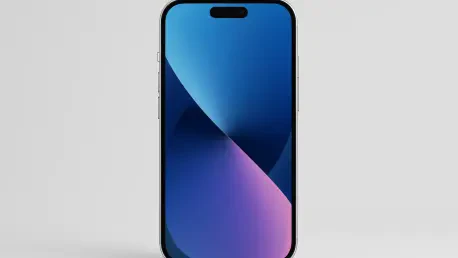
The primary challenge lies in the physics of the optical sensors and the complex array required for secure facial recognition. Shrinking that pill-shaped cutout means engineers must find a way to densify the dot projector and infrared sensors without sacrificing the biometric accuracy users have come to expect. While early rumors hinted at a total disappearance of the Dynamic Island on the iPhone 18 Pro, the current reality points toward a smaller, more refined footprint across the entire lineup, including the standard models and the iPhone Air 2. This creates a fascinating tension for software designers who must recalibrate the animations of the Dynamic Island to feel fluid around a smaller physical anchor. Even a minor reduction in the hardware “dead zone” allows for more immersive screen real estate, making the software-based notifications feel less like a mask and more like a seamless part of the display.
Display bezels for the next generation of mobile devices are expected to remain consistent with current dimensions even as internal components see significant chip upgrades. Why might a manufacturer choose to prioritize internal performance over reducing screen borders, and how does this decision affect the device’s perceived value in a competitive market?
In the current development cycle for the iPhone 18 and its siblings, we are seeing a deliberate choice to keep bezel dimensions identical to the iPhone 17 generation. Prioritizing chip upgrades over thinner borders is often a calculated move to ensure the device can handle increasingly demanding tasks, such as on-device machine learning and high-fidelity rendering. From a manufacturing standpoint, maintaining the same display chassis reduces production risk, while the improved internals provide the actual “horsepower” that keeps the device fast for years. However, this creates a market challenge where the “perceived value” might suffer because the phone looks physically unchanged from the front, aside from the smaller pill-shaped hole. To counter this, the brand relies on the tactile speed of the new processors to prove that the true innovation is happening under the hood rather than at the edges.
A split release strategy may be on the horizon, where premium and foldable models debut in the fall, while standard and second-generation thin models follow in the spring. What logistical advantages does a staggered launch offer, and how should consumers navigate their upgrade cycles when new hardware is arriving twice a year?
Staggering launches provides a massive logistical relief by smoothing out the supply chain spikes that usually overwhelm factories every September. By launching the high-end Pro, Pro Max, and the rumored iPhone Fold or Ultra in the fall, the company can capture the enthusiast market, while saving the iPhone 18, 18e, and the Air 2 for a spring debut. This keeps the brand in the news cycle year-round and prevents one model from cannibalizing the sales of another during the crowded holiday season. For consumers, this means the “newest” phone is always just six months away, which requires a more disciplined approach to upgrading. My advice to users is to identify their specific needs—if you crave the cutting-edge foldables or Pro power, the fall remains your window, but if you prefer the refined, slim profile of an Air model, the spring becomes your new target.
What is your forecast for the iPhone 18 series?
I anticipate that the iPhone 18 series will be remembered as the “harmonization” generation, where the design gap between the entry-level and Pro models significantly narrows. By bringing the smaller Dynamic Island to the entire range, from the base iPhone 18 to the specialized Air 2, we are seeing a unified visual identity that no longer penalizes those who prefer a thinner or more affordable device. While the screen bezels may remain static, the internal leap provided by the next-generation chips will be the real story, likely setting the stage for more advanced folding or ultra-thin form factors. I expect the introduction of a Fold or Ultra model this fall to officially signal a new tier of luxury, effectively splitting the lineup into three distinct categories: the experimental high-end, the powerhouse Pros, and the sleek, mainstream spring releases. This diversified portfolio ensures that no matter a user’s budget or aesthetic preference, there is a specific piece of hardware tailored to their lifestyle.