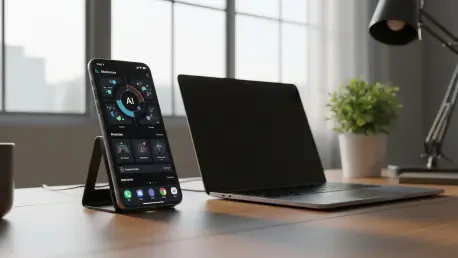

Oscar Vail is a seasoned technology expert and advocate for open-source innovation who has spent years tracking the intersection of hardware capabilities and software intelligence. With a deep focus on how emerging technologies like quantum computing and advanced robotics reshape our daily lives, he provides a unique perspective on the shifting landscape of mobile communications. As smartphone manufacturers move toward a more modular and multi-model AI approach, his insights help bridge the gap between complex engineering and the tangible user experience.
In this conversation, we explore the evolving “AI OS” strategy, the technical hurdles of deep system integration for third-party assistants like Perplexity, and the delicate balance between maintaining core partnerships with Google while fostering a competitive ecosystem.
Samsung is integrating Perplexity alongside Gemini and Bixby on the Galaxy S26. How does deep system access for third-party assistants change the mobile experience, and what technical challenges arise when giving these tools permission to search through private data like calendars or photo galleries?
Deep system access transforms the smartphone from a collection of isolated apps into a cohesive, intelligent partner that understands your context. When an assistant like Perplexity can reach into your calendar or photo gallery, it moves beyond simple web searches to perform high-level tasks, such as finding a specific receipt from last Tuesday or scheduling a meeting based on a photo of a flyer. The technical challenge lies in the “handshake” between the OS and the third-party model, ensuring that this level of integration—triggered by a long press or a “Hey Plex” command—remains secure. Developers must build rigorous privacy sandboxes so that while the AI can “see” your data to help you, that sensitive information isn’t being scraped to train global models. It is a delicate engineering feat to provide this “integrated assistant” status while maintaining the same trust levels users have with native tools.
AI features are increasingly hardware-dependent, often requiring specific NPU capabilities found in the latest models. What criteria determine if advanced assistants can be ported to older devices, and how do you prevent the software ecosystem from becoming too fragmented for users on slightly older hardware?
The decision to port features like Perplexity to older models, such as the S25 or the Z Fold 7, is made on a case-by-case basis, primarily dictated by the raw power of the Neural Processing Unit (NPU). If a device lacks the local compute power to handle low-latency responses, the experience becomes sluggish, which hurts the brand’s reputation for quality. To prevent fragmentation, manufacturers try to reach as many people as possible through One UI updates that optimize how models run on older silicon, even if some high-end creative functions remain exclusive to the newest flagship. We often see a tiered approach where the most complex, on-device tasks stay on the S26, while cloud-based versions of the same assistants are rolled out to legacy hardware to maintain a sense of equity. It is a constant balancing act between encouraging hardware upgrades and ensuring that 80% of the user base doesn’t feel left behind.
With a vast majority of people already juggling several different AI tools daily, the concept of a multi-model “AI OS” is gaining ground. What are the practical steps to make switching between assistants feel seamless, and how might specialized AI tools eventually replace the current “one-size-fits-all” model?
Samsung’s data shows that eight in 10 users are already using multiple AI tools, so the practical step is to treat AI assistants like search engines where the user can easily set a “default” in the system settings. Seamlessness comes from standardized triggers—whether it’s a specific voice command or a haptic gesture—that allow the OS to route the request to the specific “expert” model you’ve chosen. We are moving toward a future where you might use Gemini for general productivity, but switch to a “vibe coding” assistant for generating custom app snippets or a specialized creative tool for photo editing. This specialized approach is far more efficient than a one-size-fits-all model because it allows each AI to be “best-in-class” for a specific niche, rather than being mediocre at everything.
While expanding partnerships, maintaining a core relationship with Google remains a priority for many manufacturers. How do you balance the deep integration of Gemini with the need to offer competitive third-party alternatives, and what does this competition mean for the long-term evolution of the Android platform?
The relationship with Google is foundational because Android is the bedrock upon which these interfaces are built, and Gemini will likely remain the “main partner” for core features like Circle to Search. However, the introduction of Perplexity proves that the ecosystem is opening up, creating a competitive “marketplace of intelligence” directly on the home screen. This competition forces Google to innovate faster to keep its top spot, while allowing manufacturers to differentiate their hardware by offering exclusive AI partnerships. Long-term, this means the Android platform will evolve into a more modular environment where the underlying OS is simply a coordinator for various third-party intelligences. It moves the value proposition away from just the hardware and onto the quality of the “AI OS” experience.
Future mobile AI might move beyond basic search to tasks like on-the-fly app generation or complex coding support. What specific hardware breakthroughs are necessary to support these creative AI functions, and how would you explain the value of these advanced capabilities to a non-technical consumer?
To support on-the-fly app generation or real-time coding assistants, we need massive jumps in NPU throughput and significantly more efficient thermal management to handle the sustained compute load. These creative functions require the phone to not just “find” information, but to “synthesize” entirely new software structures locally. For a non-technical consumer, I would explain it as having a “digital craftsman” in your pocket: instead of searching for an app that might help you track a very specific hobby, you just tell your phone what you need, and it builds a custom tool for you in seconds. It changes the phone from a static device with a set list of features into a dynamic, shapeshifting tool that evolves based on your personal needs.
What is your forecast for the AI phone market?
My forecast is that the “AI Phone” will soon cease to be a marketing category and simply become the standard definition of a mobile device, with the “multi-model” approach becoming the industry norm. Within the next few generations, we will see the “AI OS” initiative expand so that choosing an assistant is as common as choosing a wallpaper, leading to a surge in specialized AI “plug-ins” from companies like OpenAI or Anthropic joining the ecosystem. This will drive a hardware arms race focused almost exclusively on NPU performance, as the ability to run these models locally becomes the primary differentiator between a premium flagship and a budget device. Ultimately, the market will shift from being app-centric to task-centric, where the user experience is defined by how effectively your chosen AI can navigate your digital life.