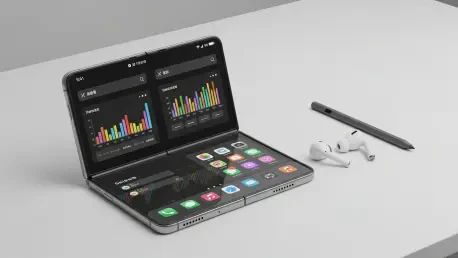

The long-standing boundary between the pocketable smartphone and the expansive tablet has finally reached a breaking point as Apple prepares to unveil its most ambitious hardware shift in a decade. For years, the tech giant remained on the sidelines while competitors experimented with various folding mechanisms, but the upcoming release of the iPhone 18 series suggests that the wait was dedicated to a complete reimagining of the category. Rather than simply adding a hinge to a phone, the engineering teams in Cupertino appear to have shrunk a workstation into a form factor that fits in a palm.
This transition marks a pivotal moment for the Apple ecosystem, where the “Pro” moniker may soon refer to a device’s ability to transform its physical shape. If the high-fidelity renders circulating among industry analysts are a true reflection of the final product, the distinction between the iPhone and the iPad Mini is effectively dissolving. This is not merely a technical update; it is a strategic move to consolidate the mobile experience into a single, high-performance unit that eliminates the need for a secondary tablet.
The End of the Tablet-Phone Divide
The historical necessity of carrying both an iPhone for communication and an iPad for productivity is rapidly becoming an outdated concept. Apple’s entry into the foldable market aims to bridge this gap by merging the portability of the iPhone with the canvas size of a small tablet. This consolidation represents a threat to the traditional tablet market, as users no longer have to choose between a large screen and a device that fits in a pocket.
By integrating iPadOS-style multitasking capabilities into the iOS environment of the foldable, Apple is creating a hybrid that caters to the “on-the-go” professional. This shift suggests that the new device is being positioned as a primary computing tool rather than a luxury accessory. As the software and hardware align, the incentive to own a standalone small tablet diminishes, signaling a major reorganization of how consumers view their personal electronics.
Why the “Wide” Shift Changes Everything
Unlike the “tall and narrow” designs that have defined the foldable market for years, Apple’s reported decision to prioritize a wider aspect ratio is a calculated move toward ergonomic utility. Most current foldables feel restricted when closed and somewhat awkward for document editing when open. By adopting a “Wide” design, the foldable iPhone provides a landscape-oriented experience that feels natural for video consumption and split-screen workflows, mirroring the functional layout of a traditional iPad.
This wider footprint also addresses the ergonomic frustrations often associated with narrow cover screens. A wider device allows for a full-sized typing experience on the front display, reducing the friction of using the phone in its folded state. By focusing on width rather than height, Apple is signaling that this device is intended for serious work, effectively capturing the audience that currently relies on the iPad Mini for reading and light editing.
Technical Feats: Erasing the Crease and Challenging Competitors
Engineering a seamless display has always been the greatest hurdle for foldable technology, and reports indicate that Apple has achieved a near-total elimination of the visible crease. Through a combination of proprietary hinge mechanics and flexible glass compositions, the internal display appears as a singular, uninterrupted pane. This achievement sets a new standard for the industry, potentially forcing rivals to rethink their own mechanical designs to maintain a competitive edge in the premium segment.
The impact of this refinement is already visible in the broader market, as competitors like Samsung are rumored to be developing “Wide” variants of their flagship foldables to keep pace with Apple’s aesthetic trajectory. Beyond the screen, the integration of a punch-hole camera and a chassis that mimics luxury hardware further distinguishes the device. These technical refinements ensure that the foldable iPhone does not feel like a prototype, but rather a polished, final evolution of the smartphone.
Insider Perspectives on the Marketing Leaks
Veteran industry observers have noted that the recent influx of high-fidelity renders carries an unusual level of detail, often associated with official marketing materials. These leaks, reportedly sourced from internal servers, provide a concrete look at Apple’s product roadmap, moving the discussion away from speculative rumors. The presence of these files suggests that the device is not a niche experiment but the centerpiece of the upcoming hardware cycle.
Marketing experts believe that by launching this device under the iPhone 18 banner, Apple is normalizing the foldable form factor for the mass market. This strategy ensures that the technology is perceived as a standard high-end option rather than a fragile novelty. If these renders accurately represent the final product, the industry is looking at a shift where the foldable becomes the default choice for power users seeking the ultimate mobile workstation.
How to Determine if a Foldable iPhone Fits Your Workflow
Adapting to a hybrid device requires a thorough assessment of one’s daily digital habits and multitasking requirements. Potential users should consider whether their current workflow frequently switches between a phone and a tablet, as the foldable iPhone is designed to consolidate those tasks. If your routine involves heavy document editing, side-by-side app usage, or extensive media consumption, the expanded screen real estate of the “Wide” design offered a level of utility that a standard smartphone simply could not match.
The decision ultimately rested on whether the convenience of a unified device outweighed the specialized, standalone experience of an iPad. For those who prioritized portability without sacrificing screen size, the foldable iPhone represented a logical progression. Users evaluated their needs for landscape-oriented productivity and decided that the era of managing two separate chargers and two separate screens had finally come to an end. This shift prompted a broader consideration of how mobile hardware functioned in a modern professional environment.