
The line separating professional cameras from smartphones has become increasingly blurred, and Xiaomi’s latest flagship, the 17 Ultra, seeks to erase it entirely with its groundbreaking Leica partnership. This device represents a significant leap forward, combining state-of-the-art mobile technology with a camera system designed to appeal to serious photographers. The recent launch in China has generated considerable interest, raising numerous questions about its capabilities, the differences between its models, and its place in the competitive flagship market.
This article serves as a comprehensive FAQ to navigate the details of the Xiaomi 17 Ultra. It will dissect the advanced Leica-branded camera, explore the distinct features of the standard and special editions, and break down the core performance specifications that power this impressive device. Readers can expect a clear, detailed overview of what makes the Xiaomi 17 Ultra a noteworthy contender in the world of high-end smartphones.
Key Questions or Key Topics Section
What Defines the Xiaomi 17 Ultra Camera System
At the heart of the Xiaomi 17 Ultra is a sophisticated, triple-camera array co-engineered with Leica, designed to deliver professional-grade imaging. The system is anchored by a primary 50MP camera utilizing a large 1-inch Light Fusion 1050L sensor. This larger sensor size, combined with LOFIC technology, allows for exceptional light-gathering capabilities, resulting in superior detail and dynamic range, especially in challenging lighting conditions.
Complementing the main sensor is a revolutionary 200MP Samsung HPE periscope telephoto lens, a standout feature that offers continuous optical zoom. Unlike traditional stepped zoom lenses, this technology allows for smooth focal length transitions, providing unparalleled versatility for framing distant subjects without losing quality. The setup is rounded out by a 50MP ultrawide camera for expansive shots and a high-resolution 50MP front-facing camera, ensuring that selfie quality matches the rear system’s prowess.
How Do the Standard and Leica Editions Differ
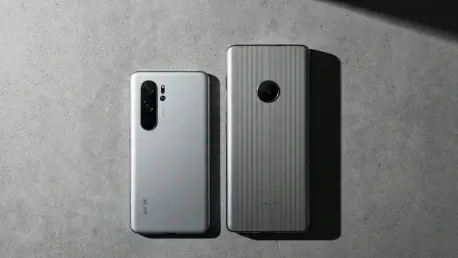
While both the standard Xiaomi 17 Ultra and its Leica edition share the same powerful internal hardware and camera sensors, their intended users and physical experience are notably different. The primary distinction lies in the Leica edition’s focus on tactile, manual control for photography enthusiasts. It uniquely features a physical, mechanical zoom ring around the camera module, which allows for direct manual adjustments to focal length, exposure, and white balance, mimicking the feel of a traditional camera lens.
Moreover, the Leica edition’s design is heavily inspired by Leica’s iconic M-series cameras. It showcases a distinctive dual-tone finish, a knurled frame pattern for enhanced grip, and the globally recognized red Leica logo. This special edition also comes with exclusive “Leica Moment” camera modes, a dedicated security chip for enhanced privacy, dual-satellite communication capabilities, and a premium accessory bundle, setting it apart as a collector’s item and a specialized photographic tool.
What Are the Core Performance Specifications
Beyond its formidable camera, the Xiaomi 17 Ultra is built on a foundation of top-tier performance hardware. Both models are powered by the cutting-edge Snapdragon 8 Elite Gen 5 SoC, ensuring exceptionally fast and efficient processing for everything from daily tasks to intensive gaming. This chipset is paired with up to 16GB of LPDDR5X RAM and as much as 1TB of UFS 4.1 storage, providing ample memory and rapid data access, all running on the fluid HyperOS 3.0 interface.
The visual experience is delivered through a stunning 6.9-inch flat M10 AMOLED LTPO display, which boasts a smooth 120Hz refresh rate and a sharp 2608 x 1200 resolution. Its peak brightness of 3,500 nits ensures outstanding visibility even in direct sunlight. A key highlight is the massive 6,800mAh silicon-carbon battery, which promises extended usage and is supported by versatile charging options: 90W wired, 50W wireless, and 22.5W wired reverse charging. The device’s durability is underscored by its robust IP66, IP68, and IP69 ratings, providing comprehensive protection against dust and water.
Summary or Recap
The Xiaomi 17 Ultra emerges as a device defined by its uncompromising approach to mobile photography, thanks to a powerful Leica-engineered camera system. Its 1-inch primary sensor and groundbreaking 200MP continuous zoom telephoto lens set a new standard for imaging versatility. The key decision for consumers lies between the highly capable standard model and the exclusive Leica edition, which offers a unique, tactile experience with its mechanical zoom ring and classic camera-inspired design.
Underpinning these photographic advancements is a robust performance package. With the latest Snapdragon chipset, a brilliant and bright display, and an exceptionally large battery with rapid charging, the Xiaomi 17 Ultra ensures a premium user experience across all functions. These elements combine to create a compelling flagship smartphone that excels as both a daily driver and a specialized creative tool.
Conclusion or Final Thoughts
The launch of the Xiaomi 17 Ultra did more than just introduce another high-end smartphone; it solidified the trend of mobile devices becoming primary tools for serious photography. This article detailed the technical prowess that makes this possible, from its advanced sensor technology to the meticulous design of the Leica edition. The choice between the two models ultimately reflected a user’s philosophy on photography—whether they preferred the streamlined efficiency of a modern smartphone or the deliberate, hands-on control of a traditional camera.
Ultimately, the Xiaomi 17 Ultra’s arrival marked a pivotal moment in the industry. It challenged the notion that exceptional photography requires dedicated, standalone equipment and demonstrated that a smartphone can, with the right engineering and partnerships, serve both the casual user and the passionate artist without compromise. This release pushed the entire market toward a future where the camera is not just a feature, but the very soul of the device.