
By keeping the total impervious surface area under 12,000 square feet, the Strata development avoids the massive environmental impact often associated with traditional industrial construction. This strategic limitation serves as the cornerstone of Alamosa County’s recent move to embrace the burgeoning artificial intelligence sector, signaling a shift in how rural communities view high-tech infrastructure. Rather than seeking out massive, resource-draining facilities, local officials have prioritized a lean, modular approach that fits within the existing ecological and social framework of the San Luis Valley. This decision reflects a calculated risk, balancing the need for economic diversification with the unwavering necessity of preserving the agricultural heritage that defines the region. As the demand for localized data processing grows in 2026, Alamosa is positioning itself not as a hub for global tech giants, but as a pioneer for sustainable, medium-scale technological integration. The approval marks a departure from standard land-use policies, favoring administrative flexibility to accommodate the rapid evolution of the digital economy. This transformation is not merely about servers and fiber optics; it is about redefining the economic resilience of a community that has historically relied on the land, now looking toward the cloud to secure its future through controlled, intentional expansion.
Regulatory Strategy: The Administrative Path
The entry of Alamosa County into the data processing sector was not facilitated by a sweeping change in legislation, but through a meticulous administrative interpretation of existing land-use codes. Richard Hubler, the county’s land use administrator, recognized that the current legal framework lacked explicit provisions for high-tech data centers, yet the code provided a pathway for “novel uses” that are functionally similar to established categories. This interpretation allowed the county to evaluate the Strata Inc. proposal based on its physical and operational characteristics rather than its technological complexity. By identifying commonalities with previously approved projects, the administration avoided the bureaucratic delays of a total zoning overhaul while maintaining strict oversight of the site’s development. This approach ensured that the project remained subject to a special use permit, which requires rigorous public review and adherence to specific environmental and infrastructural standards.
Part 1: Navigating the Novel Use Framework
The decision to categorize a data center as a novel use rested on the principle that local governments must remain adaptable to technologies that were unforeseen during the drafting of original zoning laws. Hubler’s analysis focused on the minimal human presence required for the facility’s operation and its low impact on local traffic, which aligns with the county’s goals for preserving the quiet nature of rural areas. Unlike traditional manufacturing plants that bring significant shifts in workforce density and road wear, these electronic processing units function autonomously for the most part. This functional similarity to existing industrial storage solutions provided the legal grounding necessary to move the project forward. By utilizing this administrative mechanism, the county demonstrated that existing regulations can be flexible enough to welcome innovation without sacrificing the safety or character of the surrounding neighborhoods. This precedent now provides a clear roadmap for other rural jurisdictions facing similar technological advancements, suggesting that administrative agility is as vital as the technology itself.
Part 2: Comparative Analysis of Modular Systems
To justify the approval, the county compared the Strata proposal to other modular developments such as container-based self-storage and Battery Energy Storage Systems (BESS). These systems share a specific aesthetic and functional profile: they are composed of portable units, require specialized electrical connections, and have a negligible footprint on the landscape. By framing the AI data center as a specialized version of these modular systems, the county was able to apply existing standards for setbacks, fencing, and noise mitigation. This comparative framework helped demystify the technology for the planning commission, moving the conversation away from abstract fears of artificial intelligence and toward concrete discussions about land use and physical infrastructure. The use of standardized shipping containers for housing the servers further reinforced this comparison, as these units are already a common sight in various commercial and agricultural applications throughout the valley. This logical bridging of the gap between traditional storage and modern computing was essential for gaining the necessary administrative momentum to secure the final permit.
Infrastructure Integration: Power and Connectivity
The technical feasibility of the Strata project is inherently tied to its ability to leverage existing utility networks without requiring massive new investments. The chosen site on an 80-acre vacant parcel was selected specifically for its proximity to a three-phase electric distribution line operated by the San Luis Valley Rural Electric Cooperative and high-speed fiber optic broadband provided by Jade. By situating the facility near these established corridors, the developer ensured that the data center could operate at peak efficiency with minimal disruption to the local grid. This strategic placement avoids the need for new substations or invasive transmission lines that often provoke public opposition in rural settings. The project effectively utilizes the “excess” capacity of the existing infrastructure, turning a previously underutilized plot of land into a high-value node in the global digital network. This model of integration proves that technological growth does not always necessitate the destruction of the status quo; instead, it can be a way to maximize the utility of existing regional assets.
Part 1: Utilizing Existing Utility Capacity
A major concern for any community hosting a data center is the potential strain on the local electrical grid, but the Strata development was specifically scaled to function within current limits. The facility is designed to draw power from the existing cooperative infrastructure, which was already built to handle significant agricultural and commercial loads in the vicinity. Because the project does not require the massive energy influx of a “hyper-scale” facility, it avoids the systemic upgrades that would typically be passed on to local ratepayers. This symbiotic relationship with the San Luis Valley Rural Electric Cooperative ensures that the project remains an asset rather than a liability for the community’s energy security. Furthermore, the integration of high-speed fiber through local provider Jade highlights the potential for public-private partnerships to enhance regional connectivity. By utilizing local providers, the project reinvests in the regional economy, ensuring that the financial benefits of the data processing industry are not entirely siphoned off by national telecommunications conglomerates.
Part 2: Scalability and Container-Based Engineering
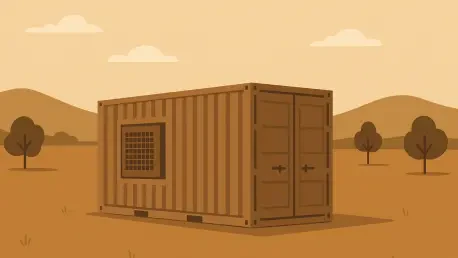
The physical design of the facility reflects a commitment to a lean engineering philosophy that prioritizes modularity over massive permanent structures. The site plan includes a series of shipping containers, ranging from 10 to 40 feet, which house the various components of the data processing system, including computing units, backup generators, and storage. This design allows for a “plug-and-play” approach to expansion, where capacity can be added incrementally as demand grows without necessitating a complete reconstruction of the site. Each container is a self-contained unit, equipped with its own cooling and fire suppression systems, which enhances the overall safety and reliability of the operation. Placing these containers on concrete pads with gravel infill ensures structural stability while maintaining natural drainage patterns and minimizing dust. This modular strategy not only reduces the initial construction timeline but also provides a clear exit strategy; if the technology becomes obsolete, the units can be removed with minimal permanent impact on the land, returning the site to its original agricultural state with relative ease.
Resource Management: Water and Environment
In the San Luis Valley, where water rights are among the most contested and vital resources, the Strata project’s approach to cooling was a decisive factor in its approval. Many high-profile data centers around the country rely on evaporative cooling systems that consume millions of gallons of water annually to keep servers from overheating. In contrast, the Alamosa facility was designed to be entirely “dry,” utilizing advanced air cooling and refrigeration technology that recirculates air rather than consuming liquid resources. This technical choice effectively removed one of the most significant barriers to entry in a region plagued by long-term drought and declining aquifer levels. By opting for a water-free operational model, the developer demonstrated a profound understanding of the local environmental constraints. The county administration emphasized that the project did not include any requests for water wells or municipal service, a fact that was essential in mitigating the concerns of local water conservancy districts and agricultural stakeholders who rely on every drop of available moisture.
Part 1: Mitigating Impact through Dry Cooling
The transition to dry cooling technology represents a major shift in the data center industry, and its application in Alamosa serves as a testing ground for future rural developments. These systems use high-efficiency fans and heat exchangers to dissipate thermal energy, a process that is particularly effective in the high-altitude, low-humidity environment of Southern Colorado. While air cooling can sometimes be less energy-efficient than water-based systems in extreme heat, the overall environmental trade-off is heavily skewed in favor of water preservation in the San Luis Valley. This commitment to resource conservation was a central pillar of the public hearings, where the developer provided detailed technical specifications to prove that the facility would not impact the local water table. By eliminating the need for cooling towers and chemical water treatments, the project also reduces the risk of groundwater contamination, a common concern with traditional industrial cooling. This proactive technical solution allowed the county to approve the project with the confidence that it would not compete with the region’s primary industry: agriculture.
Part 2: Preserving the San Luis Valley Landscape
Beyond water conservation, the project adheres to strict site-management protocols designed to minimize its visual and ecological footprint. The use of “dark-sky” compliant lighting is a critical requirement, ensuring that the facility does not contribute to light pollution near the Great Sand Dunes National Park and Preserve. This preservation of the night sky is vital for both the local tourism economy and the region’s diverse wildlife. Furthermore, the developer has implemented a dust management plan that uses natural berms rather than water-intensive landscaping to shield the facility from view and prevent wind-blown soil. This “dust berm” strategy serves a dual purpose: it maintains the open agricultural aesthetic of the valley while providing a natural barrier against the elements. By restricting the development to just two acres of an eighty-acre lot, the county ensures that the majority of the land remains a buffer zone, preserving the rural feel that residents value. This careful attention to the local ecosystem demonstrates that modern technology can coexist with nature when developers are held to high environmental standards.
Social Dynamics: Community Response and Future Outlook
The approval of the Strata data center was the culmination of an intense public dialogue that highlighted the deep-seated anxieties and hopes of the Alamosa community. While many saw the project as a necessary step toward economic modernization, others expressed significant concern regarding the speed at which the artificial intelligence sector is advancing. The public friction was exacerbated by a disconnect between traditional communication channels and the modern digital landscape; for instance, the reliance on printed newspaper notices in an increasingly digital world led some residents to feel they were not informed early enough in the process. Despite these tensions, the developer, David Meyer, sought to ground the project in local reality by positioning it as a small business venture rather than a corporate takeover. Meyer’s commitment to relocating to the area and his invitation for community members to tour the facility were intended to build trust and transparency. This personal approach to business is often the only way to succeed in tight-knit rural communities where reputation is as important as the bottom line.
Part 1: Small Business Philosophy and Local Investment
The vision for Strata Inc. deviates from the standard data center model by focusing on a “vertically integrated” system designed for small and medium-sized enterprises. Instead of serving as a storage locker for global conglomerates, the facility aims to provide localized cloud services and computational power for regional businesses that might otherwise be priced out of the high-tech market. This focus on local integration is intended to foster a symbiotic relationship where the success of the data center is tied to the growth of the regional economy. By offering specialized server space and AI processing locally, the facility could potentially attract other tech-oriented entrepreneurs to the valley, creating a small but significant tech cluster. Meyer’s intention to live on-site and participate in local governance further distinguishes this project from impersonal industrial developments. This model suggests that the future of rural technology lies not in being a passive host for urban-centric data, but in creating local infrastructure that serves the specific needs of the community while providing a sustainable livelihood for the owners.
Part 2: Addressing Public Anxiety and Procedural Gaps
The pushback against the project was a reflection of broader global concerns about the lack of guardrails in the AI industry. During the public hearings, residents cited warnings from tech leaders about the potential for AI to disrupt social order, and these existential fears often translated into opposition to the physical facility. This highlight of the “AI anxiety” phenomenon shows that local governments must be prepared to address philosophical and ethical questions even during routine land-use hearings. The split votes among the planning commission and county commissioners underscored the difficulty of finding consensus on such a transformative technology. However, the final approval was granted on the basis that the project met all technical and legal requirements, regardless of the broader cultural debate. This experience has prompted a discussion within the county about how to modernize public notification processes to ensure that all residents, regardless of their media consumption habits, have a voice in future developments. The Alamosa case serves as a reminder that technological progress must be accompanied by robust communication and a willingness to engage with the public’s legitimate fears.
Establishing a Blueprint: Lessons in Rural Governance
The process of approving the Strata project provided a valuable framework for how small jurisdictions could navigate the complexities of the digital era. The administrative strategy prioritized technical evidence over abstract speculation, ensuring that the decision was grounded in the physical realities of the site and the specific capabilities of the modular units. By focusing on the “dry” cooling system and the minimal footprint, the county was able to separate the local land-use impact from the global controversy surrounding artificial intelligence. This focus on the “how” rather than the “what” allowed the commission to move forward with a project that offers genuine economic potential without compromising regional resources. The collaboration between the land use office, the developer, and local utility providers created a unified front that addressed logistical concerns before they could become operational failures.
The administrative team established that transparency was the most effective tool for mitigating public concern, even when the final decision remained polarizing. The project proved that rural communities did not have to wait for state or federal legislation to take control of their technological future; instead, they used existing tools to set their own terms for growth. Moving forward, the county considered implementing more specific language regarding data centers in the Land Use Code to provide even clearer guidelines for future applicants. This proactive stance ensured that the first AI data center in the valley would not be an outlier, but the first of a repeatable pattern of sustainable, low-impact development. By treating the data center as a neighbor rather than an invader, Alamosa County demonstrated a path toward a more diversified and technologically integrated rural economy.