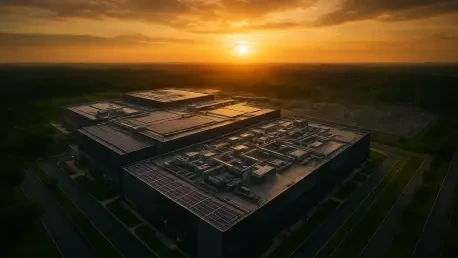

Tencent Cloud’s decision to establish a three-zone region in Johor highlights Malaysia’s rapid ascent as a primary hub for high-capacity data centers and AI processing power. This expansion occurs as the broader Asia-Pacific region undergoes a seismic shift in digital infrastructure priorities, driven by an insatiable appetite for generative AI capabilities throughout 2026. While Western tech giants have long held a firm grip on the market, the aggressive maneuvers by Chinese conglomerates suggest a fundamental realignment of the regional tech landscape. Businesses are no longer looking for simple storage solutions; they are demanding low-latency environments capable of handling the most strenuous computational workloads ever seen. This transition has turned Southeast Asia into a critical battleground where proximity to power and cooling resources determines market dominance. As nations like Malaysia and South Korea strengthen their local tech ecosystems, the pressure on providers to deliver localized, high-performance services has reached an all-time high.
Strengthening Regional Infrastructure
South KoreExpanding the East Asian AI Backbone
Alibaba Cloud has significantly deepened its commitment to the South Korean market by launching its third data center, a move that underscores its long-term growth strategy that has evolved since its initial entry in 2016. This new facility is specifically engineered to handle complex artificial intelligence tasks, providing local enterprises with the reliability needed to deploy advanced digital services across various industrial sectors. By offering a comprehensive suite of compute, storage, and security tools, Alibaba aims to capture a larger share of the East Asian market while fulfilling its multi-billion dollar global investment pledge. The technical specifications of this third availability zone allow for enhanced disaster recovery and lower latency, which are essential for the financial and retail industries. Furthermore, the integration of specialized AI hardware within the facility ensures that South Korean startups can scale their models without the prohibitive costs of offshore hosting, fostering a more robust and localized innovation ecosystem.
MalaysiEstablishing a Southeast Asian Strategic Hub
Tencent Cloud is simultaneously making a bold entry into Malaysia with the establishment of its first cloud region in Johor, signaling a major strategic pivot toward Southeast Asian dominance. This development, which includes three distinct availability zones, is designed to serve as a central hub for regional operations, tapping into the burgeoning demand from high-growth sectors such as banking and insurance. By leveraging Malaysia’s robust tech talent and existing fiber-optic infrastructure, Tencent is providing a platform that emphasizes data residency and regulatory compliance. This expansion brings Tencent’s global network to sixty-six availability zones, positioning it as a major competitor in the digital economy. The decision to select Johor reflects a broader industry trend where proximity to Singapore, combined with Malaysia’s abundant land and power resources, creates a perfect environment for high-capacity cloud infrastructure and high-density processing power. This move also highlights Tencent’s desire to build a diverse ecosystem of local partners and developers.
Market Dynamics and Sustainability
Johor: The Rapid Rise of a Premier Data Destination
Johor has emerged as a premier destination for data center investments, attracting billions of dollars in capital with the potential to reach massive power capacities within the next few years. The region’s attractiveness is bolstered by its strategic location and the proactive stance of local government authorities who have streamlined the approval process for large-scale utility connections. However, this rapid industrial growth has led Malaysian authorities to reconsider the long-term impact of such massive energy consumption on the national grid. As more multinational corporations eye Johor for their regional headquarters, the demand for stable, high-voltage electricity and industrial-grade cooling water has skyrocketed. This influx of capital has certainly accelerated the local construction industry, but it has also created a competitive environment where only the most efficient operators can secure the necessary permits. The scale of planned projects indicates that the region could rival traditional hubs like Singapore in total power output.
Resource Efficiency: Navigating New Environmental Regulations
In response to the unprecedented strain on local utilities, Malaysian authorities have implemented stricter environmental regulations to manage the heavy consumption of electricity and water by these massive server farms. New projects must now demonstrate exceptional resource efficiency, ensuring that the expansion of digital infrastructure does not compromise the country’s sustainability goals or drain essential local utilities. Developers are being pushed to adopt advanced liquid cooling technologies and renewable energy sources to mitigate their carbon footprints and satisfy both local laws and global corporate ESG standards. This regulatory shift ensures that the growth of the digital economy remains sustainable in the long term, rather than being a short-term drain on the nation’s natural resources. Companies like Tencent and Alibaba are now forced to innovate in their facility designs, incorporating solar arrays and recycled water systems to remain compliant. These mandates represent a maturation of the market, where environmental stewardship is a core requirement.
Global AI Trends and Future Growth
Competition: Confronting Global and Domestic Rivals
In both Malaysia and South Korea, Alibaba and Tencent face stiff competition from American hyper-scalers like Amazon Web Services and Microsoft, which have already established a significant presence. These US-based firms prioritize data residency and local hosting to comply with regional regulations, creating a crowded marketplace where service differentiation is increasingly difficult to achieve. The entry of Chinese providers into these markets challenges the established order through specialized services tailored to Asian business cultures. To compete effectively, Chinese firms are focusing on high-speed connectivity between their domestic mainland operations and their new regional hubs, offering a unique value proposition for businesses that operate across these borders. This competition is driving down costs for end-users while accelerating the deployment of localized cloud features. Furthermore, South Korea is witnessing a domestic push for AI computing through public-private partnerships, adding another layer of complexity for foreign tech giants.
Future Outlook: Forging Regional Leadership Through AI
The successful integration of these high-capacity regions established a blueprint for how infrastructure should evolve to meet the demands of a machine-learning-centric economy. Industry experts observed that the most effective providers were those that balanced aggressive physical expansion with a commitment to local regulatory standards and environmental stewardship. For organizations operating within the Asia-Pacific region, the primary takeaway involved the necessity of selecting cloud partners that offered both geographical proximity and specialized hardware. It became clear that relying on centralized, distant data centers was no longer a viable strategy for low-latency applications. Moving forward, businesses must prioritize data residency and energy efficiency when designing their digital architectures to ensure they remain compliant with increasingly strict national laws. The rapid development seen in Malaysia and South Korea proved that the physical location of hardware remains the ultimate differentiator in an increasingly virtual world of technology.