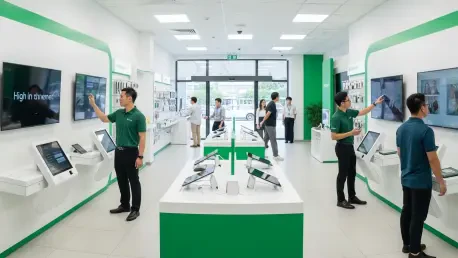

The traditional boundaries of the telecommunications industry are dissolving as mobile carriers pivot toward becoming universal connectivity providers for the modern household. Cricket Wireless, long recognized for its dominance in the prepaid mobile sector, is currently undergoing a radical metamorphosis into a comprehensive “internet storefront.” By integrating high-speed broadband services into its existing retail infrastructure, the brand is attempting to redefine its value proposition for a more demanding consumer base. This shift is not merely an expansion of a product line; it represents a fundamental change in how AT&T utilizes its subsidiary to capture market share in the increasingly competitive home internet landscape.
Adapting to a New Era of Integrated Connectivity
The telecommunications environment is currently defined by the concept of convergence, where the separation between mobile data and home Wi-Fi is rapidly disappearing. Historically, Cricket Wireless focused on providing affordable, no-contract mobile plans to a budget-conscious demographic. However, the strategic focus has shifted toward creating a unified digital ecosystem. By offering both AT&T Fiber and fixed-wireless solutions like Internet Air within its stores, Cricket is positioning itself as a central hub for all connectivity needs, bridging the gap between mobile accessibility and high-performance home broadband.
The Strategic Shift: From Prepaid Mobile to Total Connectivity
This evolution is a direct result of a broader corporate realignment designed to maximize the utility of physical retail spaces. For years, Cricket served a specific niche, but the current market demands more than just a phone plan. The transition into an “internet storefront” allows the brand to tap into a broader customer base that may not have previously considered a prepaid carrier for their primary home data needs. By leveraging a massive footprint of over 4,000 stores, the company is bringing sophisticated fiber-optic technology to local neighborhoods, making high-speed internet more accessible to the general public.
The Convergence Strategy: Driving the Race for Fiber Dominance
Bundling Services: The Key to Enhancing Customer Loyalty
The logic behind this transformation rests on the immense value of the “converged customer.” Industry analysis reveals that users who bundle their mobile and home internet services are far less likely to switch to a competitor, creating a stable and loyal subscriber base. These individuals often gravitate toward higher-speed tiers and are more inclined to expand their service portfolio over time. By transforming Cricket into a one-stop shop, the parent company is building a “sticky” ecosystem that simplifies billing and support while rewarding customers for their deep integration into the brand’s service umbrella.
Expanding the Footprint: The Role of Retail Integration
Despite the ambitious goals, the physical rollout of these services depends heavily on existing infrastructure. While Cricket maintains a vast network of storefronts, high-speed fiber is currently available in less than half of these locations due to the constraints of physical cabling. To counter this, a multi-tiered approach is being utilized, offering fixed-wireless alternatives in regions where fiber has not yet reached. This ensures that the brand can maintain a consistent marketing message regarding home connectivity across the country, regardless of the specific technology powering the connection in a given zip code.
Rebranding the Future: The Path to a Unified Identity
A major component of this strategy involves the anticipated transition to a standalone “Cricket Internet” identity. This move would involve a complete migration of technical support and billing systems into Cricket’s proprietary infrastructure, further distancing the service from its parent brand’s traditional image. By late 2026, the distinction between a prepaid mobile carrier and a primary internet service provider is expected to be nearly invisible. This rebranding effort is intended to simplify the consumer experience and establish Cricket as a powerhouse that can compete directly with legacy cable companies and other fiber providers.
Navigating Internal Obstacles: Overcoming Competitive Pressures
The path to becoming a broadband leader is fraught with operational challenges, particularly at the retail level. Sales professionals who were initially hired to sell mobile devices and monthly talk plans are now required to master the complexities of home infrastructure and installation logistics. This shift has created a degree of friction, as the technical demands of selling fiber optics differ significantly from the fast-paced world of prepaid mobile activations. Furthermore, the brand faces intense pressure from rivals like T-Mobile and Verizon, both of which are aggressively expanding their own footprints, forcing Cricket to refine its training programs and maintain its reputation for simplicity.
Actionable Insights: Strategies for Consumers and Industry Professionals
For the modern consumer, the expansion of Cricket’s portfolio provides a unique opportunity to secure high-quality home internet without the burdens of traditional credit checks or long-term contracts. It is advisable for current mobile subscribers to investigate integrated discounts, as the savings from bundling can be substantial over a multi-year period. For industry professionals, this evolution serves as a case study in how to repurpose a legacy retail brand for a digital-first economy. Success in this area will likely depend on the ability to support the retail workforce through this technical transition while maintaining high standards for customer service during the national rollout.
The Future of Cricket: Becoming an Integrated Service Provider
The strategic evolution of Cricket Wireless signaled a permanent change in how telecommunications companies approach the consumer market. By dissolving the silos between mobile and home services, the company successfully leveraged its physical accessibility to bring advanced fiber technology to a wider audience. While the challenges of infrastructure limitations and retail adaptation were significant, the move toward a unified identity created a more resilient business model. Ultimately, the transformation provided a blueprint for how a specialized mobile carrier could reinvent itself as a dominant force in the holistic connectivity market, ensuring its relevance in an era where high-speed access is no longer a luxury but a fundamental requirement for daily life.