
Industry standards now require technicians to master foundational disciplines such as VLAN management and fiber optic termination to ensure data prioritization. This shift marks the end of the era when residential technology was an afterthought or a collection of disparate gadgets. Instead, the modern home has become a dense ecosystem where the convergence of entertainment, security, and productivity requires the steady hand of a technical architect. Integration firms are moving away from a labor-centric model where the physical installation of cables was the primary value proposition. Now, the emphasis is placed on the engineering phase, where designers calculate bandwidth budgets and thermal loads long before a single device arrives at the job site. This professional metamorphosis ensures that the technological backbone of a residence can support the heavy data loads required by modern living while maintaining the aesthetic integrity of high-end architecture. Designers must now navigate the intersection of luxury and utility, crafting spaces where advanced technology feels like a natural extension of the physical environment rather than an intrusive addition. By focusing on a design-led approach, integrators are providing clients with a resilient infrastructure that serves as a permanent asset to the property.
Evolution of Infrastructure: The Digital Foundation
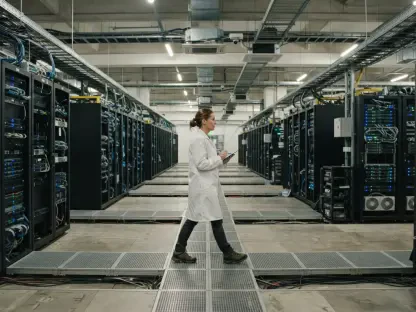
The fundamental building blocks of residential technology have undergone a radical transformation, moving from proprietary analog loops to standardized digital networks. In this current landscape, every component—from the doorbell to the home cinema processor—operates as an intelligent node on a high-speed data network. The adoption of AV-over-IP technology has fundamentally changed how signals are distributed throughout a property, allowing for nearly limitless scalability compared to traditional matrix switchers. By leveraging 10Gb fiber-optic cabling as the primary trunk for data, designers are able to provide the massive throughput required for uncompressed 8K video and high-resolution audio. This shift necessitates a deep understanding of network topology, as the physical layer of the home now mirrors the complexity of a mid-sized corporate enterprise. Integrators are no longer just wiring a house; they are building a communication infrastructure that must perform with near-zero latency to meet the demands of modern interactive media and automated control systems.
Beyond the physical cabling, the logical management of these networks has become the primary differentiator between a functional system and a failing one. Implementing Virtual Local Area Networks (VLANs) allows designers to isolate sensitive traffic, such as security camera feeds or medical monitoring equipment, from the general internet usage of the household. This segmentation is critical for maintaining performance and security, ensuring that a high-bandwidth software update on a gaming console does not disrupt the stability of the home’s lighting or climate control systems. Furthermore, the rise of Power over Ethernet (PoE) hardware has simplified deployment by allowing both data and power to be delivered over a single cable, yet it has also increased the complexity of power management. Designers must now perform detailed wattage calculations to ensure that network switches can handle the cumulative power draw of all connected devices. This meticulous approach to infrastructure ensures that the digital foundation is robust enough to handle the evolving software demands of the coming years.
Network Criticality: The Rise of Enterprise Solutions
The transition of the home network from a luxury amenity to a critical utility has redefined the responsibility of the system designer. As remote work and digital learning have become permanent fixtures of the modern lifestyle, the home network now carries the weight of professional livelihoods and educational success. This new reality has rendered standard consumer-grade routers and mesh systems obsolete for any serious residential project. Designers are increasingly specifying enterprise-grade hardware that offers higher reliability, better thermal management, and more granular control over traffic prioritization. These professional systems are designed to operate continuously under heavy load, providing the uptime that modern families require for everything from high-stakes video conferencing to 24/7 security monitoring. By treating the home network as a mission-critical system, designers are able to implement redundancies, such as dual-WAN connections with automatic failover, which keep the household online even if the primary internet service provider experiences an outage.
Wireless connectivity has also moved to the forefront of design, as the density of connected devices in the average home continues to climb at an exponential rate. With the mainstream adoption of Wi-Fi 7, designers are now capable of delivering multi-gigabit wireless speeds that rival traditional wired connections, but achieving this requires precision-placed access points and careful frequency management. The modern designer conducts comprehensive site surveys using heat-mapping software to identify potential interference from neighboring networks or structural materials like steel and concrete. This scientific approach ensures that the human experience of the network is seamless, with mobile devices roaming effortlessly between access points without dropping connections. Additionally, the integration of managed power controllers allows for remote monitoring and self-healing capabilities, where the system can automatically reboot a frozen component without requiring an on-site service call. This proactive maintenance model represents a significant shift in the industry, focusing on reliability and long-term performance rather than just the initial installation.
Engineering Standards: Documentation as a Risk Mitigation Tool
The complexity of modern residential systems has reached a point where manual improvisation on-site is no longer a viable or professional option. Instead, the industry has embraced a rigorous standard of pre-engineering and technical documentation that serves as the blueprint for every project phase. Detailed rack elevations, wiring schedules, and signal flow diagrams are now produced during the design phase, ensuring that every technician understands the exact path of every cable from point A to point B. This commitment to documentation provides a clear paper trail that protects both the integration firm and the client, setting explicit expectations for what the system will include and how it will function. When an architect or interior designer requests a change to the floor plan, the system designer can quickly update the digital drawings to reflect the impact on the technology infrastructure. This level of precision reduces the likelihood of costly rework and ensures that the physical installation is clean, serviceable, and organized according to industry best practices.
Beyond the immediate benefits during construction, professional documentation is essential for the long-term health and upgradability of the residential ecosystem. As technologies evolve from 2026 to 2028 and beyond, a well-documented system allows future technicians to perform upgrades or troubleshoot issues without having to reverse-engineer the original installer’s work. This as-built documentation acts as a digital manual for the home, detailing IP addresses, login credentials, and port assignments for every connected device. It also facilitates a higher level of collaboration with other trades, such as electricians and HVAC contractors, who rely on accurate information to integrate their systems with the home’s central control platform. By treating documentation as a core deliverable rather than an afterthought, system designers are elevating their trade to the level of professional engineering. This shift not only improves operational efficiency but also builds a foundation of trust with high-net-worth clients who expect the same level of professionalism from their technology partners as they do from their architects.
Professional Growth: Specialized Skills and Artificial Intelligence
Maintaining a competitive edge in the residential sector now requires a commitment to continuous education and the mastery of emerging technological frontiers. Technical competency is no longer defined solely by the ability to terminate a cable, but by a deep understanding of cybersecurity, network security protocols, and data privacy. As homes become more connected, they also become potential targets for digital intrusion, placing the responsibility of protecting the client’s private data squarely on the shoulders of the system designer. This has led to the widespread adoption of accredited certifications and specialized training programs that ensure a baseline of professional knowledge across the industry. Designers are also grappling with the nuances of lighting science and acoustic engineering, recognizing that the performance of a high-end audio system or a dynamic lighting array is heavily dependent on the physical environment. By mastering these diverse disciplines, designers are able to offer a more holistic service that addresses both the digital and physical aspects of the modern residential experience.
The integration of Artificial Intelligence into the design workflow is perhaps the most transformative development of the current era. AI-driven tools are now being used to automate the creation of complex documentation, generate precise technical drawings, and even predict potential network bottlenecks before the system is built. This technology allows designers to focus more of their energy on high-level creative problem-solving and client interaction while reducing the time spent on repetitive drafting tasks. Furthermore, AI is finding its way into the homes themselves, powering advanced automation routines that learn the habits and preferences of the occupants to proactively adjust lighting, climate, and security settings. Designers must now understand how to implement these intelligent systems in a way that feels helpful rather than intrusive, ensuring that the AI operates within a secure and private framework. Those who successfully leverage these tools find themselves able to deliver more complex projects with greater efficiency, setting a new standard for what is possible in residential technology design.
Actionable Strategies: Future Growth and Human Experience
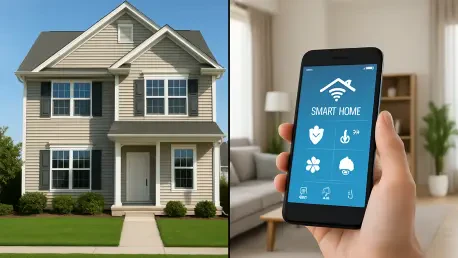
The progression of residential technology toward a more integrated and invisible future requires a fundamental shift in how designers approach the smart home concept. The final phase of this evolution focused on the human experience, where the ultimate metric of success was not the number of features, but the ease of use and the aesthetic harmony of the environment. Designers moved toward specialized finishes and hidden hardware, ensuring that the heavy engineering required for high-performance systems did not detract from the architectural beauty of the residence. This involved early-stage collaboration with interior designers to incorporate acoustical treatments and motorized concealment solutions that allowed technology to appear only when needed. By prioritizing the user journey, designers were able to create systems that felt intuitive and friction-free, reducing the learning curve for homeowners and ensuring that the technology added value to their daily lives rather than frustration. This human-centric approach transformed the integrator into a lifestyle consultant.
To remain relevant and effective, professionals in the field implemented several key strategies that transformed their business models. They prioritized the installation of additional conduit and spare fiber runs to anticipate the hardware shifts expected from 2026 to 2029, ensuring that homes remained future-ready even as bandwidth demands increased. Furthermore, the adoption of managed services and remote monitoring became a standard practice, allowing for proactive system health checks and recurring revenue streams that stabilized business operations. Integrators also invested heavily in cybersecurity audits for their clients, providing a necessary layer of protection in an increasingly digital world. These steps moved the industry away from a one-time transaction model and toward a long-term partnership with the homeowner. Ultimately, the successful system designer of the modern era was one who combined technical rigor with a deep empathy for the client’s lifestyle, ensuring that every design decision was grounded in both engineering excellence and a commitment to creating a more comfortable, secure, and inspiring home environment.