Chinese technology giants are leveraging the geographic arbitrage of Inner Mongolia to build sprawling computational facilities that would be financially impossible in crowded coastal metropolises. This shift reflects a profound reorganization of the digital economy, as the focus transitions from the glass towers of Shenzhen to the windswept grasslands of the north. In 2026, the demand for sustained processing power has reached a critical threshold, forcing a move toward regions that can accommodate thousands of server racks without the exorbitant real estate premiums of Tier 1 cities. This northern expansion is not merely a cost-saving measure but a strategic necessity for maintaining low-latency connections to Beijing’s political and academic centers. By positioning these massive data center cities within striking distance of the capital, firms ensure that the distance between data generation and processing remains minimal, effectively bridging the gap between raw industrial power and high-level artificial intelligence development.
Economic Incentives: Energy and Geographic Advantages
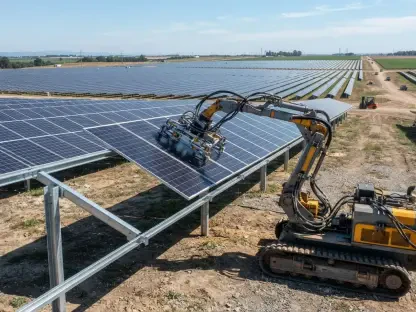
The fundamental driver of this migration is the insatiable energy appetite of the latest generation of large language models, which require power levels equivalent to small cities during peak training cycles. Inner Mongolia provides a unique dual-energy advantage by blending its historical reliance on coal-fired generation with a massive surge in renewable installations. These vast solar farms and wind corridors create a reliable energy buffer that ensures 24/7 uptime for the massive AI clusters. For instance, the Hohhot and Wulanchabu regions have become the epicenter for this energy-intensive infrastructure, offering some of the lowest electricity rates in the country. This abundance of cheap power allows developers to run training sessions for months at a time without facing the financial ruin that would occur in energy-constrained regions. The integration of “Green AI” practices through renewable grids also helps these technology companies meet increasingly stringent environmental regulations while maintaining their competitive edge in the global landscape.
Beyond the physical availability of power, the local government has aggressively pivoted the regional economy away from traditional mining and livestock toward high-value digital services. By implementing specialized tax zones and providing direct subsidies for fiber-optic connectivity, Inner Mongolia has transformed into a high-tech sanctuary for private enterprises and state-backed laboratories alike. This administrative support has created an ecosystem where the logistical hurdles of constructing massive “server farms” are significantly reduced compared to the restrictive zoning laws of the coast. This economic alignment provides a blueprint for how underdeveloped provinces can leapfrog traditional industrialization to become critical nodes in the global digital supply chain. Consequently, the region is seeing a massive influx of talent and capital, as engineers and data scientists relocate to manage these gargantuan facilities. This transition has turned the northern steppe into a modern laboratory where the scale of operations is limited only by the horizon, fostering a sustainable environment for long-term technological investment and regional growth.
Strategic Hedging: Mitigating Geopolitical Constraints
In an environment defined by tightening international trade restrictions and limited access to the most advanced semiconductor architectures, China has adopted an “infrastructure-first” strategy to maintain its trajectory. This approach involves constructing the physical shells, liquid cooling systems, and power distribution networks today, ensuring that the environment is ready for whatever hardware becomes available through domestic innovation or alternative supply chains. By perfecting the “un-glamorous” aspects of data center management—such as airflow dynamics and heat dissipation—Inner Mongolia’s facilities maximize the performance of existing chips. This optimization ensures that even older-generation hardware can operate at peak efficiency, partially offsetting the lack of access to cutting-edge Western GPUs. The focus is on creating a resilient and adaptable grid that can accommodate rapid hardware swaps without requiring extensive structural renovations. This foresight provides a critical buffer against geopolitical volatility, allowing the industry to remain operational and innovative regardless of external hardware supply shocks.
The strategic build-out in the north represents a shift from focusing on individual chip performance to prioritizing the total aggregate computational power of the network. While Western competitors may hold an advantage in the raw processing speed of specific microprocessors, China is betting on the sheer scale and operational density provided by these northern hubs. By housing hundreds of thousands of interconnected units in optimized environments, these facilities can simulate the power of more advanced systems through massive parallel processing and highly efficient software-hardware integration. This focus on facility design allows for a level of iteration and model refinement that would be physically impossible in smaller, less efficient urban data centers. Furthermore, the specialized nature of these facilities allows for the testing of proprietary liquid cooling technologies and energy recycling systems that significantly reduce the total cost of ownership. This mastery of the physical layer of the AI stack ensures that the nation remains a formidable player in the global race, as the ability to deploy vast amounts of computing power at a lower cost becomes a decisive competitive advantage.
Future Resilience: Scaling the Northern Infrastructure
The transformation of Inner Mongolia proved that geographic decentralization was the most viable pathway for sustaining the exponential growth of large-scale computational models. By decoupling the high-energy demands of AI training from the residential and commercial grids of coastal cities, the industry secured a reliable foundation for future expansion. Organizations that successfully migrated their processing workloads to the northern hubs reported significantly higher operational margins and faster deployment cycles for new algorithmic updates. This movement suggested that the long-term winners in the artificial intelligence sector would be those who prioritized the sustainability of their physical infrastructure as much as the complexity of their code. Looking ahead, the focus shifted toward integrating these northern clusters into a more unified national computing network, allowing for seamless data flow between remote processing centers and urban consumption points. This strategy laid the groundwork for a more resilient digital economy that was less susceptible to local energy shortages or high real estate fluctuations. The rise of this northern hub demonstrated that the future of technology was not just about the silicon in the chips, but the land and power that sustained them.