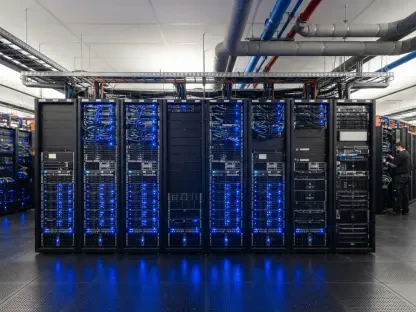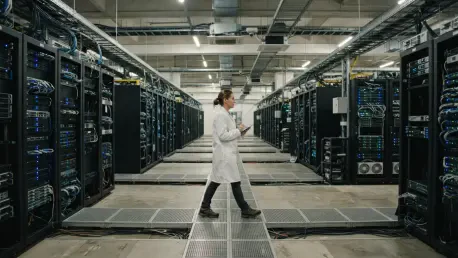

At the European X-ray Free-electron Laser facility, dCache coordinates over four hundred physical hosts to provide a total storage capacity exceeding one hundred twenty petabytes. This massive undertaking is not merely a matter of hardware but a triumph of specialized distributed architecture. As a joint venture involving the Deutsches Elektronen-Synchrotron, Fermi National Accelerator Laboratory, and the Nordic e-Infrastructure Collaboration, dCache acts as the operational nervous system for some of the most ambitious experiments in modern physics. Its primary role involves managing the entire data lifecycle, from the high-velocity ingestion of raw experimental outputs to the meticulous preservation of datasets in long-term archival libraries. For research giants like the Large Hadron Collider, the ability to maintain accessibility across global networks while ensuring data durability is paramount. The system provides a unified, scalable interface that abstracts the underlying complexity, allowing researchers from various scientific disciplines to focus on analysis rather than storage logistics. By implementing a sophisticated architectural framework, dCache ensures that the transition between active research and long-term storage is seamless, supporting the continuous flow of global scientific discovery as we navigate the demands of 2026. The core architectural philosophy centers on the strict separation of the file namespace from the physical storage location. This location transparency allows a file’s logical name to stay constant even if the data moves between high-performance SSDs and magnetic tape.
The Global Reach and Impact of Distributed Storage
Powering Major Scientific Breakthroughs: From Particles to Photons
As of 2026, dCache has maintained its position as a dominant force in scientific computing, managing over half of the storage capacity for the Worldwide Large Hadron Collider Computing Grid outside of the primary CERN site. Its reliability was instrumental in historic achievements, such as the discovery of the Higgs boson, where the management of petabyte-scale datasets required absolute precision and high availability. The system’s scale is best illustrated by its real-world applications in photon science, where experimental facilities generate billions of small files that must be indexed and stored with minimal latency. By providing the necessary throughput to handle these massive bursts of information, dCache has allowed physicists to push the boundaries of what is observable at the subatomic level. This proven track record in high-energy physics has paved the way for its adoption in other demanding fields, including astrophysics and biomedical research, where data volume and variety are increasing at an exponential rate.
The transition of dCache from a specialized tool for particle physics into a general-purpose solution for diverse scientific disciplines highlights its inherent flexibility. Today, researchers in the life sciences utilize the platform to manage complex genomic datasets that require both high-speed access for processing and secure, long-term archival. This versatility is a direct result of the system’s modular design, which can be tailored to the specific metadata and throughput requirements of different experimental workflows. As the volume of global scientific data continues to climb, the ability of dCache to scale horizontally by adding more storage pools has become an essential feature for institutions that cannot afford downtime or data loss. By balancing the load across hundreds of servers, the system prevents bottlenecks and ensures that researchers around the world have instantaneous access to the data they need to verify their hypotheses and publish their findings.
Resiliency Through Federated Systems: Building Multi-National Infrastructure
One of the most impressive features of dCache is its support for federated storage, which allows multiple international institutions to merge their local resources into a single, cohesive entity. A prime example of this is the Nordic Data-Grid Facility, which operates management services in Copenhagen while distributing storage nodes across six different countries, including Denmark, Sweden, and Norway. This geographic distribution creates incredible fault tolerance; if one site goes offline for maintenance or due to regional network issues, the rest of the system continues to function without interruption. This allows the infrastructure to behave like a single local storage system despite being spread across national borders. Such a model is particularly valuable for international collaborations where data sovereignty and resource sharing must be balanced with the need for high-performance computing and centralized management.
The federated approach also facilitates a more equitable distribution of scientific resources, enabling smaller institutions to contribute to and benefit from a large-scale data grid. By pooling storage capacity and bandwidth, these institutions can support experiments that would be impossible to host on their own. The dCache system manages the complexities of data replication and consistency across these distributed nodes, ensuring that every participant has a consistent view of the namespace. This resilience is not just a technical luxury but a fundamental requirement for modern science, where experimental results must be protected against hardware failures and natural disasters. The ability to move data transparently between different geographic locations without changing the user-facing file path remains a cornerstone of this federated strategy, providing a stable foundation for the next decade of collaborative research across the global scientific community.
Advanced Data Management and Quality of Service
Modernizing with Quality of Service: Efficient Bulk Operations
To meet the sophisticated demands of contemporary research, dCache includes a robust Quality of Service engine that allows users and administrators to define exactly how data should be handled based on latency and cost. Through a modern REST API, researchers can specify whether a file should remain on high-speed disks for immediate analysis or be moved to cheaper magnetic tape for long-term archival. This level of control is essential for managing the costs associated with petabyte-scale storage, as it allows organizations to prioritize their most active data while keeping historical records accessible at a lower price point. The Quality of Service framework simplifies the complexity of tiered storage, making it easier for automated workflows to manage data placement without human intervention, thereby reducing the risk of administrative errors.
To manage these transitions at scale, the Bulk Service module handles massive background tasks such as deleting millions of files or migrating entire datasets between storage tiers. This service has been so successful that it was adopted as the official tape API for the Worldwide Large Hadron Collider Computing Grid, standardizing how different storage providers interact with archival systems. By decoupling the request for a data move from the actual execution, the Bulk Service ensures that the system remains responsive even when processing millions of operations. This asynchronous approach is vital for large-scale facilities where the sheer volume of metadata changes could otherwise overwhelm the central management components. The standardization of these protocols ensures that dCache remains compatible with a wide range of third-party tools and services used in the scientific ecosystem, further cementing its role as a versatile management layer.
Enhancing Interoperability for Researchers: Supporting Standard Protocols
While dCache was originally developed for the specialized world of grid computing, it has evolved to support standard protocols that make it accessible to a much broader range of scientific fields. Support for NFSv4.1 and parallel NFS allows the storage system to be mounted like a local drive on a researcher’s workstation, which is essential for modern data science tools such as Jupyter Notebooks and Apache Spark. This capability bridges the gap between massive, specialized grid storage and the user-friendly tools that are common in academia and industry. By presenting a standard filesystem interface, dCache allows researchers to use their existing scripts and software without needing to learn complex grid-specific commands, significantly lowering the barrier to entry for high-performance data management.
Furthermore, dCache supports the SMB protocol for compatibility with Windows environments and was an early adopter of encrypted transfers through NFS-over-TLS. This commitment to security is combined with a protocol-agnostic design that allows the same data to be accessed via WebDAV, FTP, or specialized grid protocols simultaneously. This multi-protocol access is crucial for modern collaborations where different teams may use different operating systems and software stacks to analyze the same dataset. By providing a secure and flexible gateway to massive storage volumes, dCache ensures that data remains mobile and usable across diverse computing environments. The integration of modern authentication and authorization standards also ensures that sensitive scientific data is protected, meeting the rigorous compliance requirements of contemporary research institutions and government agencies.
Operational Excellence and Strategic Evolution
Intelligent Tape Management: Performance Optimization and Metadata
Despite the rise of flash-based storage, magnetic tape remains the most cost-effective medium for long-term data preservation. dCache addresses the inherent challenges of tape, such as high latency and slow sequential access, through innovative software solutions like the Small File Service. This service aggregates millions of tiny files into larger containers before they are written to tape, which significantly optimizes the mechanical performance of tape drives and reduces wear and tear. Additionally, dCache integrates directly with the CERN Tape Archive using specialized communication libraries. This allows for highly efficient nearline storage, where data is moved seamlessly between disk-based pools and tape cartridges based on predefined lifecycle policies, ensuring that the archive remains organized and easily retrievable.
The handling of metadata within dCache is managed by a layered namespace component that typically utilizes a high-performance PostgreSQL database. This structure is engineered for high-frequency operations, with recent optimizations allowing the system to handle the creation of up to 17,500 files per second. Such high throughput is a requirement for modern experiments that generate a vast number of small, metadata-rich files in a very short period. The system also features automated schema migration, which allows administrators to update the underlying database structures without performing manual, time-consuming interventions. This level of automation reduces the operational overhead for storage teams and ensures that the system can evolve to support new metadata requirements as scientific techniques become more complex. By combining intelligent tape management with high-speed metadata processing, dCache provides a comprehensive solution for the entire data pipeline.
Strategic Evolution and Operational Resilience: Future Outlook
In the concluding phase of the recent development cycle, the dCache project prioritized the integration of automated health monitoring and containerized deployment strategies. These initiatives allowed for a more agile response to the fluctuating storage demands of multi-national experiments. By adopting Prometheus for real-time telemetry, administrators gained unprecedented visibility into the performance of individual storage nodes, which significantly reduced the time required for troubleshooting during peak experimental periods. Furthermore, the exploration of machine learning for anomaly detection provided a proactive layer of maintenance, identifying potential hardware failures before they impacted the integrity of the data. This strategic transition from reactive management to an automated, intelligent ecosystem ensured that the infrastructure remained resilient against the growing scale of global scientific research.
The successful implementation of these features demonstrated that a modular, protocol-agnostic approach was essential for the long-term sustainability of global data grids. Moving forward, the focus shifted toward enhancing support for containerized environments like Kubernetes, making it easier for smaller research sites to deploy and manage their own dCache instances. This democratization of high-end storage technology provided the necessary tools for the next generation of researchers to tackle challenges such as the High-Luminosity LHC upgrade. By maintaining a rigorous continuous integration pipeline and emphasizing backward compatibility, the developers ensured that the system could adapt to new hardware realities without sacrificing stability. These advancements solidified the role of dCache as a cornerstone of scientific infrastructure, enabling the preservation of data that will lead to the most significant discoveries of the decade.