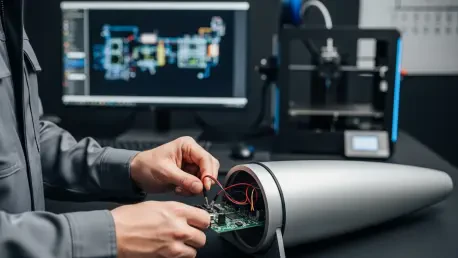

The recent emergence of functional missile guidance schematics on public code repositories signals a transformative and potentially volatile shift in how lethal technology is developed and distributed. While defense contractors historically guarded their intellectual property behind high-security barriers, the public release of a man-portable air-defense system prototype by an independent engineer has effectively lowered the entry threshold for advanced weaponry. This project, which has rapidly gained traction in the developer community, utilizes consumer-grade electronics to replicate functions that were once the exclusive domain of national militaries. By integrating low-cost microcontrollers and inertial sensors into a 3D-printed chassis, the design challenges the traditional economic logic of warfare. The ability to assemble a guided projectile for less than a hundred dollars disrupts the parity between high-cost aerial assets and the defensive measures meant to counter them, forcing a rethink of modern security protocols.
Breaking the Cost Barrier: Consumer Hardware Meets Combat Capability
Central to this technological shift is the use of the ESP32 microcontroller, a versatile and inexpensive component typically found in smart home devices. By pairing this chip with standard GPS modules and off-the-shelf inertial measurement units, the prototype employs a proportional-derivative control loop to stabilize flight and track targets with surprising precision. This architectural choice stands in stark contrast to the financial burden of established systems like the FIM-92 Stinger, which carries a price tag nearing half a million dollars per unit, or the sophisticated interceptors used in the Iron Dome. The democratization of such guidance logic means that the fiscal advantage traditionally held by wealthy nation-states is rapidly eroding as manufacturing moves from specialized factories to residential workshops. Furthermore, the inclusion of detailed documentation for distributed camera networks suggests a future where real-time targeting data is crowdsourced from ground-based sensors, further enhancing the lethality of these budget-friendly systems.
Navigating the Ethical and Tactical Landscape of Open Defense
As additive manufacturing became an integral part of modern defense strategies, as seen in the production lines of MBDA and the deployment of interceptor drones like the SkyFall P1-Sun, the line between hobbyist innovation and military-grade hardware continued to blur. This transition was marked by a shift in focus toward decentralized defense initiatives that prioritized rapid iteration over bureaucratic procurement cycles. Policymakers and security agencies began evaluating the need for stricter regulations on the export of specific high-frequency sensors and specialized software libraries that facilitated the assembly of these autonomous systems. Instead of relying solely on kinetic interception, the focus moved toward developing more robust electronic warfare capabilities to disrupt the unencrypted communication links used by open-source platforms. By addressing the software vulnerabilities inherent in consumer electronics, defense organizations sought to neutralize the threat before a launch could occur. Ultimately, the integration of open-source methodologies necessitated a collaborative approach between tech companies and governments to ensure that innovation did not inadvertently compromise global stability.