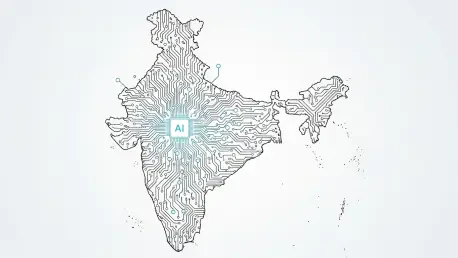

In the global race for artificial intelligence supremacy, a new front has opened, one where success is measured not by sheer computational power but by cultural and linguistic nuance. As tech giants pour billions into creating ever-larger, all-encompassing models, a Bengaluru-based startup named Sarvam AI is challenging the very definition of a “better” AI. The company has made bold claims that its specialized models outperform industry titans like Google’s Gemini and OpenAI’s ChatGPT on benchmarks directly relevant to the Indian subcontinent. This development signals more than just another competitor entering the ring; it represents a strategic push for “sovereign AI”—technology meticulously crafted to serve the unique cultural, linguistic, and practical needs of India’s diverse population. By focusing on the intricate complexities of the nation’s 22 official languages, Sarvam AI is betting that a hyperlocal, deeply contextual approach can carve out a significant niche that Western-centric platforms have so far failed to adequately address, raising fundamental questions about the future of AI development and who it truly serves.
Forging a Path with Specialized AI Tools
Sarvam AI’s strategy hinges on developing highly specialized tools that tackle specific, real-world challenges prevalent across India. One of its flagship innovations is Sarvam Vision, an advanced optical character recognition (OCR) model engineered to navigate the labyrinthine complexity of Indian documents. Unlike general-purpose AI that often falters when faced with non-standard formats, Sarvam Vision is designed to accurately interpret intricate tables, charts, and text from physical records, even in less-than-ideal conditions. This capability is particularly transformative for small businesses and government offices, which are frequently burdened with vast archives of paper documents in various regional languages. The model’s high accuracy in digitizing these records promises to streamline operations, reduce manual error, and unlock valuable data that has long been inaccessible. By building a tool that excels at a task where global competitors often show weakness—understanding the nuanced structure and scripts of Indian languages—Sarvam AI demonstrates a practical application of AI that delivers immediate and tangible value to an underserved market.
Further cementing its commitment to linguistic inclusivity, the company has developed Bulbul V3, a sophisticated text-to-speech system that sets a new standard for natural-sounding audio in Indian languages. Supporting all 22 official languages with 35 distinct and lifelike voices, Bulbul V3 goes beyond mere translation to capture the unique rhythm, tone, and pronunciation inherent to each dialect. This is a critical distinction from many mainstream text-to-speech services, whose outputs in non-English languages can often sound robotic, awkward, or carry a heavy English inflection. For millions of multilingual speakers in India, this unnatural pronunciation can be jarring and hinder adoption. Bulbul V3 aims to create a more comfortable and authentic user experience, making digital interactions feel more natural and accessible. This focus on auditory nuance underscores Sarvam AI’s core philosophy: that true accessibility in technology is achieved not just by providing a service, but by ensuring it resonates culturally and linguistically with its intended audience, fostering deeper engagement and trust.
The Rise of Sovereign AI and Cultural Relevance
The emergence of Sarvam AI is a powerful illustration of a growing global trend toward “sovereign AI,” a concept the company actively champions. This approach advocates for the creation of artificial intelligence systems that are not only developed within a nation’s borders but are also intrinsically tailored to its specific data, culture, and societal needs. In a landscape dominated by platforms built on predominantly Western datasets and cultural norms, sovereign AI offers a compelling alternative. It directly addresses mounting concerns over data privacy, algorithmic bias, and the long-term implications of relying on foreign technology to power critical infrastructure in government, business, and education. By building models from the ground up with Indian languages and contexts at their core, Sarvam AI is creating tools that are inherently more relevant and less prone to the cultural misunderstandings that can plague generalized AI. This philosophy re-frames the AI race as not just a matter of technological capability, but also one of national autonomy and cultural preservation in the digital age.
This strategic shift suggests that the future of AI innovation may not be a monolith controlled by a handful of dominant corporations. Sarvam AI’s progress demonstrates that smaller, highly focused teams can achieve significant breakthroughs by identifying and meticulously solving regional problems that larger, global-facing companies may overlook or deem too niche. While performance benchmarks are an important measure, they do not guarantee real-world success. However, if Sarvam’s claims translate into widespread adoption, it will invariably pressure major AI developers to enhance their support for a more diverse range of languages and scripts. This development signifies a broader decentralization in the AI landscape, where localized expertise becomes a key competitive advantage. It proves that innovation can flourish at the edges, challenging the notion that only massive scale can produce cutting-edge technology and potentially inspiring a new wave of region-specific AI development worldwide.
Beyond Benchmarks a New Direction for Technology
The narrative of Sarvam AI ultimately became more than a story of technical victory; it showcased a viable path toward making technology more reflective of the vast and diverse populations it aimed to serve. The company’s strategic wager—that deep cultural specificity and meticulous attention to detail could effectively compete with the sheer scale of global competitors—found its validation in a market of millions who had previously felt underserved by mainstream AI. This localized approach proved to be a powerful and sustainable strategy in the global technology race. It shifted the conversation from a singular focus on processing power and parameter counts to a more holistic view that valued cultural resonance and practical utility. Sarvam AI’s success provided a compelling blueprint for how a nation could cultivate its own technological ecosystem, one that not only answered its unique challenges but also affirmed its distinct identity in an increasingly homogenized digital world.