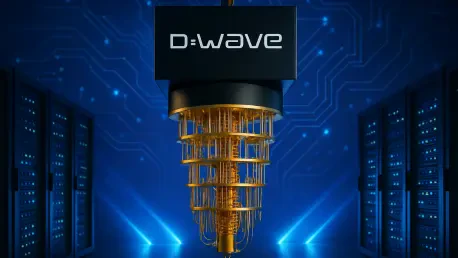

The global computing landscape is currently experiencing a profound shift as traditional silicon-based architectures struggle to keep pace with the exponential growth of complex data processing requirements. While classical supercomputers have reached impressive milestones in raw floating-point operations, they often falter when faced with NP-hard optimization problems that define modern logistics, materials science, and financial modeling. This performance ceiling has paved the way for quantum annealing and gate-model systems to move beyond the confines of theoretical research into the realm of practical industrial utility. D-Wave Quantum Inc. has emerged as a central figure in this transition, demonstrating that quantum systems can provide a measurable advantage in solving real-world challenges today rather than in a distant decade. By focusing on commercial scalability and the integration of quantum-classical hybrids, the industry is witnessing a maturation where hardware capabilities finally align with the immediate needs of global enterprise operations.
Bridging the Gap Between Research and Commercial Scalability
Building on the foundation of specialized quantum annealing, the current trajectory of advanced computing emphasizes the delivery of accessible cloud-based quantum processing units (QPUs). Unlike earlier iterations of the technology that required highly specialized physics backgrounds to operate, modern platforms now offer software development kits that allow classical programmers to submit problems via the cloud. This democratization is vital for sectors like pharmaceutical research, where simulating molecular interactions requires the kind of simultaneous multi-variable processing that quantum bits provide. Moreover, the focus has shifted toward refining error suppression and increasing qubit connectivity, which directly impacts the accuracy of results in complex scheduling and supply chain optimizations. By prioritizing these tangible performance metrics, the sector is successfully moving away from speculative laboratory experiments toward a service-oriented model that provides quantifiable value to the manufacturing and energy sectors.
Strategic Integration and Future-Proofing Computational Infrastructure
This transition toward practical application naturally leads to the necessity of hybrid computing environments, where quantum processors work in tandem with existing high-performance computing clusters. Organizations are no longer looking for a complete replacement of their digital infrastructure but are instead seeking to augment their most taxing workloads with quantum acceleration. For instance, in the realm of financial risk assessment, the ability to run thousands of simultaneous scenarios through a quantum annealer can significantly reduce the time-to-insight compared to traditional Monte Carlo simulations. As these systems become more integrated, the emphasis for technical leaders must move toward developing quantum-ready algorithms and building a workforce capable of identifying which specific problems are suited for this new paradigm. Investing in quantum-classical middleware today ensures that a business remains competitive as the hardware continues to scale from 2026 to 2028, turning computational complexity from a bottleneck into a distinct strategic advantage for the early adopters.