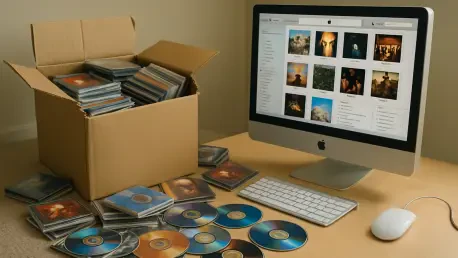

The act of purging a physical media collection today feels less like a simple decluttering and more like a profound severance from the history of personal curation. For decades, the architecture of how we consume music and video has shifted from tangible ownership toward ephemeral access, leaving many to wonder if we have traded sovereignty for convenience. At the center of this transformation lies the legacy of the digital-physical hybrid system, a framework that once promised to bridge the gap between the shelf and the screen. By examining the mechanics of media management, specifically the framework established by iTunes, we can understand why the move toward pure streaming has left a void in the user experience. This review explores the technological evolution of these systems and their lasting impact on how we interact with digital assets.
The Evolution of Digital-Physical Hybrid Systems
The emergence of digital-physical hybrid systems marked a turning point where the tactile nature of the past met the efficiency of the future. Initially, these systems were designed to solve a specific problem: how to make a stationary physical collection mobile without losing the quality or ownership associated with the original disc. This technology was built on the principle of local virtualization, where hardware acted as a gateway rather than a gatekeeper. By allowing users to digitize their own assets, the industry created a bridge that respected the consumer’s previous investments while introducing them to the benefits of a computerized library.
In the broader technological landscape, this evolution represented the first real challenge to the traditional retail model. It moved the power of curation from the hands of radio programmers and store managers into the hands of the individual. This shift was not merely about playback; it was about data management. The ability to organize, tag, and categorize thousands of files transformed the listener from a passive consumer into an active archivist. As we look back, it is clear that this era defined the metadata standards and interface expectations that continue to influence software design, even as the physical components begin to fade into the background.
Core Pillars of the iTunes Framework
Library Centralization and Cross-Platform Integration
At the heart of the most successful media management systems was the concept of a centralized hub. The iTunes framework succeeded because it acted as a single point of truth for a user’s entire digital life. Whether on a Mac or a Windows PC, the software provided a consistent interface for managing various file types, from music and movies to early mobile applications. This centralization was significant because it eliminated the need for multiple fragmented tools, offering a unified environment where performance was measured by the speed of synchronization and the reliability of the database.
The performance of this integration was particularly evident in how it handled cross-platform communication. By maintaining a structured library file that tracked every play count, rating, and playlist modification, the system ensured that the user experience remained seamless regardless of the hardware being used. This level of synchronization was revolutionary at the time, as it allowed for a persistent digital identity. However, the eventual move toward specialized, platform-specific apps has arguably diluted this experience. While modern apps are more lightweight, they often lack the comprehensive “all-in-one” utility that made the centralized model so powerful for power users.
The Media Ripping and Encoding Engine
One of the most technically significant components of this media management era was the encoding engine used to digitize physical media. This process, often referred to as “ripping,” involved sophisticated error-correction algorithms that ensured the digital copy was a faithful representation of the physical source. Users had the ability to choose between various formats, such as AAC or MP3, and adjust bitrates to balance file size with audio fidelity. This granularity gave consumers a level of control over their sensory experience that is largely absent from modern, automated streaming services.
Real-world usage of these encoding engines fostered a unique culture of digital craftsmanship. Users would spend hours monitoring “burn speeds” and manually fetching album artwork to ensure their libraries were aesthetically and technically perfect. This labor-intensive process created a psychological bond between the user and their collection. In contrast to the “rented” feel of today’s cloud-based libraries, an encoded library represented a permanent, high-quality asset that existed independently of an internet connection. This technical autonomy remains one of the strongest arguments for the hybrid model, as it protects the user from the bit-rate fluctuations and compression artifacts common in cloud delivery.
Emerging Trends in Hybrid Media Consumption
Despite the total dominance of streaming, a counter-trend is emerging that favors a return to hybrid consumption. High-resolution audio and 4K physical releases are seeing a resurgence among enthusiasts who recognize the quality ceiling of current streaming infrastructure. This shift is driven by a desire for “bit-perfect” reproduction, which many cloud services cannot guarantee due to bandwidth throttling and proprietary codec limitations. Consumers are increasingly using local servers and advanced management software to host their own high-fidelity files, essentially recreating the iTunes model with modern, decentralized hardware.
Furthermore, there is a growing movement toward media “de-clouding” among privacy-conscious users. As platforms become more aggressive with data mining and targeted advertising, the appeal of a self-hosted, offline library has grown. Innovations in network-attached storage (NAS) and personal cloud software are allowing individuals to maintain the convenience of remote access while keeping their data on their own terms. This trend suggests that the industry is moving toward a more nuanced middle ground, where the convenience of the cloud is used as a discovery tool, while the actual “core” library is kept on local, user-controlled hardware.
Real-World Applications and Sector Deployment
The principles of structured media management have found applications far beyond personal entertainment. In the education and archival sectors, the ability to manage vast quantities of digital assets with precise metadata is critical. Libraries and museums utilize similar encoding and categorization frameworks to preserve historical recordings and documents. These sectors require a level of reliability and searchability that consumer streaming services simply do not provide, making the “hub” model of media management an essential tool for institutional knowledge preservation.
In the professional creative industries, such as film production and music engineering, the hybrid approach remains the standard. Professionals cannot rely on the shifting catalogs of streaming providers; they require localized, high-speed access to their source materials. The deployment of robust media management software in these environments ensures that assets are version-controlled and easily retrievable across global teams. These use cases highlight that while the general public may have moved toward a subscription model, the foundational technology of local media management remains the backbone of the professional world.
Critical Challenges and Market Obstacles
The path forward for comprehensive media management is fraught with significant technical and regulatory hurdles. The most pressing challenge is the “walled garden” approach favored by major tech corporations. By locking content behind proprietary formats and subscription tiers, companies make it increasingly difficult for users to export or manage their own media. This lack of interoperability stifles the hybrid model and forces consumers into a cycle of perpetual payment for access to content they may have previously owned in a different format.
Moreover, the technical degradation of physical-to-digital hardware is a growing concern. As computer manufacturers remove disc drives and legacy ports, the “on-ramp” for digitizing physical media becomes more cumbersome. This hardware obsolescence, combined with aggressive Digital Rights Management (DRM) laws, creates a barrier for users who wish to maintain their own archives. While some open-source projects are working to mitigate these limitations by developing universal drivers and bypass tools, the legal landscape remains a significant obstacle to widespread adoption of independent media management.
Future Outlook and Technological Trajectory
The trajectory of digital media management is likely to be defined by the tension between corporate control and user agency. We are moving toward an era where artificial intelligence will play a major role in organizing personal libraries, automatically correcting metadata, and even upscaling lower-quality legacy files. This could breathe new life into old collections, making the act of maintaining a personal archive more appealing to a broader audience. The long-term impact of these developments will be a more resilient media landscape where users are not entirely dependent on a single service provider.
Potential breakthroughs in decentralized storage, such as blockchain-based ownership verification, may also offer a solution to the “rental” problem. Imagine a future where a digital purchase grants a permanent, platform-agnostic license that can be managed in any software of the user’s choice. This would restore the sense of ownership that characterized the iTunes era while retaining the global accessibility of the cloud. As society becomes more aware of the fragility of digital-only formats, the demand for these “sovereign media” solutions is expected to grow, potentially forcing a shift in how content is sold and distributed.
Final Assessment and Key Takeaways
The review of digital media management reveals that the transition from a hybrid, ownership-based model to a pure streaming environment was a trade-off that prioritized immediate access over long-term stability. The iTunes framework was a masterclass in providing a bridge between these two worlds, offering tools for curation and craftsmanship that have yet to be fully replicated by modern platforms. While streaming offers an unparalleled breadth of content, it lacks the depth of connection and the security of ownership that localized management provided. The current state of the market suggests a growing fatigue with “subscription-everything,” leading to a renewed interest in hybrid systems.
The legacy of these technologies demonstrated that a well-managed digital library is more than just a list of files; it is a personal history and a safeguard against cultural erasure. Future developments must focus on breaking down the barriers of closed ecosystems to allow for a more democratic and durable form of media consumption. For those who value the artistry of a collection and the integrity of the media they consume, the lesson was clear: the best approach to the digital age is one that maintains a foot in both the physical and virtual realms. This balanced philosophy remains the most effective strategy for navigating an increasingly volatile and corporate-controlled digital landscape.